
Loading content...
Loading content...
Loading content...

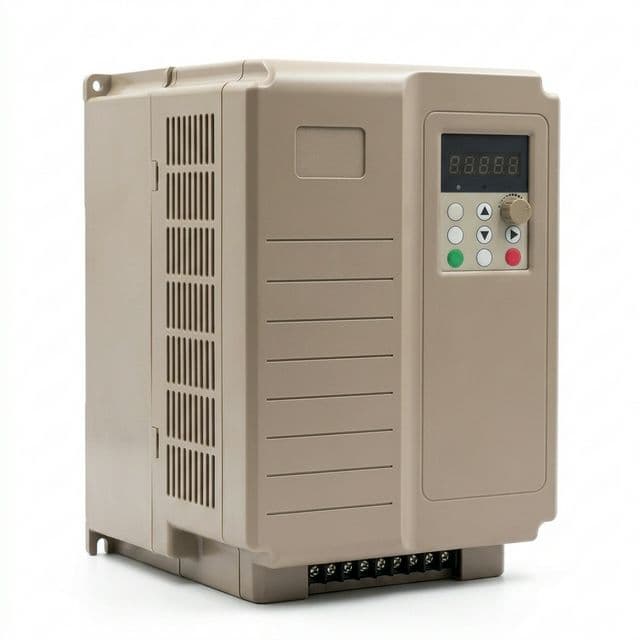
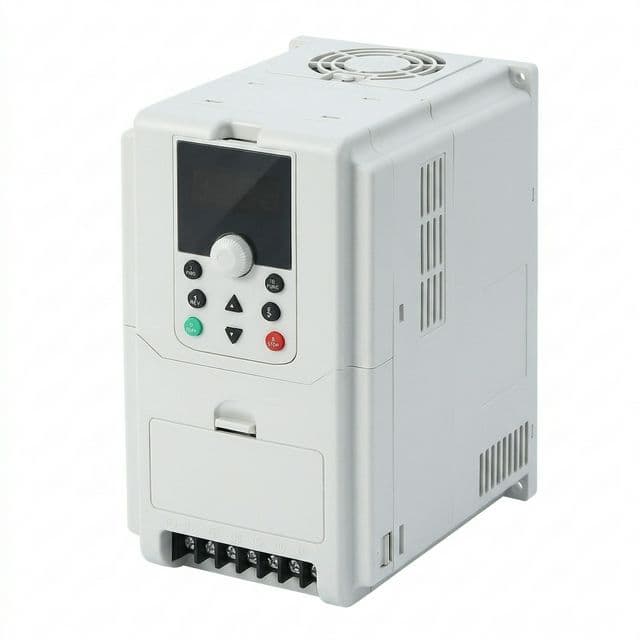
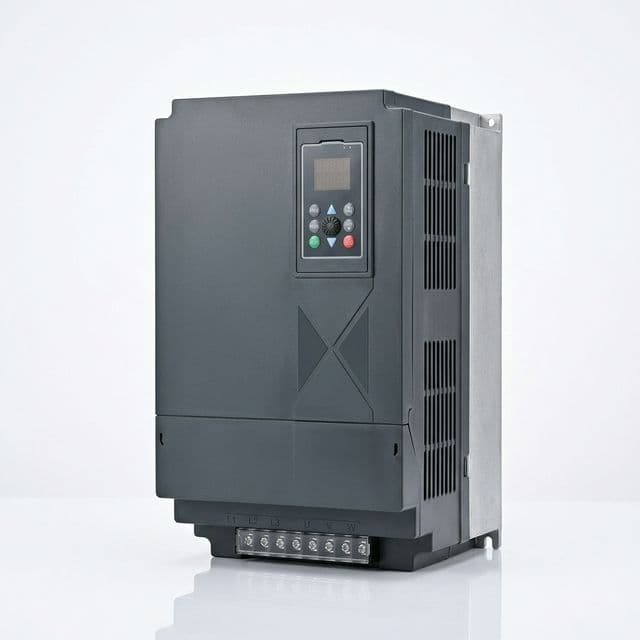
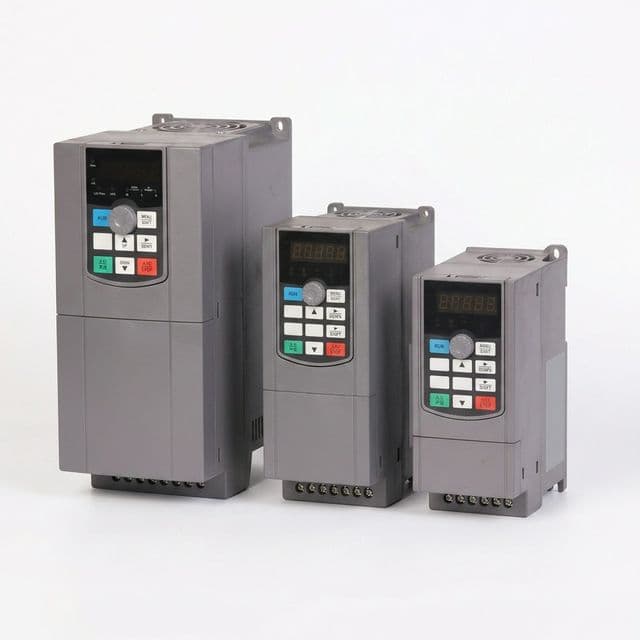
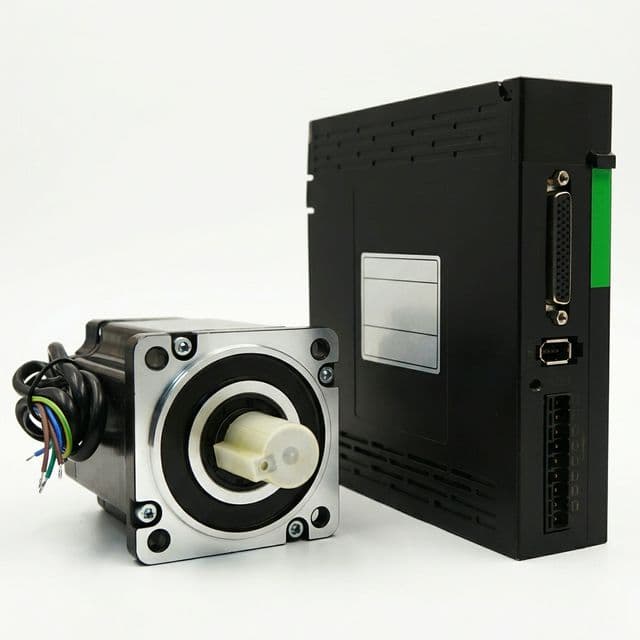
Variable frequency drives, servo kits, and diagnostic sensors used in PID commissioning workflows.
Use one canonical URL to run a practical motor pid tuning check, then review method limits, risks, and source-backed decision guidance. This page explicitly covers the alias intent 3 phase ac induction motor pid tuning without splitting into competing pages and also answers ac induction motor pid tuning searches.
Published April 26, 2026 | Evidence refresh April 26, 2026
Cascade Check
Speed/current loop ratio
Gain Window
Ku-Pu startup gains
Slip Sanity
Synchronous vs rated
Fill real test inputs, then run one-click tuning guidance with boundary checks.
Relay test result, >0
Sustained oscillation period
Controller execution period
Measured or planned crossover
2% settling target
Used for synchronous-speed sanity
Usually 50 or 60
Nameplate or validated test value
Synchronous speed estimate: 1,500.0 rpm
Slip estimate: 2.67%
Deterministic output with explicit assumptions, boundary states, and an action path.
Core conclusions, key numbers, and applicability boundaries for quick decision filtering.
For 3-phase AC induction motor PID tuning, speed-loop crossover should stay comfortably below current-loop crossover. Pushing speed loop too close to current loop usually creates oscillation under load steps.
Ziegler-Nichols coefficients produce a testable starting point, but production gains still need retuning against thermal drift, sensor noise, and inertia mismatch.
Without anti-windup, integrator accumulation delays recovery after saturation and worsens overshoot. Back-calculation and clamping each have clear operating envelopes.
As loop crossover approaches sampling constraints, delay and quantization effects dominate. If sample-to-update latency is not controlled, aggressive gains become non-repeatable.
No-encoder and low-speed sensorless modes usually require more conservative gains and stronger disturbance filtering for stable operation across payload variance.
In adjustable-speed operation, motor torque capability can require derating (commonly cited 0-20% at rated frequency depending on harmonics and cooling). Fast tuning targets that ignore thermal limits create false confidence.
Industrial PID/PIDE features (windup control, bumpless transfer, cascade coordination) improve controllability, but they do not make the loop a certified safety function, and EU machinery compliance planning must follow the 20 January 2027 regulatory transition timeline.
| Number | What it means | Why it matters | Evidence |
|---|---|---|---|
| 0.45 Ku | ZN PI startup gain | Closed-loop PI baseline used for first-run tuning before plant-specific refinement. | S2 |
| 0.6 Ku / 0.5 Pu / 0.125 Pu | ZN PID core triplet | Classic aggressive PID startup set (Kp/Ti/Td) for Ku-Pu identified loops. | S1 |
| 1/18 fs | Current-loop default bandwidth heuristic | TI FCL examples describe this as default practical setup before aggressive widening. | S4 |
| 1/6 fs | Upper crossover caution zone | TI guidance flags this as an upper practical range where noise/stiffness rises sharply. | S4 |
| >= 5% fs | Delay sensitivity threshold | Microchip notes sample-to-update delay impact increases markedly in this region. | S5 |
| f_s/10 | Well-tuned current-loop reference point | Microchip examples describe fs/10-class current-loop bandwidth as a practical high-performance target when delay is controlled. | S5 |
| 0-20% | Rated-frequency torque derating range (VFD use) | NEMA MG 1 Part 30 states torque derating at rated frequency can range 0-20% depending on motor/control harmonic losses and thermal reserve. | S6 |
| ~30 Hz | Low-speed V/Hz boost threshold | NEMA notes that below about 30 Hz, extra V/Hz (boost voltage) may be needed to maintain air-gap flux and torque. | S6 |
| 20 Jan 2027 | EU machinery regulation mandatory date | European Commission guidance states Regulation (EU) 2023/1230 applies on a mandatory basis from this date. | S9 |
| 2 methods | Built-in anti-windup modes | Back-calculation and clamping are the two standard built-in methods emphasized in industrial tooling. | S3 |
Secondary CTA
Need a commissioning-ready test plan and handoff template for this motor PID tuning scope?
| Scope | Decision boundary | Status | Evidence |
|---|---|---|---|
| Best-fit scenarios | 3-phase AC induction motors with measurable Ku/Pu test response, VFD speed loop commissioning, encoder or stable observer available. | Applicable | S4S5 |
| Borderline scenarios | Large inertia ratio (>8), payload shifts >3x, weak low-speed estimation, or thermal limits near derating boundary. | Use with caution | S5S6 |
| Not-fit scenarios | Safety-critical torque/speed functions claimed through standard PID/PIDE logic, or systems where Ku/Pu relay testing cannot be run safely. | Not applicable | S7 |
| EU handoff boundary | If the machine is placed on the EU market near the 2027 transition, commissioning artifacts should align with Regulation (EU) 2023/1230 rollout timing and technical-file expectations. | Required for EU rollout | S9 |
| Data gaps | No reliable public cross-vendor benchmark for induction-motor PID commissioning time/cost under identical plant constraints. | Known unknown | Pending data |
Clear formulas, stage1b gap closure, and source traceability.
synchronous_speed_rpm = 120 * line_frequency_hz / pole_count slip_pct = (synchronous_speed_rpm - rated_speed_rpm) / synchronous_speed_rpm * 100 speed_loop_target_hz ~= 4 / settling_time_sec / (2*pi) PI (ZN): Kp = 0.45*Ku, Ti = Pu/1.2, Ki = Kp/Ti PI (Tyreus): Kp = 0.31*Ku, Ti = 2.2*Pu, Ki = Kp/Ti PID (ZN): Kp = 0.6*Ku, Ti = 0.5*Pu, Td = 0.125*Pu PID (No overshoot): Kp = 0.2*Ku, Ti = 0.5*Pu, Td = 0.33*Pu sampling_guardrail: current_loop_bw / sample_freq <= 1/6 cascade_guardrail: speed_loop_bw / current_loop_bw <= 0.25
Boundary and uncertainty note: these equations generate startup values. Plant-specific nonlinearities, observer quality, and torque limits still require empirical refinement.
| Gap | Decision risk | Fix applied | Evidence |
|---|---|---|---|
| Tool output lacked explicit sampling-boundary interpretation. | Users could push gains into delay-dominated regions without warning. | Added ratio checks (`current-loop / sampling` and `speed-loop / current-loop`) with severity-based actions. | S4S5 |
| Windup risk was implied but not operationalized. | Integrator saturation recovery path remained ambiguous in commissioning. | Added anti-windup switch, result-state warnings, and direct mitigation actions (back-calculation/clamping). | S3 |
| Alias intent was not visible in decision sections. | Users searching 3 phase ac induction motor pid tuning might assume this URL is mismatched. | Added alias phrasing in hero, FAQ, and dedicated anchor section for shareable deep-links. | S2 |
| Method alternatives were text-only and not decision-ready. | Teams lacked a clear mapping from plant condition to tuning family. | Added structured method comparison table with formulas, strengths, risks, and use conditions. | S1S2 |
| Thermal and VFD operating boundaries were weakly covered. | Teams could ship aggressive gains without derating/low-speed flux checks, raising overload risk. | Added NEMA-backed guardrails (0-20% derating context, low-speed V/Hz boost boundary) and reflected them in risk/decision tables. | S6 |
| Control-vs-safety and regulation timeline boundaries were implicit. | Users might treat PID loop quality as safety/compliance sufficiency. | Added explicit safety boundary and EU 2027 regulation timing notes in conclusions, risk matrix, FAQ, and decision boundary table. | S7S8S9 |
| ID | Source | Date | Usage in this page |
|---|---|---|---|
| S1 | Microstar Labs: Ziegler-Nichols tuning rule summary | Accessed April 26, 2026 | Provides classical rule coefficients, including Kp=0.6Ku, Ti=0.5Tu, Td=0.125Tu for PID and no-overshoot variants. |
| S2 | Engineering LibreTexts: PID Tuning via Classical Methods | Accessed April 26, 2026 | Documents closed-loop Ziegler-Nichols workflow and PI baseline coefficients frequently used for startup tuning. |
| S3 | MathWorks: Anti-Windup control using PID Controller block | Accessed April 26, 2026 | Explains back-calculation and clamping anti-windup strategies and shows practical actuator saturation failure modes. |
| S4 | TI SPRACL1B: Quick Response Control of PMSM Using Fast Current Loop | Revised September 2020 | accessed April 26, 2026 | Provides current-loop bandwidth heuristics: default near 1/18 of sampling frequency and open-loop crossover push toward 1/6 with higher noise/stiffness risk. |
| S5 | Microchip MCAF docs: Current loop tuning | Doc version 6.0.2 | accessed April 26, 2026 | Details sample-to-update delay bottlenecks, fs/10 well-tuned loop examples, and stronger delay sensitivity at >=5% of sampling frequency. |
| S6 | ANSI/NEMA MG 1 Part 30 (2021 watermark copy) | ANSI/NEMA MG 1-2016 (Rev. 2018), Part 30 | ©2021 | accessed April 26, 2026 | Defines slip and VFD application boundaries: below ~30 Hz V/Hz boost may be needed, and rated-frequency torque derating can range from 0 to 20% depending on motor/control losses. |
| S7 | Rockwell Studio 5000: Enhanced PID (PIDE) | Studio 5000 v38 online help | accessed April 26, 2026 | States PIDE is not supported in safety applications and clarifies cascade design expectation that the secondary loop must respond faster than the primary loop. |
| S8 | Rockwell Studio 5000: Anti-reset Windup and Bumpless Transfer (PID) | Studio 5000 v37 online help | accessed April 26, 2026 | Explains integral freeze at output limits and bumpless manual-to-auto transfer with internal back-calculation/tracking behavior. |
| S9 | European Commission (DG GROW): Machinery legislation overview | European Commission page | accessed April 26, 2026 | Confirms Regulation (EU) 2023/1230 applies mandatorily from 20 January 2027 and documents transitional compliance context for machinery placed on the EU market before that date. |
New evidence converted into decision boundaries, counterexamples, and explicit uncertainty markers.
| Dimension | Verified insight | Applicability condition | Tradeoff / limitation | Status | Evidence |
|---|---|---|---|---|---|
| Current-loop aggressive bandwidth | TI FCL documentation sets a default around 1/18 of sampling frequency and notes open-loop crossover can be pushed toward 1/6 with rising noise/stiffness risk. | Digital FOC stacks with measured latency and adequate signal quality. | Higher bandwidth improves disturbance rejection but reduces delay/noise margin. | Conditional | S4 |
| Delay-driven instability | Microchip tuning guidance highlights sample-to-update delay as a bottleneck, with strong sensitivity near >=5% of sampling frequency and fs/10 as a practical high-performance target when tuned carefully. | Current loops where ADC/PWM delay and compute timing are known. | Reducing delay often needs faster hardware or tighter firmware scheduling. | Validated | S5 |
| VFD thermal and torque envelope | NEMA MG 1 Part 30 states ASD-driven induction motors should be derated for cooling reduction and harmonics, with rated-frequency torque derating often spanning 0-20% depending on motor/control combination. | Variable-speed operation under non-sinusoidal drive output. | Derating improves thermal reliability but may reduce peak throughput. | Validated | S6 |
| Low-speed torque preservation | NEMA MG 1 notes that below about 30 Hz, additional volts-per-hertz boost may be needed to maintain air-gap flux and torque. | Low-speed induction-motor operation below base frequency. | Voltage boost can recover torque but may increase heating at low airflow. | Validated | S6 |
| Control vs safety function | Rockwell PIDE documentation explicitly says the instruction is not supported in safety applications; anti-windup and bumpless transfer help control quality but do not certify safety functions. | PLC/PID commissioning loops used in machine control. | Separate safety function architecture adds engineering effort but avoids unsafe claims. | Validated | S7S8 |
| Regulatory transition timing | European Commission machinery guidance states Regulation (EU) 2023/1230 applies mandatorily from 20 January 2027, while machinery placed before that date follows Directive 2006/42/EC context. | EU market launch and technical-file handoff planning. | Earlier alignment reduces retrofit work but can increase upfront documentation load. | Validated | S9 |
| Cross-vendor commissioning benchmark | No reliable public dataset was found to normalize induction-motor PID commissioning time/cost across inverter platforms, payload classes, and safety constraints. | Budgeting and timeline forecasting. | Use pilot runs or supplier-backed trials instead of public benchmark assumptions. | Pending | Pending data |
Pending rows are intentionally marked where no reliable public cross-vendor dataset is available yet; avoid forcing certainty in budget or schedule claims.
Structured tradeoffs for commissioning choices and risk mitigation.
| Method | Formulas | Strength | Risk / limitation | Use when | Evidence |
|---|---|---|---|---|---|
| PI (Ziegler-Nichols closed-loop) | Kp = 0.45Ku, Ti = Pu/1.2, Kd = 0 | Fast startup and simple commissioning on speed loops. | Can overshoot when inertia ratio is high or torque limits are tight. | Encoder-based speed loop, moderate dynamic requirement. | S2 |
| PI (Tyreus-Luyben style) | Kp = 0.31Ku, Ti = 2.2Pu, Kd = 0 | Higher robustness margin on noisy plants. | Slower disturbance rejection and longer settling time. | Sensorless or variable-load machines where robustness dominates. | S1 |
| PID (Ziegler-Nichols classic) | Kp = 0.6Ku, Ti = 0.5Pu, Td = 0.125Pu | Aggressive response when measurement quality is high. | Noise amplification and saturation risk without anti-windup/filtering. | High-SNR encoder feedback and strict response-time target. | S1 |
| PID (No overshoot variant) | Kp = 0.2Ku, Ti = 0.5Pu, Td = 0.33Pu | Lower overshoot profile for fragile mechanics. | Can feel sluggish under abrupt load changes. | Packaging, lift, or precision stages with low overshoot tolerance. | S1 |
High-impact risks should be closed before release: sampling overflow, cascade coupling, windup recovery failure, and control-safety misclassification.
| Risk | Trigger | Impact | Mitigation | Evidence |
|---|---|---|---|---|
| Sampling ratio overflow | Current-loop crossover approaches sampling constraints (near or beyond 1/6 fs). | High | Lower loop bandwidth target or increase sampling frequency before retuning gains. | S4S5 |
| Speed/current loop coupling oscillation | Recommended speed-loop bandwidth exceeds ~25% of current-loop bandwidth. | High | Reduce speed-loop target and retest with load-step profiles. | S4S5 |
| Integrator windup after torque clamp | Saturation events with no anti-windup path configured. | High | Enable back-calculation or clamping and validate recovery time after saturation release. | S3 |
| Plant-parameter drift | Temperature rise or inertia shift invalidates Ku/Pu test baseline. | Medium | Schedule gain revalidation at thermal steady state and max payload. | S5S6 |
| Unaccounted VFD derating | Commissioning assumes nameplate torque continuously without accounting for harmonic/cooling derating in ASD operation. | High | Apply motor-control-specific derating checks and validate thermal behavior at continuous duty before release. | S6 |
| Low-speed flux collapse | Low-speed operation is tuned aggressively without volts-per-hertz boost strategy below ~30 Hz. | Medium | Review low-speed V/Hz boost settings and retest torque reserve with thermal monitoring. | S6 |
| Control loop misused as safety function | PID/PIDE performance is treated as equivalent to a certified safety function. | High | Keep safety architecture separate (for example STO/safety controller path) and do not use standard PIDE as safety evidence. | S7S8 |
| EU compliance timeline miss | Commissioning package is delivered without accounting for the Regulation (EU) 2023/1230 mandatory date. | Medium | Align handoff checklist with 20 January 2027 transition timing and maintain canonical traceability in technical documentation. | S9 |
| Alias-intent mismatch in handoff docs | Teams treat 3 phase ac induction motor pid tuning as separate page intent. | Medium | Use canonical URL and alias anchor in internal SOP links to prevent route fragmentation. | S2 |
| Scenario | Assumptions | Process | Outcome |
|---|---|---|---|
| AMR wheel module retrofit (4-pole, 50 Hz) | Encoder available, inertia ratio ~2.5, moderate overshoot tolerance (8%). | PI ZN startup -> anti-windup on -> speed-loop set to <=20% of current-loop bandwidth. | Usually reaches stable commissioning in 2-3 tuning passes. |
| High-inertia tugger drivetrain | Inertia ratio >10, payload swings, low overshoot demand (<=4%). | Start with Tyreus-Luyben PI -> increase Kp gradually after disturbance tests. | Settling may be slower but robustness is materially higher. |
| Sensorless low-speed induction drive | No encoder, noisy low-speed estimates, tight torque limits. | Avoid aggressive PID start; prefer conservative PI and explicit saturation handling. | Stable but conservative envelope; upgrade feedback if response target is strict. |
| Fast conveyor indexing with high-SNR feedback | Encoder present, rigid mechanics, strict settling target (<100 ms). | Use PID ZN as baseline, then trim derivative and anti-windup gain under load-step tests. | Can achieve quick response if sampling headroom remains healthy. |
Decision-focused FAQs plus direct next-step actions.
This anchor confirms that the alias query 3 phase ac induction motor pid tuning is intentionally merged into the canonical URL /learn/motor-pid-tuning.
Primary CTA
Move from quick tuning estimate to production-grade commissioning review with your drive data.
