Loading content...
Loading content...
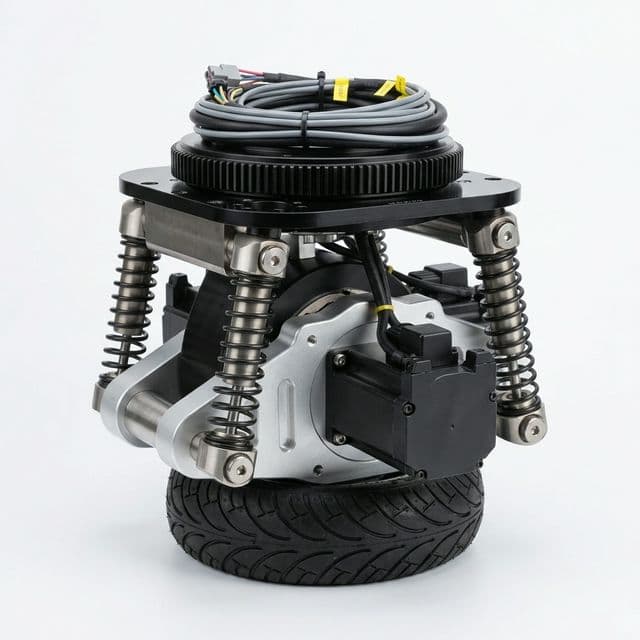
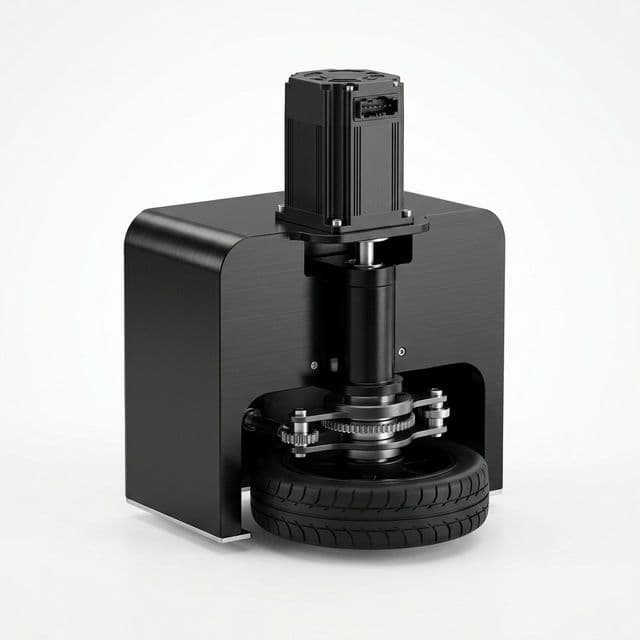
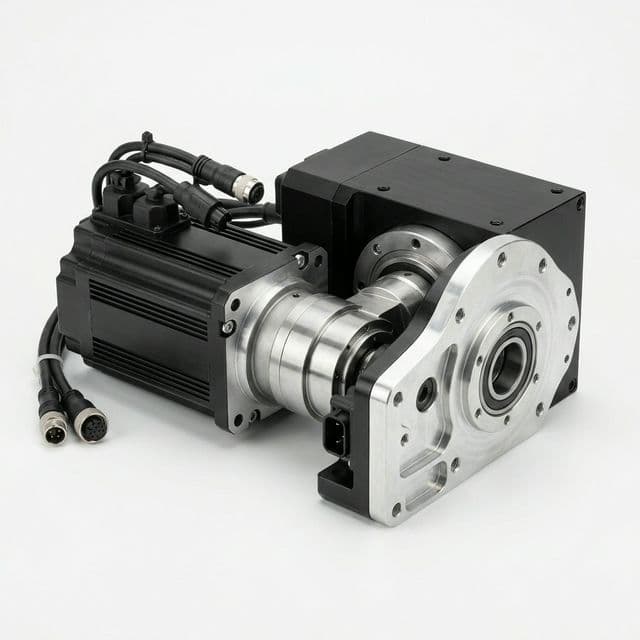
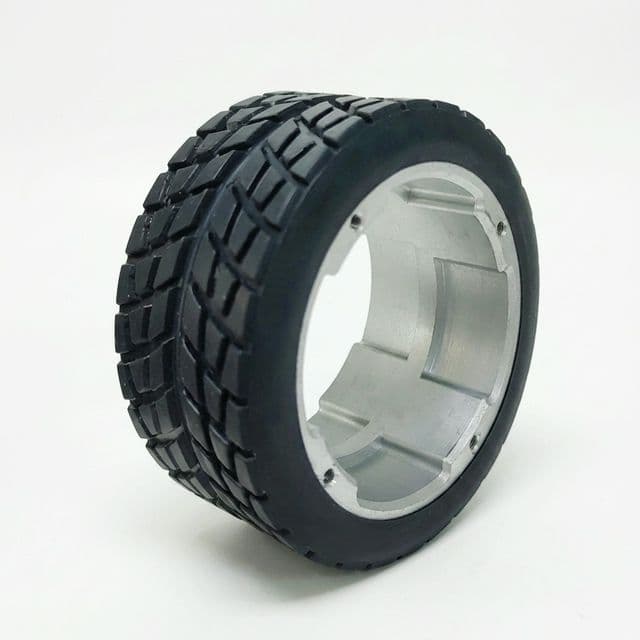
agv drive units / agv traction drive unit / agv modular drive unit / agv differential drive unit / agv omnidirectional drive unit / agv integrated drive unit
Use this single canonical page to evaluate AGV drive unit fit, estimate per-wheel torque reserve, and decide when to choose compact integrated modules versus heavy-payload or split architectures. This page also explicitly covers the alias queries agv drive units, agv traction drive unit, agv modular drive unit, agv differential drive unit, agv omnidirectional drive unit, and agv integrated drive unit without creating competing routes.
Distinct angle vs /learn/agv-drive-system: this workflow prioritizes single-module sizing, supplier handoff readiness, and boundary disclosure for one AGV drive unit SKU, not full-vehicle topology planning.
Published May 8, 2026 | Evidence refreshed May 13, 2026 | Review cadence: every 6 months or after major standards/regulation updates
Defaults are tuned for a mid-payload indoor AMR fit baseline. Adjust boundaries to match your real vehicle, floor, and duty profile. Base mass and payload are combined automatically as total moving mass.
Every result includes interpretation, boundaries, and the next executable action.
47 public standards/regulation references
ISO/IEC/CiA/PNO/Beckhoff/VDA/ANSI/NIST/EUR-Lex/ATEX/OSHA/eCFR/PHMSA/UNECE sources are mapped to method, risk, and tradeoff sections.
4 decision states with boundary warnings
Fit/review/risk/inconclusive outputs include explicit next actions.
3 architecture families compared
Steer-drive, heavy-payload, and split-drive options are benchmarked side by side.
Core conclusions, key numbers, and audience boundaries are shown here so the tool result can be used in procurement and design decisions.
Run the tool to generate torque, architecture fit, and risk-boundary interpretation.
19 Jul 2023 / 20 Oct 2026 / 20 Jan 2027
Corrigendum-aligned legal milestones for Regulation (EU) 2023/1230
Use this corrected milestone set in release gates. Do not reuse uncorrected 13th/14th legacy dates from older templates.
Evidence: S3, S13
ISO 3691-4:2023 -> ISO/DIS 3691-4
AMR/AGV baseline is active but revision is already in DIS stage
ISO now lists explicit DIS lifecycle markers (40.00 and 40.20), so review checkpoints should be tied to lifecycle state rather than static citation age.
Evidence: S1, S23
ISO 12100:2010 -> ISO/DIS 12100.2
Risk-assessment framework has an active draft successor
The listing now shows a second DIS loop and FDIS-registration marker, so hazard-file refresh gates should be tied to lifecycle state changes.
Evidence: S14, S24
ISO/DIS 3691-4 exclusion set: trailer towing / remote-controlled / elevated operator
Driverless-truck baseline is not universal across mixed AGV modes
If your project includes towed trailers, remote-control operation, or elevated operator position, treat it as a separate requirement stream instead of reusing baseline assumptions.
Evidence: S23
IEC 60529 vs ISO 20653
IP code boundary that affects interpretation of IP69K language
This page treats IP69K as an environment-specific claim requiring context, not a universal shorthand.
Evidence: S4, S5
31.25 us
PROFINET base clock from guideline reference
Used to frame expected controller-network timing discipline in higher-dynamic steering-drive loops.
Evidence: S9
>10 ms / <5 ms & >250 us / <250 us
PROFINET guideline time-requirement bands
PNO guideline classifies these as typical boundaries for RT/TSN free-running, IRT/TSN clock-synchronous, and manufacturer-specific ultra-fast solutions.
Evidence: S9
CC-A / CC-B / CC-C / CC-D
PROFINET conformance classes define minimum capability envelope
PNO guidance states CC-A should be used only when higher classes cannot be used; CC-C/CC-D align better with high timing demands.
Evidence: S9
10 to 1000 kbit/s
CANopen data-rate envelope (CiA summary)
For CANopen CC planning, CiA lower-layer guidance is more restrictive than generic CAN examples: while CAN HS headlines often cite about 40 m at 1 Mbit/s, CANopen CC planning uses about 25 m plus short stub limits.
Evidence: S10, S11, S16
VDA 5050 v3.0.0 (Mar 2026) / released 20 Apr 2026
Fleet-orchestration interface baseline moved to a new major version
VDA highlights new autonomy-oriented functions (zone concept, path sharing) and recommends current-version adoption; older versions are no longer recommended/developed further.
Evidence: S43, S44, S45
50 us to >100 ms
TwinCAT task-cycle range in EtherCAT documentation
Used as a reminder that final behavior depends on full control-loop scheduling, not bus label alone.
Evidence: S12
<=100 us cycle / <=1 us jitter
EtherCAT public technology baseline for high-dynamic positioning
This is a technology-level reference, not an automatic application guarantee. Final timing still depends on full control-loop design.
Evidence: S25
100 m
Typical max cable distance between two EtherCAT participants
Beckhoff documentation decomposes the segment as 5 m patch + 90 m installation + 5 m patch; physical topology remains a first-order constraint.
Evidence: S18
B56.5-2024 + R15.08-2-2023
North America IMR/AGV safety baseline set
For US/NA deployments, acceptance evidence often requires this package view rather than ISO-only mapping.
Evidence: S19, S20, S21
29 CFR 1910.178(a)(2) -> ANSI B56.1-1969
Current OSHA codified anchor can lag newer ANSI consensus editions
OSHA publishes a 2022 proposed update to newer ANSI B56 editions; until a final rule is confirmed, treat consensus-version adoption as a legal-status check item.
Evidence: S37, S38
1910.178 rule-history checkpoint: latest design update entry is 2022 proposed rule
Do not treat OSHA design-standard migration as finalized by default
The OSHA 1910.178 Federal Register tracker is used here as a governance checkpoint; keep legal-status validation active before declaration and contract gates.
Evidence: S38, S42
IEC 61800-5-1 + IEC 61800-3
Functional safety is not the full drive claim: add electrical-hazard + EMC path
Safety architecture claims should not stop at STO/PL language; electrical/thermal/energy hazards and EMC applicability boundaries need explicit verification.
Evidence: S7, S39, S40
11 Jun 2026 / 11 Sep 2026 / 11 Dec 2027
Cyber Resilience Act staged applicability for digital products
For connected steering-drive/control products, treat cybersecurity obligations as a release-gate timeline, not post-launch housekeeping.
Evidence: S28
ATEX Directive + CELEX 02022D1668
Explosive-atmosphere handoff baseline
When explosive-atmosphere scope is triggered, use ATEX legal scope plus the latest harmonised-standards list instead of extrapolating ISO 3691-4 intent.
Evidence: S29, S30
IEC 62619:2022 (AGV motive apps in scope)
Power-source stream cannot stay implicit
ISO 3691-4 excludes power sources, so battery safety has to be tracked as a separate requirement stream from day one.
Evidence: S1, S31
18 Aug 2027 (replacing 18 Aug 2025)
EU battery due-diligence obligations are postponed by 2 years
Regulation (EU) 2025/1561 amends Regulation (EU) 2023/1542 Article 48, so battery supply-chain compliance gates must be re-baselined in procurement plans.
Evidence: S32
UN 38.3 test-summary gate (49 CFR 173.185(a)(3))
Battery logistics evidence is a pre-shipment release dependency
For cells/batteries manufactured on or after 2008-01-01, test-summary artifacts must be available in the supply chain; missing summaries should block supplier approval.
Evidence: S41
49 CFR 173.185(a)(3): 10 required test-summary data elements + Wh marking gate
Battery transport readiness needs artifact completeness, not just a yes/no claim
At RFQ stage, require complete test-summary fields and verify Wh marking obligations where applicable (for example lithium-ion batteries from 2024-05-10 baseline language).
Evidence: S41
UN Manual Rev.8 (2023) + Amend.1 files (2025-09-12)
UN 38.3 technical baseline is revision-sensitive
UNECE explicitly flags subsection 38.3 amendments in Amend.1, so supplier evidence packs should name the manual revision/amendment baseline instead of saying only “UN 38.3 compliant”.
Evidence: S47
ISO 24134:2006 (confirmed 2021) -> ISO/CD 24134
Automated steering/travel control baseline is legacy and in revision
The current document explicitly covers automated steering/travel/lifting control requirements but is marked "to be revised", so long-cycle programs should track replacement progress.
Evidence: S33
ISO/DIS 13849-2 lifecycle: 40.00 / 40.20 / 40.60
Safety-validation guidance is actively moving through DIS ballot
Validation templates for SRP/CS should be version-locked and rechecked when lifecycle states move, not assumed static after design freeze.
Evidence: S34
NIST SP 800-82r3 (2023-09) + IEC 62443-2-1:2024
Cybersecurity requires technical control baselines, not date-only tracking
Use CRA milestones for legal gates and pair them with OT control-program evidence (architecture hardening, patch/vulnerability workflows, and lifecycle governance).
Evidence: S35, S36
+15% to +40% reserve
Current sizing reserve policy in this calculator
This is an internal planning heuristic. No single public cross-vendor standard mandates this percentage window.
Evidence: Pending public benchmark (internal policy only)
Use the tool output as the first filter, then move to diagnostics, control tuning, and compliance checks before RFQ lock-in.
Use these links to complete adjacent decisions around diagnostics, control tuning, and safety architecture.
This section explains how outputs are derived, where assumptions begin, and which references support key decisions.
| Step | Formula / logic | Decision value | Boundary | Evidence |
|---|---|---|---|---|
| Traction baseline | Fr = c * m * g | Converts floor condition and gross mass into baseline resistance force before grade and acceleration are considered. | No universal public coefficient set covers all wheel compounds and contamination states; calibration must come from your pilot telemetry. | S1 |
| Grade + acceleration force | Fpeak = Fr + (m * g * grade) + (m * v / t) | Captures incline and speed-ramp demand that usually dominates peak AGV drive unit sizing in AMR transfers. | Assumes linear acceleration and no wheel slip; high-jerk duty profiles require motion-profile simulation. | S1 |
| Control-loop timing sanity check | Tresponse ~= Tcontroller + Tfieldbus + Tdrive | Communication and control timing can dominate slip and thermal behavior when dynamic demand is high. | Protocol labels are not enough. For demanding loops, validate where your application falls against published timing bands (for example >10 ms, <5 ms and >250 us, or <250 us manufacturer-specific paths) and verify service-layer behavior when TSN is introduced. | S9, S10, S16, S17, S12, S18, S26 |
| Fleet-orchestration interface governance | Interoperability baseline = fieldbus timing fit + VDA 5050 version-locked master/robot contract | Prevents mixed-fleet programs from conflating vehicle-level control timing with fleet-level orchestration interface decisions. | VDA 5050 v3.0 introduces autonomy-facing orchestration constructs (for example zones and path sharing), and VDA guidance marks older versions as no longer recommended/developed further. Fleet interface revision still does not replace fieldbus timing, safety, or EMC validation streams. | S43, S44, S45, S9, S26 |
| Safety-architecture boundary | Safety claim valid only after PL/SIL target + verification are frozen | Avoids treating safety features as ready-made compliance outcomes before system-level validation. | ISO 13849-1 principles and IEC 61800-5-2 functions still require project-specific target definition and verification; ISO/DIS 13849-2 lifecycle movement shows validation guidance is active and should be revision-controlled; IEC 60204-1 scope starts at the electrical supply connection and does not remove the need for system-level stop-strategy design. | S6, S34, S7, S8, S15 |
| Drive electrical + EMC boundary | Drive claim = functional safety + electrical/thermal safety + EMC applicability check | Prevents teams from treating STO/PL language as complete proof while electrical hazard and EMC obligations remain unresolved. | IEC 61800-5-1 and IEC 61800-3 both list traction/electric-vehicle exclusions, and IEC 61800-3 states radio transmission/reception requirements are out of scope; confirm product classification and additional standards path before final claims. | S7, S39, S40 |
| Jurisdiction and scope gate | Applicable standard set = deployment region + operating scope | Prevents design teams from carrying one region or one standard package into a different regulatory acceptance context. | ISO 3691-4 excludes power-source requirements and some operating contexts. North America deployments commonly require B56.5/R15.08 package mapping in addition to ISO-based engineering references. | S1, S19, S20, S21 |
| Driverless-scope filter for mixed operating modes | Applicability check = driverless baseline - {towed trailers, remote control, elevated operator} | Prevents teams from assuming one driverless-truck baseline still applies when tugger trailers or mixed remote-control modes are introduced later. | ISO/DIS 3691-4 explicitly excludes safety requirements for trailer(s) towed behind a truck, excludes remotely-controlled trucks, and excludes trucks with elevated operator position. Treat those as separate requirement streams before supplier lock. | S23 |
| US codified-vs-consensus standard status gate | Mandatory baseline = codified CFR + legal status of updates | Avoids procurement and declaration plans that assume newer consensus editions are already mandatory when codified text still anchors legacy references. | eCFR 29 CFR 1910.178 currently references ANSI B56.1-1969 while OSHA migration to newer ANSI editions (including B56.5) is still tracked as proposed-rule status in public rule history; treat this as a legal-governance check, not an automatic substitution. | S37, S38, S42 |
| Out-of-scope and cybersecurity gate | Scope handoff = environment boundary + connected-product obligations | Stops teams from treating legal scope exclusions and cybersecurity obligations as late-stage documentation tasks. | Explosive-atmosphere use should trigger ATEX path mapping, and connected digital products should map CRA staged dates into release governance with technical control baselines (for example OT security countermeasures and IACS security-program evidence). | S28, S35, S36, S29, S30 |
| Power-source requirement stream | Battery safety baseline != traction mechanics baseline (parallel stream) | Prevents battery/power-source requirements from being silently dropped when teams focus on torque and motion architecture. | ISO 3691-4 scope excludes power-source requirements; battery safety and battery due-diligence obligations should be traced in dedicated requirement streams. | S1, S31, S32 |
| Battery shipment evidence gate | Release readiness includes UN 38.3 test-summary availability | Stops teams from discovering missing lithium-battery transport evidence after hardware and supplier decisions are already frozen. | 49 CFR 173.185(a)(3) requires UN 38.3 test-summary availability for cells/batteries manufactured on or after 2008-01-01 (with defined exceptions), and the section also specifies required data fields plus Wh-marking context for lithium-ion batteries; convert these into explicit RFQ and release criteria. | S41 |
| Per-wheel torque split | T = (F * r) / n | Maps total force to per-wheel torque requirement using wheel radius and number of traction wheels. | Assumes symmetric load sharing. Real vehicles need correction for CG offset and transient axle transfer. | S1 |
| Reserve and risk adjustment | Trecommended = T * (1 + reserve) | Adds buffer for duty-cycle heating, ambient stress, ingress sealing losses, and shock events. | Reserve factor here is a policy choice (15%-40%), not a normative requirement. | S1, S6, S7 |
| Milestone | Date / version | Planning impact | Evidence |
|---|---|---|---|
| Regulation (EU) 2023/1230 enters into force | 2023-07-19 | Use this corrected force date in contract and declaration planning; avoid outdated 13 July date variants from pre-corrigendum copies. | S3, S13 |
| Article-level early applicability gate (corrected point b) | 2026-10-20 | This corrected article gate is frequently misread as 2023 in legacy templates; update compliance checklists before design-freeze sign-off. | S13 |
| Additional staged applicability points (corrected) | 2024-01-20, 2024-07-20, 2025-07-20, 2026-07-20 | Procurement and validation plans should map these dates to product-release gates and technical-file milestones. | S13 |
| Full application date (corrected) | 2027-01-20 | Treat as hard gate for full conformity workflow on affected machinery placed on market; freeze one CELEX reference set in governance docs to avoid mixed-date drift. | S3, S13, S22 |
| Cyber Resilience Act staged applicability | 2026-06-11 / 2026-09-11 / 2027-12-11 | Connected steering-drive/control products should map these milestones into secure-design, incident-vulnerability process, and release-readiness gates rather than deferring cybersecurity evidence to after launch. | S28 |
| Battery due-diligence obligations postponed | 2027-08-18 (replaces 2025-08-18) | Battery supply-chain compliance work should still start early, but legal gate planning must reflect the amended application date and the updated Commission-guideline date (2026-07-26). | S32 |
| ANSI/ITSDF B56.5 latest listed revision | 2024 | North America AGV programs should verify they are not still planning against B56.5-2019 assumptions where 2024 revisions now apply. | S19 |
| ANSI/A3 R15.08-2 system/application requirement baseline | 2023 | IMR safety evidence in North America frequently requires Part 2 integration requirements, not just component-level claims. | S20, S21 |
| OSHA powered industrial truck design reference update (status checkpoint) | 2022-02-16 proposed rule (87 FR 8755) | tracker used as ongoing status checkpoint | Until a final-rule outcome is confirmed in the public 1910.178 rule history, do not assume newer ANSI references automatically replace codified 29 CFR 1910.178 baseline text in compliance workflows. | S37, S38, S42 |
| UN 38.3 test-summary availability gate in U.S. transport path | 49 CFR 173.185(a)(3) baseline + harmonized requirement effective 2022-01-01 (button-cell exception effective 2024-05-10) | Battery supplier approval and service-parts logistics should include test-summary artifact checks (including required data fields) before release and shipment readiness gates. | S41 |
| VDA 5050 interface baseline update for mixed fleets | Version 3.0.0 (March 2026) | press release dated 2026-04-20 | For multi-vendor AGV/AMR fleets, version-governance should be frozen early; new autonomy-oriented functions in v3.0 and the “older versions no longer recommended” notice can materially affect master-control integration and commissioning scope. | S43, S44, S45 |
| UN Manual of Tests and Criteria revision governance | Rev.8 (2023) + Amend.1 files published 2025-09-12 | Battery-compliance templates should explicitly reference manual revision/amendment baselines, because UNECE highlights subsection 38.3 amendments and rupture-definition changes in Amend.1. | S47 |
| ISO/DIS 3691-4 current lifecycle and scope-check trigger | Current stage 40.00 (DIS registered) | registration date 2026-04-08 | When platform scope includes towed trailers, remote-control operation, or elevated operator position, trigger a separate requirement stream instead of assuming default driverless baseline coverage. | S23 |
| ISO 12100 lifecycle state for risk-assessment baseline | Review confirmed 2022 (ISO 12100) + ISO/DIS 12100.2 lifecycle markers through 40.99 | Risk files should record the exact baseline revision and trigger revalidation checkpoints when DIS lifecycle states move. | S14, S24 |
| Deployment scope | Baseline set | What it covers | Critical boundary | Evidence |
|---|---|---|---|---|
| EU/EEA industrial site deployment | ISO 3691-4:2023 + Regulation (EU) 2023/1230 timeline + battery due-diligence timeline | Driverless industrial-truck safety verification, machinery-regulation transition planning, and battery supply-chain due-diligence timeline governance. | ISO 3691-4 excludes power-source requirements and selected operation contexts; the DIS track also flags non-applicability to remote-control/elevated-operator and trailer-towing cases. Connected products may need CRA lifecycle planning, and battery due-diligence obligations apply on the amended schedule (18 Aug 2027). | S1, S23, S3, S13, S28, S32 |
| EU/EEA potentially explosive-atmosphere operation | ATEX Directive 2014/34/EU + current harmonised standards publication set | Defines legal scope and conformity path for equipment/protective systems intended for explosive atmospheres. | Do not reuse non-ATEX assumptions from general AMR guidance; verify harmonised-standard version applicability at each release gate. | S29, S30 |
| North America IMR/AGV deployment | OSHA 29 CFR 1910.178 codified baseline + ANSI/ITSDF B56.5-2024 + ANSI/A3 R15.08-2-2023 | B56.5 addresses driverless/automated industrial vehicle safety use, while R15.08-2 addresses IMR system and application requirements. | ISO-only evidence may be insufficient, and newer ANSI editions should be tied to explicit legal-status checks against codified OSHA references until final-rule updates are confirmed. | S37, S38, S42, S19, S20, S21 |
| Multi-vendor fleet orchestration (master control + heterogeneous robots) | VDA 5050 v3.0.0 interface contract + project fieldbus stack | Defines a common master-control/robot communication layer for mixed fleets while preserving vendor-specific vehicle internals. | VDA 5050 interface alignment does not replace vehicle-level timing/safety validation. Version governance must be explicit because VDA marks older versions as no longer recommended or developed further. | S43, S44, S45, S9, S25 |
| Cross-region product rollout (EU + North America) | Dual-track package: ISO/EU legal timeline + ANSI B56.5/R15.08 set | Creates one requirements baseline that supports both CE planning and North America deployment reviews. | Do not assume equivalence by label; map each requirement to a verifiable evidence artifact before RFQ freeze. | S1, S3, S13, S19, S20 |
| Gap found | Why insufficient | Enhancement applied | Evidence | Updated on |
|---|---|---|---|---|
| Regulation timeline relied on generic summary dates | Date-level compliance planning can fail if teams keep pre-corrigendum 13th/14th milestones in legal checklists. | Added corrigendum-backed milestone corrections and timeline notes with explicit replacement guidance. | S3, S13 | May 13, 2026 |
| Article 54 point (b) milestone was previously summarized with wrong year | Using 2023 instead of 2026 for this gate can shift legal-readiness actions by years and distort release planning. | Corrected the date to 20 Oct 2026 and linked it to governance action: freeze legal source version in project templates. | S13, S22 | May 13, 2026 |
| Fieldbus section lacked explicit applicability thresholds | Protocol labels alone do not define whether a loop belongs in RT, IRT/TSN clock-synchronous, or manufacturer-specific ultra-fast tiers. | Added timing-band boundaries (>10 ms, <5 ms and >250 us, <250 us) and linked them to decision tables. | S9, S26 | May 13, 2026 |
| Bus comparison lacked explicit counterexamples for speed claims | Readers can misread "5 Mbit/s today" as a hard ceiling and miss edge cases where optimized CANopen FD designs go higher. | Added counterexample/limitation framing (common 2/5 Mbit/s implementations vs optimized SIC/topology scenarios) and migration-governance actions. | S17, S27 | May 13, 2026 |
| Safety language did not make PLr scope boundary explicit enough | Readers can misread standards references as fixed PLr prescriptions for every AMR steering-drive scenario. | Reframed method and FAQ text to require project-specific target definition and verification before safety claims. | S6, S7, S8 | May 13, 2026 |
| CANopen boundary focused on bitrate but not deployment constraints | Decision risk is often underestimated when distance, node count, and diagnostics load are omitted from early planning. | Replaced generic CAN HS assumptions with CiA CANopen CC deployment limits (including 1 Mbit/s with short-bus/stub constraints) and added CANopen FD migration boundary notes. | S10, S16, S17 | May 13, 2026 |
| Safety section did not clearly separate electrical-equipment scope from system-level stopping claims | Teams may over-trust component-level safety functions without confirming full stop-strategy architecture. | Added IEC 60204-1 scope boundary and stop-function context to method/risk text so STO or emergency-stop statements are not treated as full-system proof. | S15, S8, S7 | May 13, 2026 |
| Cross-region deployment requirements were not explicitly mapped | Using only one regional standard stack can fail customer acceptance when projects are deployed across EU and North America. | Added jurisdiction boundary table with EU (ISO/EU regulation) and North America (ANSI B56.5 + R15.08) baseline mapping and decision guidance. | S1, S3, S13, S19, S20, S21 | May 13, 2026 |
| Risk-assessment baseline change management was implicit | Long program cycles can drift if teams do not track when referenced standards move into revision/replacement. | Added ISO 12100 lifecycle-state note and explicit revalidation action when replacement publication lands. | S14, S24 | May 13, 2026 |
| Draft-standard lifecycle states were represented with stale single-stage snapshots | Teams can miss revalidation windows if they only track one old DIS status and ignore subsequent lifecycle state changes. | Updated ISO/DIS 3691-4 and ISO/DIS 12100.2 lifecycle wording to include currently listed stage sequences and execution triggers. | S23, S24 | May 13, 2026 |
| Explosive-atmosphere boundary had no standards handoff path | Saying "out of scope" without an actionable baseline leaves hazardous-location projects with no immediate compliance route. | Added ATEX scope mapping and harmonised-standards publication reference (including EN 1755 listing context) in jurisdiction, method, and key-number sections. | S29, S30 | May 13, 2026 |
| Connected-product cybersecurity obligations were missing from release governance | Fieldbus and digital-control decisions can ship without aligned cybersecurity gates if teams treat security as post-launch documentation. | Added CRA staged applicability dates and mapped them to release-governance and risk-tradeoff sections. | S28 | May 13, 2026 |
| Power-source boundary lacked an actionable standard path | Not naming a battery baseline makes the "separate stream" recommendation difficult to execute during early RFQ planning. | Added IEC 62619 industrial battery baseline (including AGV motive-application scope) to convert boundary warning into a concrete next step. | S1, S31 | May 13, 2026 |
| Battery due-diligence timeline was not aligned to the latest legal amendment | Teams can mis-time supplier evidence gates when internal plans still use the superseded 18 Aug 2025 date. | Added Regulation (EU) 2025/1561 milestones (including 18 Aug 2027 application and 26 Jul 2026 guideline date) to timeline, jurisdiction, and risk decisions. | S32 | May 13, 2026 |
| Steering-automation control boundary relied mostly on ISO 3691-4 scope language | The page did not explicitly surface ISO 24134 automated-function control scope and lifecycle-revision status. | Added ISO 24134 scope/lifecycle evidence and mapped it as a steering/travel control boundary for long-cycle programs. | S33 | May 13, 2026 |
| Functional-safety section emphasized ISO 13849-1 but underplayed validation-lifecycle movement | Teams can freeze safety templates too early if design guidance is cited without tracking the validation-document lifecycle. | Added ISO/DIS 13849-2 lifecycle reference and updated method/standards sections to require version-controlled validation artifacts. | S34 | May 13, 2026 |
| Cybersecurity section focused on legal timelines more than technical execution controls | Date-only compliance planning can miss architecture hardening and long-life patch/governance controls in OT systems. | Added NIST SP 800-82r3 and IEC 62443-2-1:2024 as implementation-level control baselines linked to risk and next-action guidance. | S35, S36 | May 13, 2026 |
| Architecture torque bands could be misread as normative cross-vendor benchmarks | Public cross-vendor torque benchmark datasets remain limited, so numeric bands need explicit non-normative framing. | Marked comparison torque bands as planning heuristics and linked readers to the evidence-gap row for benchmark limitations. | Pending confirmation / no reliable public source | May 13, 2026 |
| North America section under-specified codified-vs-consensus standard status | Readers could assume new ANSI editions automatically replace codified OSHA references, creating legal-readiness risk in contract and acceptance planning. | Added explicit OSHA codified baseline reference plus proposed-rule status mapping, and converted the mismatch into a named governance gate in timeline/jurisdiction/method sections. | S37, S38, S42, S19, S20, S21 | May 13, 2026 |
| Drive safety narrative leaned on functional safety more than electrical/EMC applicability | Teams can over-trust STO/PL claims while electrical hazard and EMC scope constraints remain unverified for the actual product class. | Added IEC 61800-5-1 and IEC 61800-3 boundaries (including traction exclusion and radio-scope notes) into method, lifecycle, risk, and FAQ sections. | S7, S39, S40 | May 13, 2026 |
| Battery stream lacked shipment-evidence execution criteria | Without explicit UN 38.3 test-summary gating, supplier onboarding can pass early reviews and fail near shipment/service release. | Added 49 CFR 173.185(a)(3) test-summary availability gate to timeline, method, risk, and evidence-gap rows with RFQ-ready actions. | S41 | May 13, 2026 |
| Driverless baseline boundary did not explicitly cover mixed-mode exclusions | Teams could incorrectly extend the driverless-truck baseline to tugger trailers, remote-control fallback, or elevated-operator variants. | Added ISO/DIS 3691-4 exclusion language into key numbers, method scope gate, timeline, and risk table to force early requirement-stream split for mixed modes. | S23 | May 13, 2026 |
| OSHA update status was described, but rule-history checkpoint was not explicit | Without a repeatable rule-history checkpoint, teams can treat a proposed migration path as final and mis-sequence compliance actions. | Added OSHA 1910.178 Federal Register tracker as a named evidence source and tied it to timeline/method governance checkpoints. | S38, S42 | May 13, 2026 |
| Battery transport gate lacked explicit artifact-completeness language | A binary "has test summary" check can miss missing mandatory fields and late shipment blockers. | Expanded the battery-transport boundary to include required test-summary data-field completeness and Wh-marking context in key-number and timeline guidance. | S41 | May 13, 2026 |
| Fleet-layer interoperability boundary was under-specified | Readers could conflate vehicle fieldbus timing with master-control/fleet interface choices, causing integration surprises in mixed-vendor rollouts. | Added VDA 5050 v3.0 evidence (release + recommendation + specification) and mapped it to method/timeline/jurisdiction/tradeoff sections as a separate governance stream. | S43, S44, S45 | May 13, 2026 |
| Legacy fleet-interface-version risk was not explicit | Projects can stay on older interface versions by inertia, then absorb migration cost late during FAT/SAT or plant rollout. | Added explicit version-governance language that VDA recommends 3.0.0 and does not recommend/develop older versions further, with early version-lock action guidance. | S44, S45 | May 13, 2026 |
| UN 38.3 execution language did not reference manual-revision drift | Battery documentation can be “formally present” but still misaligned with the revision/amendment baseline used by suppliers and assessors. | Added UNECE Rev.8 + Amend.1 governance signal and PHMSA implementation guide linkage so contracts and RFQ checklists can pin revision/amendment baselines and artifact completeness checks. | S46, S47 | May 13, 2026 |
| Later corrigenda visibility is limited in this round | Public access and language availability can hide incremental legal-text changes not reflected in engineering templates. | Marked this as a governance risk with explicit "pending confirmation" action in the evidence ledger. | Pending confirmation / no reliable public source | May 13, 2026 |
| Standard / baseline | Current state | Why it matters | Action trigger | Evidence |
|---|---|---|---|---|
| ISO 3691-4:2023 (current baseline) | Published edition 2 (2023-06), stage 90.92 to be revised; replacement ISO/DIS 3691-4 listing now explicitly shows 40.00/40.20 lifecycle states. | Projects with long commissioning windows can drift if they assume scope language stays static through procurement and validation. | If release gates run beyond current enquiry-stage milestones, run a standards-delta review before final supplier lock and hazard-file freeze. | S1, S23 |
| ISO/DIS 3691-4 applicability exclusions for mixed-mode platforms | Draft scope text explicitly excludes trailer(s) towed behind a truck, remotely-controlled trucks, and trucks with elevated operator position. | Programs that combine autonomous, tugger, or remote-control fallback modes can fail acceptance if one baseline is applied without scope splitting. | At concept freeze, run a mode-by-mode applicability review and branch requirements where excluded modes appear. | S23 |
| ISO 12100:2010 (risk methodology baseline) | Current baseline remains in use; ISO/DIS 12100.2 listing now shows second DIS loop states and 40.99 (approved for FDIS registration) marker. | Risk-template wording can change at publication, affecting how hazard files and acceptance arguments are structured. | Record revision/date in every risk artifact and schedule revalidation at each lifecycle transition, not only at final publication. | S14, S24 |
| ISO 24134:2006 (automated truck functions) | ISO listing shows the standard as current and confirmed in 2021, while lifecycle state is 90.92 (to be revised) and ISO/CD 24134 is listed as the replacement track. | Steering/travel/lifting automated-function controls are directly relevant to steer-drive architectures, so lifecycle drift can affect control-safety assumptions. | If platform release extends beyond current baseline gates, run an automated-function control review and map impacts from ISO/CD 24134 progress. | S33 |
| ISO/DIS 13849-2 (validation layer for SRP/CS) | Current ISO listing shows DIS lifecycle movement through 40.00, 40.20 and 40.60. | Projects using ISO 13849-1 principles need validation artifacts that stay aligned with evolving Part 2 guidance. | Treat safety-validation templates as controlled documents and recheck them whenever DIS lifecycle states move before final certification planning. | S34 |
| IEC 61800-5-1:2022 (drive electrical, thermal and energy safety) | Edition 3.0 is published with stability date 2026 and listed corrigenda updates; scope explicitly excludes traction applications and electric vehicles. | Functional-safety references do not automatically close electrical hazard or thermal/fire risk claims for drive hardware. | For each platform release, verify product classification and ensure electrical-safety evidence is mapped separately from functional-safety claims. | S39, S7 |
| IEC 61800-3:2022 (drive EMC requirements and test methods) | Edition 4.0 is published with stability date 2027 and corrigendum update; scope excludes traction/electric-vehicle applications and states radio transmission/reception requirements are not specified. | Drive communication reliability can fail if EMC obligations are treated as implicit or if excluded product classes are not identified early. | Before supplier lock, confirm EMC applicability path and add separate radio-compliance requirements where wireless interfaces are present. | S40 |
| U.S. powered industrial truck legal baseline (codified CFR vs proposed update) | eCFR 29 CFR 1910.178 currently references ANSI B56.1-1969; OSHA update to newer ANSI editions is published as a proposed rule in 2022 and tracked as such in rule history. | North America programs can fail legal-readiness checks if project templates assume proposed consensus updates are already codified. | Maintain an explicit legal-status checkpoint before declarations, contracts, and customer acceptance sign-off. | S37, S38, S42 |
| UN 38.3 test-summary requirement in U.S. transport path (49 CFR 173.185) | Current eCFR text requires test-summary availability for cells/batteries manufactured on or after 2008-01-01, specifies ten data elements, and keeps defined exception language for qualifying button cells. | Missing battery shipment evidence can block service and replacement logistics even when mechanical and control design is complete. | Gate supplier approval on complete test-summary artifacts (not partial packets) and verify transport-readiness evidence before release and spare-parts shipment. | S41 |
| Cyber Resilience Act (EU 2024/2847) for connected products | Staged applicability points are already defined (2026 and 2027 milestones). | Network-connected steering-drive/control products can fail launch governance if cybersecurity evidence starts after integration freeze. | Attach CRA milestone checkpoints to architecture freeze, SBOM/vulnerability workflow setup, and pre-release declaration readiness. | S28 |
| Battery due-diligence obligations (Reg. (EU) 2023/1542 as amended) | Regulation (EU) 2025/1561 replaces the original due-diligence date with 18 Aug 2027 and updates the guideline milestone. | Supplier-approval and sourcing-governance calendars can fail if they still assume superseded dates. | Re-baseline legal gates and supplier evidence requests on the amended schedule before RFQ and declaration milestones. | S32 |
| OT cybersecurity control baselines (NIST SP 800-82r3 + IEC 62443-2-1:2024) | NIST SP 800-82r3 is final (2023) with identified potential updates, and IEC 62443-2-1 edition 2.0 is published (2024) with long-life IACS assumptions. | Connected steering-drive/control products need operational control programs, not just legal-date tracking. | Require supplier and internal evidence for OT hardening, vulnerability handling, and patch governance before productization lock. | S35, S36 |
| VDA 5050 fleet-orchestration interface lifecycle (v3.0) | VDA publishes v3.0.0 as the current recommendation (March 2026) and states older versions are no longer recommended/developed further. | Mixed-fleet projects can fail interoperability goals if interface-version governance is deferred until commissioning. | Version-lock the fleet interface profile in architecture documents before FAT and align vendor integration tests to the same major version baseline. | S43, S44, S45 |
| UN Manual of Tests and Criteria (Rev.8 + Amend.1) revision governance | UNECE publishes Rev.8 and separate Amend.1 files, explicitly noting subsection 38.3 lithium-battery amendments and rupture-definition updates. | Battery shipment/compliance claims can diverge between parties if revision/amendment baselines are implicit. | Pin manual revision + amendment in supplier contracts and verify that test-summary packets are traceable to that baseline during RFQ and release reviews. | S46, S47 |
| Regulation (EU) 2023/1230 date governance | Primary text and corrigendum must be read together; project templates often mix date sets from different copies. | Calendar misalignment can break conformity-readiness sequencing even when engineering work is otherwise complete. | Freeze one CELEX reference set in governance docs and require legal-document control checks at each major gate. | S3, S13, S22 |
| Topic | Signal A | Signal B / counterexample | Decision impact | Execution rule | Evidence |
|---|---|---|---|---|---|
| Machinery-regulation transition dates in legacy templates | Corrigendum CELEX 32023R1230R(01) provides corrected 20th-based milestone set (including 20 Oct 2026 and 20 Jan 2027). | Older internal copies can still carry pre-corrigendum 13th/14th-based wording. | Teams may pass internal engineering checks while failing external legal-readiness dates. | Do not accept date values unless they are traced to the corrected CELEX/corrigendum reference set used in project governance. | S13, S22 |
| North America standard package: codified OSHA reference vs newer ANSI editions | Current eCFR 29 CFR 1910.178(a)(2) references ANSI B56.1-1969 as codified text. | OSHA published a 2022 proposed rule to update references to newer ANSI editions (including B56.1-2020, B56.5-2019, and B56.6-2021); rule-history tracking is therefore required until final-rule status changes. | Program teams can mis-sequence declarations, contracts, or acceptance evidence if proposed consensus updates are treated as already codified. | Use a two-layer baseline: codified CFR requirement + explicit legal-status check for proposed/future updates before final compliance claims. | S37, S38, S42 |
| Driverless baseline reuse vs mixed-mode AGV/tugger operation | ISO/DIS 3691-4 provides a driverless-truck system baseline and operating-zone framing for autonomous industrial trucks. | The same draft scope excludes trailer(s) towed behind a truck, excludes remotely-controlled trucks, and excludes trucks with elevated operator position. | Mixed-mode platforms can pass internal reviews yet fail scope applicability if one baseline is reused without branching. | Run mode-by-mode applicability mapping at concept freeze; if excluded modes exist, open a separate requirement stream before supplier lock. | S23 |
| CANopen FD data-phase speed interpretation | CiA CANopen FD overview highlights common current implementation ranges (typically 2 or 5 Mbit/s, future-ready to 10 Mbit/s). | CiA CAN Newsletter example shows up to 8 Mbit/s possible with optimized topology and SIC transceiver. | Without boundary context, teams can under-spec or over-promise communication performance in RFQs. | Treat speed claims as topology- and ecosystem-dependent; require controller + transceiver + toolchain evidence before architecture lock. | S17, S27 |
| Explosive-atmosphere requirement inheritance | ISO 3691-4 scope exclusions are often interpreted as "just avoid this use case" at concept stage. | ATEX legal scope and harmonised-standards publication path define explicit compliance obligations once explosive-atmosphere use is in scope. | Skipping the handoff can surface as late conformity failure after architecture and supplier commitments are already frozen. | When hazardous-location operation is possible, switch to an ATEX requirement matrix immediately and track harmonised-standard version applicability per release. | S1, S29, S30 |
| Connected-product feature velocity vs cybersecurity governance | Fieldbus and remote-diagnostics integration is often treated as a pure performance and interoperability topic. | CRA introduces staged obligations for products with digital elements, including industrial control systems and remote data-processing contexts. | Security obligations can miss release windows if they are not planned alongside control and diagnostics architecture. | Bind cybersecurity evidence checkpoints to the same release gates used for control-loop validation and supplier lock. | S28 |
| Battery due-diligence project calendars (legacy vs amended legal dates) | Regulation (EU) 2025/1561 explicitly replaces the due-diligence application date with 18 Aug 2027 and updates the guideline milestone. | Existing internal plans may still be pinned to the superseded 18 Aug 2025 date. | Date drift can mis-sequence supplier qualification and legal-readiness deliverables. | Reject battery compliance schedules that are not traceable to the amended legal text and re-baseline supplier gates accordingly. | S32 |
| Vehicle-level fieldbus fit vs fleet-level orchestration interface versioning | Fieldbus references (for example EtherCAT/PROFINET/CANopen) focus on controller-network timing and diagnostics behavior at vehicle loop level. | VDA 5050 v3.0 introduces autonomy-oriented fleet-interface constructs, and VDA states older versions are no longer recommended/developed further. | Programs can pass loop-level performance tests but still fail multi-vendor orchestration integration if interface-version governance is deferred. | Treat fieldbus and fleet-interface decisions as parallel streams: lock VDA 5050 version baseline early and run conformance checks with the master-control stack before FAT. | S9, S25, S43, S44, S45 |
| UN 38.3 summary availability vs revision-traceable manual baseline | 49 CFR 173.185(a)(3) requires test-summary availability and specified data fields for applicable lithium batteries in transport workflows. | UNECE Rev.8 + Amend.1 explicitly notes subsection 38.3 amendments, so technical baseline details can shift over time. | A supplier may provide a summary document, but its technical baseline can still be outdated or ambiguous for audit/compliance review. | Require test-summary packets to include revision/amendment traceability (Rev.8/Amend.1 baseline) and mark unresolved baseline evidence as pending before shipment approval. | S41, S46, S47 |
| Safety architecture design confidence vs validation-document lifecycle | Teams often freeze safety templates using only ISO 13849-1 references after early design decisions. | ISO listing shows ISO/DIS 13849-2 lifecycle movement, indicating active validation-guidance evolution. | Untracked lifecycle movement can leave safety validation artifacts stale near certification gates. | Lock safety-validation templates to a versioned baseline and require lifecycle-state checks at each major gate. | S6, S34 |
| Cybersecurity legal milestones vs implementation-level OT controls | CRA dates provide legal timing gates for products with digital elements. | OT control frameworks stress concrete lifecycle controls, including long-asset-life governance and operational countermeasures. | Legal-date compliance alone does not guarantee secure deployment in long-lived industrial systems. | Map legal milestones to OT control evidence (architecture, patch, vulnerability workflows) before release approval. | S28, S35, S36 |
| Ref | Source | Date context | Usage in page |
|---|---|---|---|
| S1 | ISO 3691-4:2023 Industrial trucks — Safety requirements and verification — Part 4: Driverless industrial trucks and their systems | Edition 2 published 2023-06 | lifecycle stage 90.92 (to be revised) | accessed May 13, 2026 | Defines AMR/AGV safety scope, exclusions (for example public-road and explosive-atmosphere operation), and indicates the current edition is under revision. |
| S2 | EUR-Lex summary: Regulation (EU) 2023/1230 on machinery | Summary last update 2025-06-12 | accessed May 13, 2026 | Provides staged applicability dates and transition context used in procurement and compliance planning. |
| S3 | Official Journal text: Regulation (EU) 2023/1230 | Published 2023-06-29 (OJ L 165) | accessed May 13, 2026 | Primary legal text for machinery conformity obligations and transition governance. |
| S4 | IEC 60529:1989 Degrees of protection provided by enclosures (IP Code) | Publication date 1989-11-30 | accessed May 13, 2026 | Reference for IP code framework used by the enclosure selection ladder in this tool. |
| S5 | ISO 20653:2023 Road vehicles — Degrees of protection (IP code) | Edition 3 published 2023-08 | accessed May 13, 2026 | Clarifies IP coding in road-vehicle context and supports boundary notes around IP69K terminology usage. |
| S6 | ISO 13849-1:2023 Safety of machinery — Safety-related parts of control systems — Part 1 | Edition 4 published 2023-04 | accessed May 13, 2026 | Used for functional-safety boundary: the standard defines principles, but does not set project-specific required performance levels. |
| S7 | IEC 61800-5-2:2016 Adjustable speed electrical power drive systems — Functional safety requirements | Publication date 2016-04-18 | edition 2.0 | stability date 2026 | accessed May 13, 2026 | Supports safety-architecture references (e.g., drive safety functions) and boundary warnings around project validation; current listing indicates ongoing maintenance status. |
| S8 | ISO 13850:2015 Safety of machinery — Emergency stop function | Edition 3 published 2015-11 | review confirmed 2020 | accessed May 13, 2026 | Used for boundary reminder that emergency stop does not cover every protective function (for example, reversal or motion limitation). |
| S9 | PROFINET Design Guideline V1.59 (PNO) | Version 1.59 released 2025-01 | accessed May 13, 2026 | Provides PROFINET timing references (base clock 31.25 us, update-time bands, and CC-A/B/C/D class boundaries) for bus-fit decisions. |
| S10 | CiA CANopen overview | CiA knowledge page | accessed May 13, 2026 | Provides CANopen data-rate range (10 kbit/s to 1000 kbit/s) used for communication-boundary notes. |
| S11 | CiA CAN HS transmission fundamentals | CiA knowledge page | accessed May 13, 2026 | Provides high-speed CAN line-length relationship (e.g., 1 Mbit/s theoretical 40 m before practical margins). |
| S12 | Beckhoff EtherCAT system documentation (EtherCAT master in TwinCAT) | Documentation page | accessed May 13, 2026 | Used for EtherCAT practical cycle-time and 100 Mbit/s physical-layer context in high-dynamic motion loops. |
| S13 | EUR-Lex corrigendum (CELEX 32023R1230R(01)) | Published 2023-07-04 (OJ L 169) | accessed May 13, 2026 | Corrects key applicability dates in the machinery regulation text (including 20 Jan 2027 full-application wording, 20 Oct 2026 article gate, and multiple 20th-date replacements). |
| S14 | ISO 12100:2010 Safety of machinery — General principles for design — Risk assessment and risk reduction | Review confirmed 2022 | lifecycle stage 90.92 (to be revised) | ISO listing indicates expected replacement by ISO/DIS 12100.2 | accessed May 13, 2026 | Used to mark risk-assessment governance boundaries: keep hazard files version-controlled and revalidated when the standard revision baseline changes. |
| S15 | IEC 60204-1:2016+AMD1:2021 CSV Safety of machinery — Electrical equipment of machines — Part 1: General requirements | Consolidated version includes Amendment 1:2021 | scope states application starts at the point of connection to the electrical supply | accessed May 13, 2026 | Adds electrical-equipment scope and stop-function boundaries (including references to STO/SS1 in Clause 9 context) for safety architecture interpretation. |
| S16 | CiA CANopen lower layers | CiA knowledge page | accessed May 13, 2026 | Provides CANopen CC bit-timing boundaries (for example 1 Mbit/s with approximately 25 m bus length plus 1.5 m max stub and 7.5 m total stub guidance). |
| S17 | CiA CANopen FD: The art of embedded networking | CiA knowledge page | accessed May 13, 2026 | Used for migration boundary notes: CANopen FD data phase supports up to 5 Mbit/s today (future-ready to 10 Mbit/s), but deployment still depends on ecosystem and controller support. |
| S18 | Beckhoff EtherCAT: cable lengths between two EtherCAT participants | Documentation page lists 100 m Ethernet segment decomposition (5 m + 90 m + 5 m) | accessed May 13, 2026 | Adds physical-layer planning boundary for large AMR layouts: timing is not the only bus constraint; segment distance and topology matter. |
| S19 | ANSI/ITSDF B56.5-2024 Safety Standard for Driverless, Automatic Guided Industrial Vehicles and Automated Functions of Manned Industrial Vehicles | Most recent standard listing notes revision from 2019 edition to 2024 edition | accessed May 13, 2026 | Used for North America deployment boundary notes and dual-region evidence planning alongside ISO/EU tracks. |
| S20 | ANSI/A3 R15.08-2-2023 Industrial Mobile Robots — Safety requirements — Part 2: Requirements for IMR systems and applications | 2023 edition listing references IMR Types A/B/C system/application framework | accessed May 13, 2026 | Supports jurisdiction-specific requirements mapping for IMR system/application integration in North America programs. |
| S21 | ANSI/RIA R15.08-1-2020 Industrial Mobile Robots — Safety requirements — Part 1 | ANSI approved 2020-04-03 | listing links Part 1 hazard framework with Part 2 and B56.5 package mapping | accessed May 13, 2026 | Used to explain why IMR safety planning in North America is typically a multi-standard package, not a single-document substitution. |
| S22 | Consolidated Regulation (EU) 2023/1230 view (CELEX 02023R1230-20230629) | Consolidated view listing includes C1 corrigendum context | accessed May 13, 2026 | Used as the consolidated legal-reference checkpoint so project teams can lock one CELEX version for date governance and avoid mixed-template drift. |
| S23 | ISO/DIS 3691-4 Industrial trucks — Safety requirements and verification — Part 4 | DIS registered 2026-04-08 | current stage 40.00 (DIS registered) with 40.20 and 40.60 listed as enquiry-stage progression markers | accessed May 13, 2026 | Shows successor-draft lifecycle detail and explicit scope boundaries (including exclusions for trailer(s) towed behind a truck, remotely-controlled trucks, and elevated-operator-position trucks), so mixed-mode programs can trigger separate requirement streams early. |
| S24 | ISO/DIS 12100.2 Safety of machinery — Risk assessment and risk reduction | Lifecycle lists second DIS loop 40.00 (2025-10-07) -> 40.20 (2025-10-28) -> 40.60 (2025-12-24), plus 40.99 (approved for FDIS registration) marker | accessed May 13, 2026 | Converts generic "to be revised" wording into a lifecycle-driven execution trigger for hazard-file and validation-template refresh. |
| S25 | EtherCAT Technology Group: EtherCAT - the Ethernet Fieldbus | ETG technology page | accessed May 13, 2026 | Adds public ETG timing baseline (development focus on <=100 us cycle and <=1 us synchronization jitter) as a high-dynamics comparison anchor. |
| S26 | PI: PROFINET over TSN | Page states PROFINET V2.4 with TSN integration | accessed May 13, 2026 | Clarifies concept boundary: TSN is an extension layer and does not replace PROFINET application services. |
| S27 | CiA CAN Newsletter 1/2020: Scalability of CANopen | Published 2020-03 | accessed May 13, 2026 | Provides counterexample boundaries for CANopen FD data-phase scaling (e.g., up to 8 Mbit/s under optimized topology/SIC transceiver), preventing over-generalized speed claims. |
| S28 | EUR-Lex summary: Cyber Resilience Act (Regulation (EU) 2024/2847) | OJ reference 2024/2847 dated 2024-11-20 | applicability dates listed as 2026-06-11, 2026-09-11, and 2027-12-11 | summary last update 2025-02-18 | accessed May 13, 2026 | Adds product-cybersecurity timeline and scope context for network-connected steering-drive/control products (including industrial control systems). |
| S29 | Directive 2014/34/EU (ATEX) — equipment and protective systems for potentially explosive atmospheres | In force (OJ L 96, 2014-03-29) | consolidated version includes amendments to 2026-05-30 | accessed May 13, 2026 | Used to define the explosive-atmosphere boundary path when ISO 3691-4 scope exclusions are triggered. |
| S30 | Commission Implementing Decision (EU) 2022/1668 consolidated 2026-01-14 (ATEX harmonised standards list) | Consolidated text 2026-01-14 includes amendment (EU) 2026/82 and Annex I reference EN 1755:2015 for industrial trucks in potentially explosive atmospheres | accessed May 13, 2026 | Provides the currently published harmonised-standards reference path for explosive-atmosphere industrial-truck requirements. |
| S31 | IEC 62619:2022 Safety requirements for secondary lithium cells and batteries in industrial applications | Edition 2.0 published 2022-05-24 | stability date 2026 | scope includes motive applications (forklift truck, AGV) | accessed May 13, 2026 | Adds an actionable battery/power-source baseline path because ISO 3691-4 explicitly excludes power-source requirements. |
| S32 | Official Journal text: Regulation (EU) 2025/1561 amending Regulation (EU) 2023/1542 (battery due diligence obligations) | Published 2025-07-30 (OJ L series 2025/1561) | Article 1 replaces due-diligence application date with 2027-08-18 and guideline date with 2026-07-26 | accessed May 13, 2026 | Adds timeline correction for battery due-diligence obligations so supply-chain gates are aligned with current legal dates. |
| S33 | ISO 24134:2006 Industrial trucks — Additional requirements for automated functions on trucks | Edition 1 published 2006-01 | last reviewed and confirmed 2021 | current lifecycle stage 90.92 (to be revised) with ISO/CD 24134 listed as replacement | accessed May 13, 2026 | Adds steering/travel/lifting automation-control scope boundary and revision-lifecycle context specific to automated truck functions. |
| S34 | ISO/DIS 13849-2 Safety of machinery — Safety-related parts of control systems — Part 2 | ISO listing lifecycle includes 40.00 (2025-12-04 DIS registered), 40.20 (2026-02-06 DIS ballot initiated), and 40.60 (2026-05-02 close of voting) | accessed May 13, 2026 | Strengthens the design-vs-validation boundary by mapping current draft lifecycle for SRP/CS validation guidance aligned with ISO 13849-1:2023. |
| S35 | NIST SP 800-82 Rev. 3 — Guide to Operational Technology (OT) Security | Published 2023-09 | planning note 2024-07-18 identifies potential updates | accessed May 13, 2026 | Adds technical cybersecurity control guidance (threats, vulnerabilities, countermeasures) so CRA timelines are paired with implementation-level OT controls. |
| S36 | IEC 62443-2-1:2024 Security for industrial automation and control systems — Establishing an IACS security program | Edition 2.0 published 2024-08-07 | stability date 2026 | IEC page notes IACS lifespan can exceed twenty years and patch availability can be uncertain | accessed May 13, 2026 | Adds lifecycle-security governance baseline for connected steering-drive/control stacks where long asset life and patch uncertainty drive operational risk. |
| S37 | eCFR 29 CFR 1910.178 — Powered industrial trucks (OSHA codified requirement) | eCFR page shows title 29 up to date as of 2026-05-11; paragraph (a)(2) still references ANSI B56.1-1969 | accessed May 13, 2026 | Defines the current codified U.S. baseline for powered industrial-truck design references and highlights legal-status checks needed before assuming newer consensus editions are mandatory. |
| S38 | Federal Register 87 FR 8755 (2022-02-16) — OSHA Powered Industrial Trucks Design Standard Update (Proposed Rule) | Document type is Proposed Rule; published 2022-02-16; comments closed 2022-05-17 | accessed May 13, 2026 | Provides the proposed migration path to ANSI B56.1-2020 / B56.5-2019 / B56.6-2021 and supports explicit “pending final-rule confirmation” governance in North America planning. |
| S39 | IEC 61800-5-1:2022 Adjustable speed electrical power drive systems — Safety requirements (electrical, thermal and energy) | Publication date 2022-08-31 | edition 3.0 | stability date 2026 | corrigenda 1 (2023-09) and 2 (2025-12) included in listed copy | accessed May 13, 2026 | Adds electrical/thermal/fire/energy hazard boundary that is distinct from functional-safety-only claims and flags traction/electric-vehicle exclusions. |
| S40 | IEC 61800-3:2022 Adjustable speed electrical power drive systems — EMC requirements and specific test methods | Publication date 2022-11-30 | edition 4.0 | stability date 2027 | corrigendum 1 (2025-04) included in listed copy | accessed May 13, 2026 | Provides EMC baseline and critical applicability limits: traction/electric-vehicle exclusion and explicit note that radio transmission/reception requirements are not specified by this document. |
| S41 | eCFR 49 CFR 173.185 — Lithium cells and batteries (UN 38.3 test-summary availability requirements) | eCFR page shows title 49 up to date as of 2026-05-11; paragraph (a)(3) requires test-summary availability for cells/batteries manufactured on or after 2008-01-01, includes ten required data elements, and keeps button-cell exception language in force | accessed May 13, 2026 | Converts battery compliance from generic planning into executable RFQ/release gates by anchoring required UN 38.3 test-summary artifacts and data fields. |
| S42 | OSHA interlinking tracker: 29 CFR 1910.178 Federal Register notices | Tracker listing includes 2022-02-16 design-standard update notice and is used here as a status checkpoint | accessed May 13, 2026 | Used to confirm that design-standard update references for 1910.178 should still be treated as proposed-rule governance until a newer final-rule signal is published in the rule history. |
| S43 | VDA press release: Version 3.0 of VDA 5050 released | Press release dated 2026-04-20 | VDA states v3.0 is open-source and adds autonomy features such as zone concept and path sharing | accessed May 13, 2026 | Adds an official mixed-fleet interoperability update signal for mobile robots and clarifies what changed for higher-autonomy orchestration. |
| S44 | VDA topic page: VDA 5050 recommendation and lifecycle notice for interface versions | Page recommends version 3.0.0 (March 2026) and states older versions are no longer recommended or developed further | accessed May 13, 2026 | Creates a concrete version-governance boundary for multi-vendor AGV/AMR integrations instead of treating interface revision as optional late-stage cleanup. |
| S45 | VDA 5050 specification PDF v3.0.0 (March 2026) | Version 3.0.0 dated March 2026 | semantic-versioning major release with scope and role definitions in the specification text | accessed May 13, 2026 | Used to separate fleet-orchestration interface scope from vehicle-level fieldbus or safety standards, reducing scope-confusion risk in architecture decisions. |
| S46 | PHMSA: Lithium Battery Test Summaries (Revised July 2024) — implementation guide | Revised 2024-07 | cites 49 CFR 173.185(a)(3) requirement effective 2022-01-01 and button-cell exception effective 2024-05-10 | accessed May 13, 2026 | Adds an open government implementation reference for UN 38.3 test-summary execution details, including required data fields and T.1-T.8 test context. |
| S47 | UNECE Rev.8 files page: UN Manual of Tests and Criteria Rev.8 (2023) + Amend.1 (2025) | UNECE page notes Rev.8 plus Amend.1 publication set (2025-09-12 files) and explicitly lists subsection 38.3 lithium-battery amendments | accessed May 13, 2026 | Supports revision-governance actions: battery transport and rupture-definition assumptions should be tied to an explicit manual revision/amendment baseline in supplier contracts. |
Protocol choice changes achievable timing and diagnostics behavior. This table is a boundary screen, not a universal ranking.
| Protocol | Timing baseline | Best fit | Boundary notes | Evidence |
|---|---|---|---|---|
| EtherCAT | ETG technology page states development focus on <=100 us cycle and <=1 us jitter; Beckhoff docs add task cycles from 50 us to >100 ms and 100 m segment decomposition (5 m + 90 m + 5 m) | High-dynamic, tightly synchronized multi-axis motion when deterministic timing is engineered end-to-end | Performance still depends on controller task design, diagnostics load, and physical topology/cabling discipline. For connected products, cybersecurity release obligations should be planned in parallel; EMC and product-class applicability checks should be explicit rather than assumed. | S25, S12, S18, S40, S28, S35, S36 |
| PROFINET | PNO guideline references 31.25 us base clock, timing bands (>10 ms, <5 ms and >250 us, <250 us manufacturer-specific), and CC-A/B/C/D capability boundaries | Industrial interoperability with structured plant-network governance and bounded update-time requirements | Needs explicit load budgeting and topology discipline; TSN extends PROFINET but does not replace PROFINET services (alarms/diagnostics/parameterization). Connected-product cybersecurity obligations remain a separate governance stream, and EMC applicability should be documented as a dedicated acceptance artifact. | S9, S26, S40, S28, S35, S36 |
| CANopen | CiA summary gives 10 to 1000 kbit/s; CANopen lower-layer table adds CC planning boundaries (for example around 25 m at 1 Mbit/s plus short stubs) | Moderate-dynamic machines, retrofit projects, and cost-sensitive distributed control loops | At high dynamics, larger node counts, or longer cable runs, timing margin and diagnostics depth can become bottlenecks. | S10, S16 |
| CANopen FD (migration path) | CiA CANopen FD note indicates common current implementations around 2/5 Mbit/s with future-ready path to 10 Mbit/s; CiA newsletter examples show up to 8 Mbit/s in optimized SIC/topology conditions | Projects that need incremental migration from classic CANopen while preserving distributed CAN topology concepts | Adoption depends on full ecosystem support (controller, drives, tooling, diagnostics); treat as migration program, not drop-in switch. | S17, S27, S28, S35, S36 |
| VDA 5050 v3.0 (fleet orchestration layer) | Major version baseline recommended as 3.0.0 (March 2026); release communication highlights zone concept, path sharing, and standardized power-saving actions for higher-autonomy mobile robots | Mixed-vendor fleet orchestration where a master control system coordinates heterogeneous AMRs/AGVs | This interface governs master-control to robot orchestration, not vehicle-level fieldbus timing or functional-safety validation. Older versions are no longer recommended/developed further by VDA and should be treated as controlled migration legacy. | S43, S44, S45 |
| Trigger | Keep current path | Escalate path | If ignored | Evidence |
|---|---|---|---|---|
| Loop target remains >10 ms and interoperability is primary | Use mainstream CC-B/RT-centric architecture with explicit latency budget and controlled diagnostics load. | No forced migration required. Preserve simplicity and focus on commissioning quality. | Unnecessary protocol complexity can increase integration cost without measurable throughput benefit. | S9, S26 |
| Loop target moves into <5 ms or clock-synchronous multi-axis behavior is required | Keep RT/free-running architecture only with strict pilot telemetry and jitter acceptance criteria. | Escalate to IRT/TSN clock-synchronous path or EtherCAT deterministic sync design and validate controller + network + drive as one loop. | Late jitter/slip defects emerge in FAT/SAT, driving rework and delayed ramp. | S9, S25, S26 |
| Classic CANopen at 1 Mbit/s with trunk/stub growth or higher node/update pressure | Remain on classic CANopen only within CiA physical-layer limits and with conservative busload policy. | Evaluate CANopen FD as a managed migration and verify full ecosystem readiness (controller + transceiver + diagnostics tooling). | Intermittent latency spikes and control-quality degradation appear during scale-up. | S16, S17, S27 |
| Fleet includes multiple robot vendors or autonomy levels under one master-control system | Proceed only if the fleet interface version is explicitly locked and compatibility-tested across all robot suppliers. | Escalate to VDA 5050 v3.0 integration governance (version baseline, action model, zone/path-sharing behavior, conformance checklist) before plant-wide rollout. | Master-control integration can fragment by vendor, causing late orchestration defects even when individual vehicles pass local motion tests. | S43, S44, S45 |
| Wireless diagnostics/remote-control features or high-EMI zones are added late in architecture | Proceed only if EMC test scope, product classification, and radio-compliance ownership are already defined in release criteria. | Escalate to a dedicated EMC + radio requirement stream and verify whether additional standards apply beyond generic drive EMC references. | Late EMC/radio nonconformities can invalidate timing assumptions and block release despite passing early motion tests. | S39, S40 |
| Connected product has remote diagnostics/update features and EU market access target | Proceed only if cybersecurity ownership, SBOM process, and vulnerability-handling workflow are already mapped to release gates. | Escalate to explicit CRA readiness workstream (architecture + process + documentation) before productization lock. | Integration may pass performance tests but fail late release/compliance governance. | S28, S35, S36 |
| Connected OT stack has long service life with unclear patch and vulnerability-response ownership | Proceed only if supplier and internal teams can show operational controls (asset inventory, vulnerability intake, and patch governance) before pilot scale-up. | Escalate to explicit OT security-program gates using NIST SP 800-82r3 and IEC 62443-2-1:2024 as baseline references. | Cybersecurity gaps surface late in service operations, forcing expensive remediation after deployment. | S35, S36 |
Compare AGV drive unit options by torque band, integration cost, and failure boundary before committing to supplier RFQs.
| Option | Best fit scenario | Typical torque band | Integration cost | Boundary notes | Evidence |
|---|---|---|---|---|---|
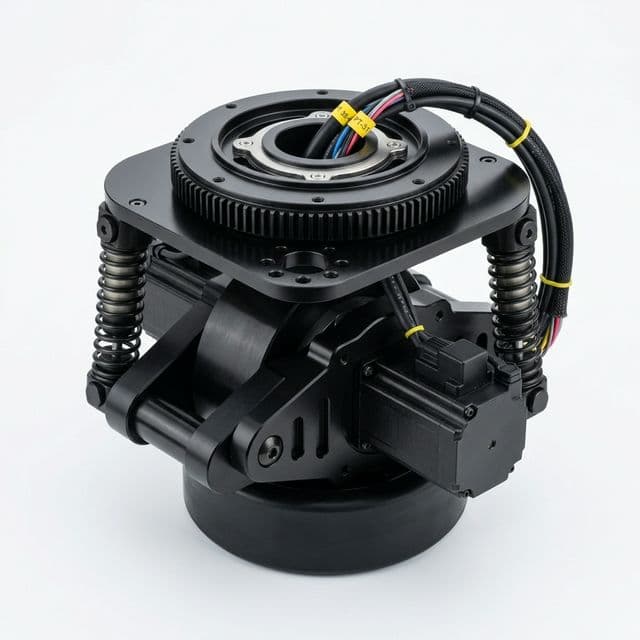
| Compact integrated AGV drive unit | Indoor AMR <=1.5 t, moderate duty, controlled thermal profile | Planning heuristic band (non-normative): 40-90 Nm peak per drive wheel | Lower integration effort, faster commissioning | Can become thermally constrained when duty and ambient are both high; verify against OEM derating curves before lock-in. Torque-band values are screening heuristics, not cross-vendor guarantees. | S1, S7 |
| Steer-drive unit module | Tight aisle maneuvering with frequent orientation changes | Planning heuristic band (non-normative): 70-160 Nm peak per drive wheel | Medium (mechanical alignment + controls tuning) | Control quality depends strongly on steering feedback quality and timing consistency across the motion stack. Treat torque bands as initial filters until validated with OEM curves. | S1, S6, S9 |
| Sealed heavy-payload unit | Dusty/washdown layouts and payload cycles with high traction demand | Planning heuristic band (non-normative): 140-280 Nm peak per drive wheel | Medium-high (cooling, enclosure, service planning) | IP requirement interpretation must match the real environment standard context; overspecification can increase thermal and service burden. Confirm torque capability using supplier thermal derating data. | S4, S5 |
| Split motor + gearbox + controller stack | Custom platforms with non-standard geometry or compliance constraints | Custom, often >220 Nm peak | High engineering effort, high flexibility | Longer validation and configuration-management cycle; typically justified only when standard modules cannot satisfy duty, safety or environment boundaries. | S2, S3, S6, S7 |
| Decision dimension | Fast path | Conservative path | Failure mode if wrong | Evidence |
|---|---|---|---|---|
| Fast commissioning vs thermal margin | Choose compact integrated units for faster mechanical/electrical integration and lower upfront engineering load. | Choose heavy-payload or split architecture when duty, ambient, and ingress jointly pressure continuous torque. | Thermal derating can collapse usable torque in production duty, forcing late redesign and supplier requalification. | S1, S7 |
| Interoperability vs ultra-fast motion timing | Keep mainstream plant interoperability priorities and use RT/TSN free-running where time demand is moderate. | Budget IRT/TSN clock-synchronous or vendor-specific architecture when loop timing sits in sub-5 ms or sub-250 us zones. | Network and controller jitter becomes the hidden root cause of slip, oscillation, and throughput instability. | S9, S12 |
| Lower bus complexity vs CANopen scalability | Retain existing CANopen stack for moderate dynamics and limited node/update-rate pressure. | Escalate to tighter timing architecture or CANopen FD migration if high dynamics, larger node counts, or long cable runs erode timing margin. | Generic bitrate assumptions mask CANopen-specific bus/stub limits, causing intermittent control-quality failures during scale-up. | S10, S16, S17 |
| Short-term legacy compatibility vs VDA 5050 major-version alignment | Keep older fleet-interface versions to avoid immediate integration refactoring. | Adopt and version-lock VDA 5050 v3.0 baseline for new mixed-fleet programs, then validate master-control interoperability before scale rollout. | Late interface migration pressure can break orchestration behaviors (zones/path sharing/actions) during commissioning and inflate retrofit cost. | S43, S44, S45 |
| Accelerated go-to-market vs legal date certainty | Plan against a single full-application date only and postpone staged-milestone integration. | Map corrected staged dates (including 20 Oct 2026 and 20 Jan 2027 gates) into design freeze, conformity assessment, and declaration workflows from project start. | Programs can pass internal engineering gates but miss external conformity readiness windows near launch. | S3, S13, S22 |
| Single-region compliance pack vs cross-region rollout | Use one regional standards baseline to reduce upfront documentation effort. | Build a dual-track evidence matrix early when deployments may span EU and North America. | Late customer acceptance failures force redesign of validation plans and delay launch windows. | S1, S3, S13, S19, S20, S21 |
| Reusing one driverless baseline vs splitting mixed-mode requirements | Assume autonomous baseline still applies when trailers or remote-control fallback are introduced later. | Run mode-by-mode scope gating and split requirement streams when towing, remote-control, or elevated-operator modes appear. | Late scope-mismatch discoveries can invalidate validation evidence and force rework after supplier lock. | S23 |
| Assuming OSHA migration is finalized vs maintaining rule-history checkpoints | Adopt newer ANSI references as if codified and skip explicit legal-status verification in each project gate. | Use codified 1910.178 baseline plus proposed-rule/rule-history checks before declaration, contract, and acceptance sign-off. | North America legal-readiness artifacts can fail external review even when engineering performance targets are met. | S37, S38, S42 |
| Treating functional-safety language as complete drive compliance vs layered safety evidence | Use STO/PL references as the primary compliance narrative and defer electrical/EMC detail to late verification. | Maintain layered evidence from day one: functional safety + electrical/thermal safety + EMC applicability and classification checks. | Programs pass concept reviews but fail late test/certification gates when electrical or EMC boundaries are challenged. | S7, S39, S40 |
| Fast network feature rollout vs cybersecurity release readiness | Prioritize telemetry and remote-service features first, then add cybersecurity documentation near launch. | Plan connected-product cybersecurity obligations as first-class release gates with architecture, SBOM, and vulnerability-process ownership defined early. | Late security-governance gaps can block market access or force emergency redesign near production release. | S28, S35, S36 |
| General AMR baseline reuse vs hazardous-location deployment readiness | Reuse non-ATEX architecture and documentation assumptions across all sites to reduce early engineering effort. | Trigger an ATEX-specific requirement stream as soon as potentially explosive-atmosphere use is plausible. | Hazardous-location compliance failures appear after supplier and platform decisions are already costly to reverse. | S29, S30 |
| Faster battery supplier onboarding vs due-diligence readiness | Prioritize commercial onboarding speed and postpone full raw-material traceability/evidence collection. | Treat due-diligence evidence as part of early supplier qualification and align gates with amended legal dates. | Late compliance-package gaps can block release or force urgent supplier requalification near launch. | S32 |
| Date-only cybersecurity compliance vs technical OT control execution | Track legal milestones and assume product teams can retrofit operational controls later. | Pair legal milestones with OT security-program evidence (hardening, patch/vulnerability workflows, and long-life asset governance). | Release passes timeline checks but fails operational security readiness in commissioning and service phases. | S28, S35, S36 |
| Rapid battery supplier onboarding vs transport-evidence readiness | Advance sourcing and deployment planning before verifying UN 38.3 test-summary artifact availability. | Gate RFQ and supplier qualification on transport-evidence completeness, including test-summary availability checks. | Spare-part and service logistics stall near launch because compliant battery shipment evidence is missing. | S41 |
The alias keywords agv drive units, agv traction drive unit, agv modular drive unit, agv differential drive unit, agv omnidirectional drive unit, and agv integrated drive unit are intentionally served on the same canonical URL to avoid split ranking signals and duplicate decision content.
Canonical anchor (agv drive units):/learn/agv-drive-unit#alias-agv-drive-units
Canonical anchor (agv traction drive unit):/learn/agv-drive-unit#alias-agv-traction-drive-unit
Canonical anchor (agv modular drive unit):/learn/agv-drive-unit#alias-agv-modular-drive-unit
Existing alias anchor (still supported):/learn/agv-drive-unit#alias-agv-differential-drive-unit
Existing alias anchor:/learn/agv-drive-unit#alias-agv-omnidirectional-drive-unit
Legacy anchor kept for existing links:#alias-agv-integrated-drive-unit
This preserves one URL where tool output and report evidence stay synchronized for engineering and procurement teams.
These blocks convert uncertainty into concrete mitigation steps so teams can continue execution without hiding evidence gaps.
| Risk | Impact | Likelihood | Mitigation |
|---|---|---|---|
| Undersized peak torque in ramp transitions | High | Medium | Add peak-torque reserve, validate accel profile on loaded ramps, and log wheel-slip events before release. |
| Ingress level selected without washdown reality check | Medium | Medium | Map cleaning SOP and contaminant profile first, then pick IP tier and seal strategy to avoid over/under specification. |
| Using ISO 3691-4 in out-of-scope environments | High | Low | If operation touches public roads or explosive atmospheres, run a dedicated standards applicability review before reusing this baseline and switch to ATEX mapping where required. |
| Assuming ISO 3691-4 covers power-source design requirements | High | Medium | Treat traction battery/power-source requirements as a separate standards stream; do not infer coverage from ISO 3691-4 scope alone. |
| Duty-cycle thermal drift reduces usable torque | High | High | Track winding or housing temperature trend, lower continuous limit, and schedule cooling or derating guardrails. |
| Assuming emergency stop or STO equals full braking/isolation behavior | High | Medium | Separate stop-category design, braking strategy, and electrical-isolation strategy in the safety concept rather than collapsing them into one claim. |
| Communication timing budget not validated for selected bus | High | Medium | Measure real cycle-time/jitter under expected network load, and check bus-length/stub assumptions against selected protocol design guides before supplier lock. |
| Fleet interface version is not locked across mixed-vendor robots | High | Medium | Treat VDA 5050 version governance as a formal gate: freeze the major version baseline and run master-control interoperability checks before FAT/SAT. |
| Using pre-corrigendum machinery-regulation dates in project gates | High | Medium | Use corrigendum-aligned milestones (including 20 Oct 2026 and 20 Jan 2027 gates), freeze one CELEX reference set, and recheck template dates before release. |
| Treating standard references as permanently stable | Medium | Medium | Track lifecycle state (for example DIS progression and publication triggers) and schedule formal risk-file refresh before long-term framework agreements. |
| Cross-region acceptance planned with single-region standards package | High | Medium | Create an evidence matrix that maps EU and North America standards from project start; validate each release gate against region-specific requirements. |
| North America compliance pack assumes proposed ANSI updates are already codified | High | Medium | Use a legal-status checkpoint that separates current codified OSHA references from proposed update paths, and keep 1910.178 rule-history checks active before declaration, contract, and acceptance sign-off. |
| Mixed-mode platform assumes driverless baseline still covers tugger or remote-control variants | High | Medium | Run scope gating for each operating mode (autonomous, towing, remote-control fallback, elevated operator) and split requirement streams when exclusions apply. |
| No functional safety path in architecture baseline | High | Medium | Define safety architecture early (STO/SLS and diagnostic coverage) and freeze verification plan before pilot rollout. |
| Connected steering-drive/control product reaches release gate without cybersecurity evidence plan | High | Medium | Map CRA staged obligations into release governance early (design controls, vulnerability process, and documentation ownership). |
| Hazardous-location projects reuse non-ATEX assumptions from general AMR templates | High | Medium | Create an ATEX-specific requirement matrix and verify harmonised-standard applicability before supplier lock. |
| Battery/power-source requirements remain implicit in steering-drive sizing | High | Medium | Track battery safety as a dedicated stream (for example IEC 62619 baseline for industrial motive use) in parallel with traction sizing. |
| Battery due-diligence planning still uses superseded 2025 legal date | High | Medium | Re-baseline battery supply-chain compliance gates on Regulation (EU) 2025/1561 dates and verify supplier evidence timing before RFQ lock. |
| Battery supplier lacks UN 38.3 test-summary artifacts at shipment gate | High | Medium | Add test-summary availability checks to RFQ and supplier approval criteria, and block release if required artifacts are missing for applicable battery builds. |
| Battery test-summary packets are present but missing mandatory data fields | High | Medium | Validate full test-summary field completeness and related marking evidence during RFQ sampling, not just the existence of a summary document. |
| UN 38.3 evidence references are not revision/amendment traceable | Medium | Medium | Require suppliers to declare manual revision/amendment baseline (Rev.8/Amend.1) alongside test-summary packets and treat unmatched baselines as pending evidence. |
| Safety-validation artifacts remain static while ISO 13849-2 lifecycle moves | Medium | Medium | Version-control safety-validation templates and perform lifecycle checks before certification and customer acceptance gates. |
| Connected OT controls rely on legal timeline tracking without technical control evidence | High | Medium | Use OT control baselines (for example NIST SP 800-82r3 and IEC 62443-2-1) to define measurable hardening, patch, and vulnerability workflows. |
| Drive compliance claim omits electrical-hazard and EMC applicability boundaries | High | Medium | Run layered verification (functional safety + electrical/thermal safety + EMC applicability), and confirm traction/radio boundary handling before final release claims. |
| Alias query interpreted as component lookup only | Medium | Low | Keep canonical URL with alias anchor and explicit FAQ so procurement and engineering teams land on same decision workflow. |
| Topic | Known | Unknown | Current treatment | Next step | Status |
|---|---|---|---|---|---|
| Wheel-floor coefficient for your exact tire compound | The force model is physically valid and directionally useful. | Exact coefficient under your contamination and wear state. | Uses conservative floor-based defaults and elevated reserve. | Capture measured traction/drag during pilot runs and recalibrate c. | monitor |
| Thermal derating curve of selected AGV drive unit | Duty and ambient thermal stress clearly affect output. | Vendor-specific torque-vs-temperature curve in your enclosure. | Applies reserve-factor heuristic and boundary alerts. | Request OEM thermal map and validate with loaded endurance run. | pending |
| Cross-vendor reserve-factor benchmark | Reserve factor strongly changes pass/fail decisions in early sizing. | No reliable public, cross-vendor dataset was found for a universal reserve percentage by AMR duty class. | Keeps reserve as explicit internal policy (15%-40%) and avoids presenting it as a normative threshold. | Build internal benchmark from pilot fleets and normalize by duty, temperature and ingress profile. | pending |
| Field failure rate by IP class in AMR duty | Ingress classes exist and are test-based. | Publicly comparable lifecycle failure rates by IP class for AMR AGV drive units remain limited. | Treats ingress choice as a risk tradeoff, not as a direct reliability guarantee. | Collect supplier RMA + fleet telemetry by environment profile before setting default IP policy. | pending |
| CANopen FD interoperability evidence in multi-vendor AMR fleets | CiA positions CANopen FD with higher data-phase capability than classic CANopen. | Public, cross-vendor AMR benchmarks for CANopen FD conformance, diagnostics tooling maturity, and long-run maintenance burden remain limited. | Treats CANopen FD as a migration option with explicit ecosystem-support checks, not as an automatic drop-in upgrade. | Run vendor matrix verification (controller + drive + diagnostics toolchain) before committing CANopen FD architecture at scale. | pending |
| VDA 5050 v3.0 migration effort across mixed-vendor installed base | VDA recommends v3.0.0 as current baseline and states older versions are no longer recommended/developed further. | Cross-vendor migration effort (gateway effort, action-model mapping, and test burden) for existing v2.x fleets is still case-specific; 暂无可靠公开数据 for a universal downtime benchmark. | Treats interface-version lock as an early architecture gate and separates fleet-interface decisions from vehicle fieldbus sizing. | Run a pilot conformance matrix (master control + each robot vendor) and record migration impact before plant-wide rollout commitment. | pending |
| Safety-function target level (PL/SIL) | ISO 13849-1 and IEC 61800-5-2 define principles/functions relevant to the architecture, and ISO/DIS 13849-2 is active on the validation side. | Project-specific claim after architecture and diagnostics are frozen. | Flags missing safety path as high-risk. | Run functional-safety concept review and version-lock validation artifacts before procurement lock. | pending |
| Regulatory transition timing | Primary timeline and first corrigendum date replacements are publicly available. | Whether your project templates and legal workflow are consistently locked to the same CELEX/corrigendum reference set. | Uses corrigendum-backed milestones and marks legal-source-version lock as a governance requirement. | Run legal-document control check before declaration freeze; block release if date fields are not traceable to one approved legal reference pack. | monitor |
| North America codified-vs-consensus standard status for AGV acceptance | Current OSHA codified text (29 CFR 1910.178) and the 2022 proposed update path are both publicly available. | Whether/when the proposed update path will be finalized in a way that changes your mandatory baseline during this project window. | Uses a dual-layer baseline (current codified text + proposed update tracking) and avoids treating proposal language as already mandatory. | Run legal-status checkpoint at each major gate, review the 1910.178 rule-history tracker, and keep a dated compliance memo in the project file. | monitor |
| Mixed-mode applicability when autonomous AGV scope expands to tugger or remote-control operation | ISO/DIS 3691-4 provides clear exclusions for trailer towing, remotely-controlled trucks, and elevated-operator-position trucks. | Which excluded-mode requirement streams and evidence artifacts your project will need once those modes are introduced. | Treats this as an explicit scope-gating decision before supplier lock and acceptance planning. | Run mode-by-mode applicability mapping at concept freeze and open separate requirement matrices for excluded operating modes. | monitor |
| PROFINET conformance-class alignment with delivered devices | PNO guidance differentiates CC-A/B/C/D and indicates CC-A is not preferred when higher classes are feasible. | Whether selected supplier devices and engineering tools enforce the claimed class behavior under your real cycle/load profile. | Treats CC declaration as initial filter only and requires commissioning evidence for timing-sensitive cells. | Capture class claim + measured update/jitter + diagnostics behavior per device before final architecture freeze. | pending |
| Drive EMC/electrical standard applicability classification | IEC 61800-5-1 and IEC 61800-3 publish explicit scope and exclusion boundaries (including traction/electric-vehicle contexts). | Which exact product classification path your certifier will apply to each AGV drive subsystem (and whether extra radio/sector requirements are triggered). | Treats EMC/electrical safety as a separate evidence stream rather than assuming functional-safety references are sufficient. | Lock classification decision and standards list with certifier/safety assessor before supplier nomination. | pending |
| Cross-standard equivalence for ingress terminology | IEC 60529 and ISO 20653 both define IP-code frameworks with different product-context assumptions. | A universal cross-sector mapping for every AMR cleaning profile is not publicly standardized. | Keeps IP69K wording as context-bound claim and avoids treating it as universal shorthand. | Document test standard + cleaning profile in each RFQ and require supplier test-report traceability. | monitor |
| ATEX harmonised-standard version drift for industrial-truck use | Directive 2014/34/EU establishes legal scope and the Commission publishes harmonised-standard references via Implementing Decision workflow. | Which exact harmonised-standard edition/transition window each supplier uses in your planned release window. | Uses current consolidated publication reference and flags version governance as a release-gate check. | At design freeze, lock one CELEX publication baseline and verify supplier declarations against the same standards-reference set. | monitor |
| CRA readiness maturity for steering-drive/control vendor stack | CRA staged applicability dates are public and include industrial control system contexts. | Real supplier readiness for SBOM, coordinated vulnerability handling, and secure-update governance in your exact program. | Treats cybersecurity as a release-gate stream, not a post-commissioning add-on. | Add CRA checklist evidence requests to RFQ and gate supplier approval on measurable security process artifacts. | pending |
| Battery due-diligence readiness across shortlisted suppliers | Regulation (EU) 2025/1561 postpones battery due-diligence obligations to 18 Aug 2027 and updates the guideline milestone. | Whether shortlisted suppliers can provide traceability and due-diligence evidence on your project timeline. | Marks due-diligence evidence as a supplier-gate item, not a post-award paperwork task. | Add due-diligence evidence requirements to RFQ now and run a date-aligned supplier readiness check before design freeze. | pending |
| UN 38.3 test-summary completeness for service and spare batteries | 49 CFR 173.185(a)(3) sets test-summary availability requirements for applicable lithium cells/batteries in transport workflows. | Whether each shortlisted supplier can provide complete test-summary artifacts and required data fields for every planned battery variant. | Flags this as a release and logistics gate, not a post-award document request. | Collect sample test-summary packets during RFQ, verify mandatory data-field completeness, and reject suppliers that cannot provide traceable artifact sets (including marking-related evidence where applicable). | pending |
| UN 38.3 manual revision alignment in supplier evidence packets | UNECE publishes Rev.8 and Amend.1 separately and explicitly notes subsection 38.3 amendments. | Whether each supplier test package is mapped to the same manual revision/amendment baseline used by your compliance reviewer; in many RFQs this linkage remains 待确认. | Adds revision-governance requirement in method/timeline/risk sections and treats unmatched baseline references as unresolved evidence. | Require revision/amendment traceability fields in RFQ battery templates and block release when baseline mapping is absent or inconsistent. | pending |
| Impact of ISO 24134 replacement on current steering-control assumptions | ISO 24134 is confirmed as current but marked to be revised, with ISO/CD 24134 listed as replacement track. | What requirement deltas in the replacement track will affect your control architecture and validation plans. | Treats the baseline as usable but lifecycle-sensitive for long-cycle programs. | Track ISO/CD 24134 progression and run a standards-delta review before final acceptance testing. | monitor |
| Operational cybersecurity control maturity (beyond legal-date tracking) | NIST SP 800-82r3 and IEC 62443-2-1 provide implementation-level OT security guidance for long-lived systems. | Whether your supplier stack and internal operations can execute patch, vulnerability-response, and hardening controls at required service levels. | Treats cybersecurity as a release-gate stream with explicit implementation evidence requests. | Run OT control readiness assessment (asset inventory, patch SLA, vulnerability workflow) before productization lock. | pending |
| Scenario | Assumptions | Process | Outcome |
|---|---|---|---|
| A. 1.2 t indoor pallet AMR, smooth floor | 1.6 m/s, 8% grade, duty 70%, IP65, EtherCAT | Tool estimates moderate per-wheel peak torque and medium reserve. Thermal risk remains manageable with encoder feedback. | Integrated AGV drive unit is usually viable, with commissioning focus on ramp tuning, slip checks, and timing-budget confirmation. |
| B. 2.8 t heavy transfer AMR, jointed concrete | 2.1 m/s, 12% grade, duty 90%, IP67, PROFINET | Peak and continuous torque rise simultaneously; reserve requirement expands due to shock and thermal pressure. | Sealed heavy-payload unit or split architecture is safer than compact integrated modules; bus-cycle governance becomes a release-critical check. |
| C. Cleanroom AMR with frequent sanitation | Low shock, frequent sanitation, IP target under review | Ingress terminology is mapped to the applicable standard context before selecting hardware. | Steer-drive or sealed integrated options remain valid; thermal and maintenance access should drive final selection. |
| D. Retrofit platform with legacy CANopen stack | Existing controller constraints, no encoder redundancy, high update demand | Protocol lock-in and sensing gaps lower confidence despite acceptable static torque estimates. | Result should be treated as review/risk until control-loop telemetry and safety path are upgraded. |
| E. Same steering-drive platform released in EU and North America | Shared hardware baseline, dual-region deployment target, mixed customer acceptance criteria | Tool output is paired with jurisdiction mapping (EU regulation timeline + North America B56.5/R15.08 package) before supplier commitment. | Teams avoid late-stage acceptance rework by aligning evidence artifacts to both regions at design-freeze time. |
| F. Connected AMR with lithium service-battery swaps in U.S. operation | Remote diagnostics enabled, replacement battery logistics in scope, mixed supplier readiness | Design team passes torque/protocol checks, then verifies codified U.S. standard status and UN 38.3 test-summary artifacts before release. | Program avoids late shipment and acceptance delays by treating legal-status and battery-transport evidence as first-class gate criteria. |
| G. Tugger-style deployment adds trailer towing and remote-control fallback | Core platform started as driverless AMR baseline, later expanded for trailer moves and mixed operation modes | Team runs scope gating before supplier lock, checks ISO/DIS 3691-4 exclusions, and opens separate requirement streams for excluded modes. | Program avoids late scope-mismatch failures by splitting evidence and validation plans instead of forcing one baseline across all operation modes. |
| H. Warehouse upgrades to mixed-vendor AMR fleet under one master controller | Existing robots on legacy interface, new robots target higher autonomy features, single WCS/MCS rollout deadline | Team treats fieldbus timing and fleet-interface governance as separate streams, locks VDA 5050 v3.0 baseline, and runs integration checks for zones/path-sharing behavior before FAT. | Program reduces late orchestration failures and avoids last-minute version-migration rework during plant commissioning. |
Questions are grouped for intent clarity: scope alignment, tool operation, and decision-risk execution.
If your result is fit/review, move to shortlist validation with real telemetry. If your result is risk/inconclusive, close data gaps first to avoid high-cost rework later.

Steer-drive modules, wheel-motor assemblies, and matching control components for AMR and AGV programs.