
Loading content...
Loading content...
Loading content...

STO-enabled VFD drives, safety relays, and safety-rated modules for functional safety architectures.
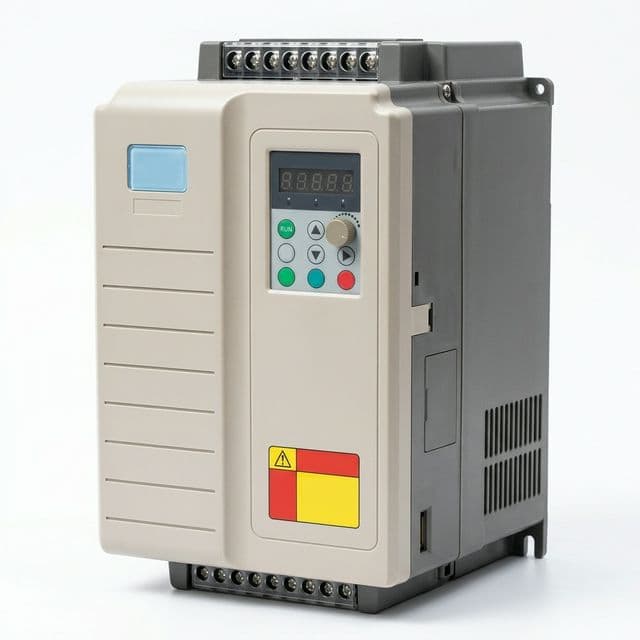
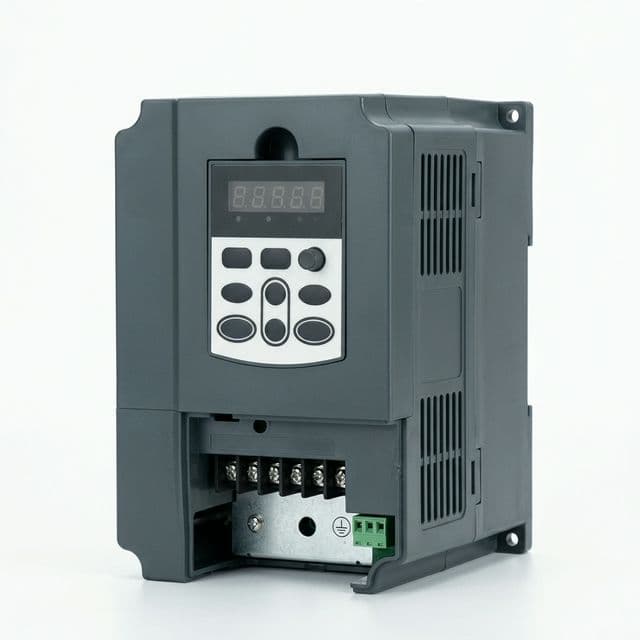
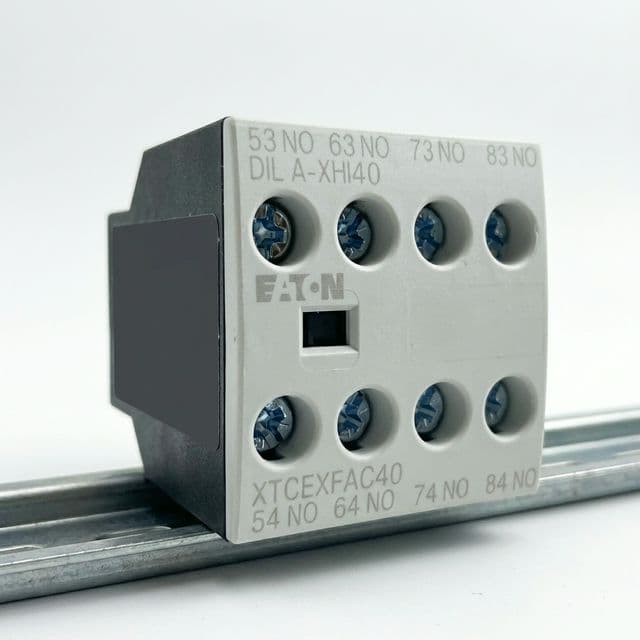
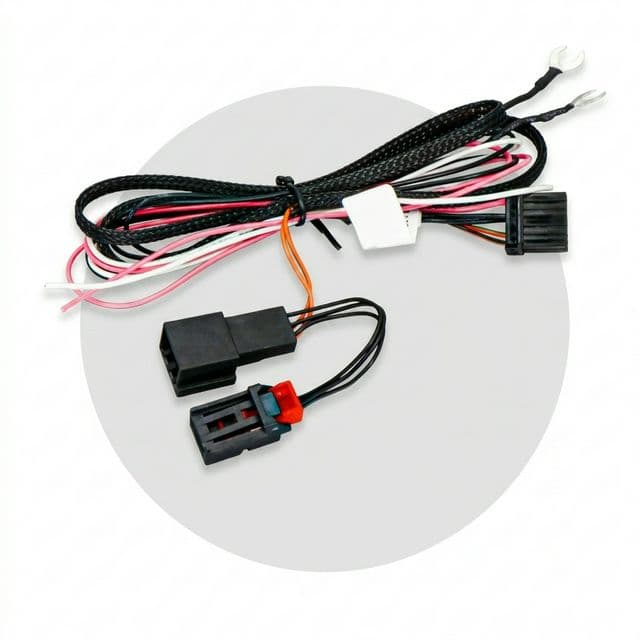
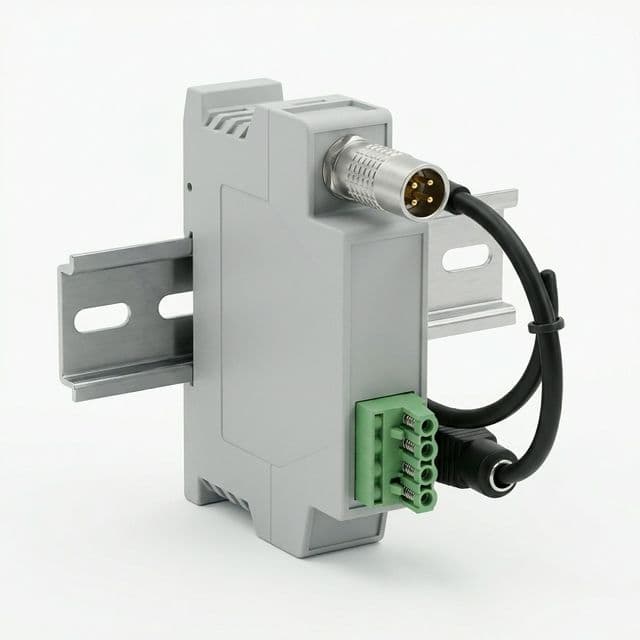
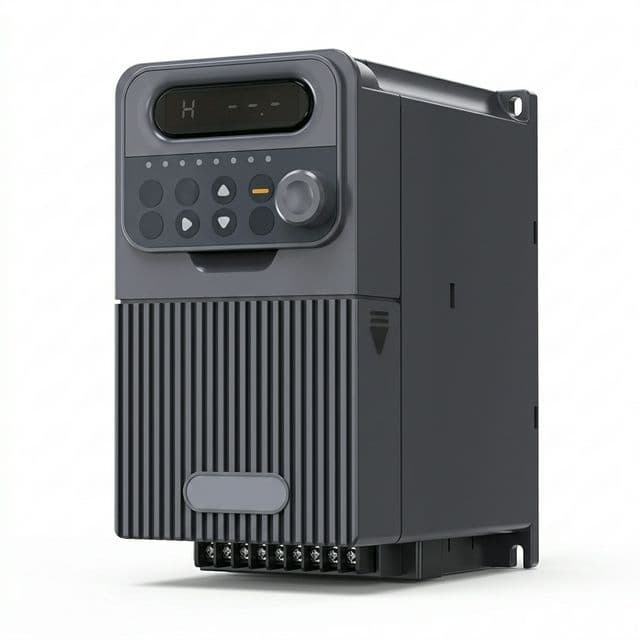
Run a practical Safe Torque Off (STO) / Safe Stop (SS1, SS2) triage first, then review evidence, boundaries, and risk tradeoffs in one place. This page explicitly resolves alias intent for ac drive sto without creating a duplicate route.
Input safety assumptions, get status + explanation, then act.
Sources, method, comparison, risk matrix, and FAQ in-page.
Last updated evidence: April 27, 2026
High score does not equal legal sign-off. Always validate stop behavior, restart sequence, and proof-test records before release.
Use these related pages for regulatory timing, commissioning diagnostics, and control-loop tuning context that commonly affects STO design decisions.
Fill required assumptions, run analysis, and get status-specific next steps.
Empty state
Submit inputs to generate a readiness score, interpretation, and next-step actions.
If your query is specifically “ac drive sto”, keep alias intent checked so result text and action plan stay aligned.
Both Rockwell and ABB manuals state STO disables torque but does not remove hazardous electrical energy for maintenance activities.
Documented examples include suspended/tensioned loads and up to 180° shaft motion in specific failure cases.
ISO 13849-1:2023 is explicit that required PLr and safety-function selection are application-specific outputs of risk assessment.
IEC 61800-5-2 removes proof-test language at PDS(SR) level, while vendor manuals still require proof-test planning for connected safety chains.
Controlling both STO channels from one safety circuit can invalidate intended SIL3 assumptions in published vendor guidance.
Regulation (EU) 2023/1230 applies from 20 January 2027, with transitional logic for products placed before that date.
Keeping tool and evidence together prevents conflicting interpretations between duplicate pages and preserves audit traceability.
Use this edition as your base reference when claiming STO/SS1/SS2 behavior.
Treat 2027 projects as change-sensitive and check amendment status before freezing compliance claims.
The standard does not define which safety function or PLr your application must use.
Vendor manuals explicitly document residual-rotation scenarios, so STO cannot be treated as “zero movement” by default.
Directive 2006/42/EC transition and repeal timing should be reflected in release checklists.
Intervals are user/application-defined; do not present 6/12/24 months as normative requirements.
Published April 27, 2026 · Evidence refreshed April 27, 2026
Mobile hint: data tables in this section support horizontal swipe.
| Gap | Risk if ignored | Enhancement fix | Evidence |
|---|---|---|---|
| Electrical-safety boundary was implicit and easy to miss. | Teams may wrongly treat STO as lockout-equivalent for electrical work. | Added explicit “STO is not electrical isolation” conclusion, FAQ, and risk-row mitigation path. | S3, S4 |
| Residual-motion section lacked concrete published counterexamples. | Readers could underestimate post-STO movement in suspended-load or semiconductor-fault scenarios. | Added 180-degree counterexample and external-force caveat into key numbers, conclusions, and boundary ledger. | S3, S4 |
| Proof-test guidance implied fixed month bands. | Could be mistaken as normative requirement instead of application-defined lifecycle policy. | Replaced fixed-value framing with explicit “no universal default” rule and marked tool thresholds as heuristics only. | S1, S3, S4 |
| Dual-channel STO architecture condition was not explicit. | Single-circuit wiring to both STO channels may be deployed while assuming SIL3 integrity. | Added wiring-independence boundary and mitigation row in risk register and FAQ. | S4 |
| Regulatory timeline lacked corrigendum-aware wording. | EU release plans could misalign transition documents and conformity statements. | Added Article 51/52/54 timing references and Commission transition summary with date-specific notes. | S5, S6 |
| Tool score thresholds (time/diagnostics/proof-test) looked normative. | Users might over-trust heuristic thresholds as standard limits. | Added explicit heuristics disclaimer in tool assumptions and data-availability ledger. | S2 |
| New fact | Time marker | Decision impact | Evidence |
|---|---|---|---|
| IEC 61800-5-2 edition metadata shows Publication date 2016-04-18, Stability date 2026, and AMD1 forecast publication date 2027-01-02. | 2016-04-18 / 2026 / 2027-01-02 | Treat long-cycle projects as update-sensitive and re-check amendment status before compliance freeze. | S1 |
| ISO 13849-1:2023 states it does not specify which safety function or required PLr shall be used for particular applications. | Edition 4 (2023-04) | PLr cannot be auto-assigned from a template page; risk assessment remains mandatory. | S2 |
| Rockwell and ABB documents both state STO does not remove hazardous voltage / does not disconnect drive voltage. | 2014 manual + January 2026 manual | Never use STO status as electrical-work clearance condition; keep lockout isolation workflow. | S3, S4 |
| Vendor manuals document residual-rotation counterexamples (including up to 180-degree cases) and suspended-load caveats. | Published manuals (2014, 2026) | For vertical or tensioned loads, STO-only is a boundary case and often needs brake-integrated architecture. | S3, S4 |
| Consolidated EU text shows Regulation (EU) 2023/1230 application from 20 January 2027 and Directive 2006/42/EC repeal with same date. | Consolidated text accessed 2026-04-27 | Release templates should branch before/after 20 January 2027 and preserve transition evidence. | S5, S6 |
| Concept | Includes | Excludes | Action | Evidence |
|---|---|---|---|---|
| STO function outcome | Torque-producing power is disabled in the drive output stage. | Electrical isolation for maintenance and guaranteed immediate zero motion. | Keep lockout steps and residual-motion controls in the commissioning checklist. | S3, S4 |
| PLr and safety function selection | Methodology for SRP/CS design and validation workflow. | Predefined PLr/safety-function assignments for your machine application. | Treat PLr and selected stop function as risk-assessment outputs with traceable assumptions. | S2 |
| Proof-test policy | System-level recurring test planning with interval tied to application context. | Universal month defaults copied between machines without justification. | Document interval owner, closure criteria, and affected subsystem list. | S1, S3, S4 |
| Dual-channel STO integrity | Separate STO input routing and channel monitoring that preserves intended architecture integrity. | Single safety circuit controlling both STO channels when targeting SIL3 behavior. | Review wiring topology and diagnostic tests before final FAT/SAT sign-off. | S4 |
| EU conformity timing | Date-bound transition logic for declarations and technical-file references. | Assuming one static legislative baseline across pre/post-2027 releases. | Add 20 January 2027 transition gates to release and documentation workflows. | S5, S6 |
| Code | Source | Date | Usage |
|---|---|---|---|
| S1 | IEC Webstore: IEC 61800-5-2:2016 (Edition 2.0) | Accessed April 27, 2026 | Baseline scope for drive safety sub-functions; publication date, stability date, and lifecycle watchpoint (AMD1 under development). |
| S2 | ISO: ISO 13849-1:2023 Safety-related parts of control systems (Part 1) | Accessed April 27, 2026 | Edition/date baseline and explicit boundary: the standard does not specify safety functions or required PLr for specific applications. |
| S3 | Rockwell 750-UM005I-EN-P (January 2026): Integrated Safety Functions Option Module | Published January 2026 | accessed April 27, 2026 | Primary drive-manual evidence for STO limits: no electrical safety, hazardous voltage can remain, residual-rotation counterexample, stop-category mapping, and user-defined proof-test cadence. |
| S4 | ABB LT0313A02 Safety Manual: Safe Torque Off (STO) function for MicroFlex e150 drives | Effective March 18, 2014 | accessed April 27, 2026 | Independent vendor evidence for STO boundaries: no voltage disconnection, coast-stop behavior, vertical/suspended-load brake requirement, SIL3 wiring independence, and proof-test obligations. |
| S5 | data.europa.eu consolidated text: Regulation (EU) 2023/1230 (includes corrigenda) | Accessed April 27, 2026 | Legal text for Article 51/52/54 timing: Directive 2006/42/EC repeal date and Regulation application date (20 January 2027). |
| S6 | European Commission: Machinery sector legislation overview | Accessed April 27, 2026 | Regulatory transition summary including corrigendum note and mandatory application boundary on 20 January 2027. |
| S7 | Rockwell 2198-RM001E-EN-P (August 2022): Kinetix 5700 Safe Monitor Functions | Published August 2022 | accessed April 27, 2026 | Additional drive-level context for standstill/hold behavior and SS1/SS2/SOS implementation caveats. |
| S8 | ABB Technical Guide No.10: Functional Safety for Drives | Accessed April 27, 2026 | Cross-standard interpretation layer for IEC 61800-5-2 and practical stop-category usage in drive projects. |
| Option | Stop behavior | Strength | Limitation | Best fit | Evidence |
|---|---|---|---|---|---|
| STO only | Immediate torque removal, coast-to-stop. | Fast torque inhibition and robust unexpected-start prevention path. | No controlled deceleration and no electrical isolation; external forces/inertia can keep motion hazardous. | Low-inertia horizontal axes with validated residual-motion controls and separate electrical isolation procedures. | S3, S4, S8 |
| SS1 + STO | Controlled deceleration followed by torque-off. | Improves stopping predictability for inertia-dominant loads. | Requires configuration and validation of deceleration logic and timing windows. | Most production axes where uncontrolled coasting is unacceptable. | S3, S7, S8 |
| SS2 / SOS style hold strategy | Controlled stop with energy maintained for monitored standstill/holding. | Supports position retention and faster restart in selected architectures. | Higher implementation complexity and stronger diagnostic/monitoring dependencies. | High-throughput cells requiring controlled hold states. | S7, S8 |
| Contactor-only power removal | External power isolation path, often slower and wear-sensitive. | Can provide additional disconnection layer when required by risk model. | On its own, often lacks rich diagnostic behavior expected in modern drive safety workflows. | Supplementary layer, not default replacement for validated drive safety functions. | S3, S8 |
| Dimension | Status | Note |
|---|---|---|
| Stop-category semantics | Known | Publicly documented in drive manuals and standards pages. |
| STO electrical-isolation capability | Known (negative) | Published manuals explicitly state STO does not remove hazardous voltage or replace electrical isolation. |
| Universal stopping-distance benchmarks | Unknown | Pending verification: public vendor-neutral benchmark datasets are not consistently available. |
| Proof-test interval default month value | Unknown / no universal default | Public sources indicate interval selection is application-defined and may differ by subsystem; any fixed default claim should be treated as pending verification. |
| PLr target assignment | Conditional | Derived from machine risk assessment, not from keyword intent. |
| Tool thresholds as legal limits | Not supported | Threshold values in this page are triage heuristics and require project-specific validation before use in sign-off decisions. |
| Risk | Trigger | Impact | Mitigation | Evidence |
|---|---|---|---|---|
| Residual motion after STO trigger | High inertia or gravity load with STO-only strategy. | Unexpected stopping distance and hazardous post-trigger movement. | Adopt SS1+STO or add verified braking architecture with periodic validation. | S3, S4, S8 |
| Electrical shock exposure under false STO assumptions | Maintenance plan assumes STO means output voltage is absent and skips full isolation. | Personnel electrical hazard and major safety nonconformity. | Keep lockout/main-supply isolation as mandatory workflow separate from STO state. | S3, S4 |
| PL claim mismatch | Documentation states PLd/PLe but diagnostics and architecture evidence incomplete. | False confidence during validation and audit exposure later. | Bind PL statements to measured diagnostics, SISTEMA evidence, and revision control. | S2, S3 |
| Proof-test drift | No enforced proof-test calendar or undocumented maintenance updates. | Hidden degradation of safety function confidence over lifecycle. | Set interval owner, acceptance criteria, and closure records in commissioning checklist. | S1, S3, S4 |
| Single-circuit dual-channel wiring | Both STO channels are controlled by one safety circuit while expecting SIL3 behavior. | Architecture integrity claim is undermined and failure common-cause risk increases. | Route channels independently and re-validate channel diagnostics before release. | S4 |
| Restart interlock bypass | Reset and startup logic coupled incorrectly in PLC/drive project. | Unexpected restart hazard after safety trip recovery. | Separate reset acknowledgment from start command and validate restart sequence test cases. | S3, S4 |
| Regulatory timing mismatch | Safety documentation template ignores 2027 EU transition constraints. | Late rework in technical file and conformity route selection. | Add regulation-date gates to project release checklist and evidence pack. | S5, S6 |
Assumption: Horizontal axis, PLd target, proof test every 12 months, diagnostics >=85%.
Process: Configured SS1+STO, verified deceleration window and restart interlock in FAT.
Outcome: Tool status usually “on-track” or “needs review” with clear remaining documentation actions.
Assumption: High inertia, no holding brake, PLe target, sparse validation record.
Process: Boundary sample reveals high-risk classification and recommends architecture escalation.
Outcome: Result drives immediate action toward controlled stop and brake-integrated design review.
Assumption: Team can access motor area quickly but is under downtime pressure.
Process: Applied explicit rule: STO status is not electrical-isolation evidence; lockout/isolation remained mandatory before electrical work.
Outcome: Avoided unsafe restart and electrical exposure while keeping restart workflow traceable in maintenance logs.
Assumption: Need short downtime recovery while keeping controlled stop behavior.
Process: Compared SS1+STO and hold-capable strategy; prioritized deterministic stop first, then restart performance.
Outcome: Decision matrix supports phased adoption with explicit evidence and proof-test cadence.
Keep one canonical URL for both “safe torque off” and “ac drive sto”. Use the tool output to trigger the right next workflow, then keep evidence and risks in the same decision packet.
If your result is inconclusive, start with the minimal fallback path, then rerun this tool after collecting diagnostics and stop-test evidence.
