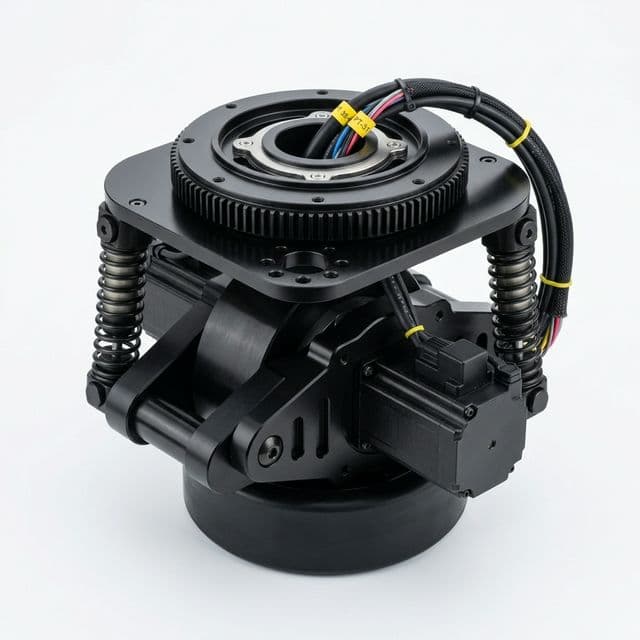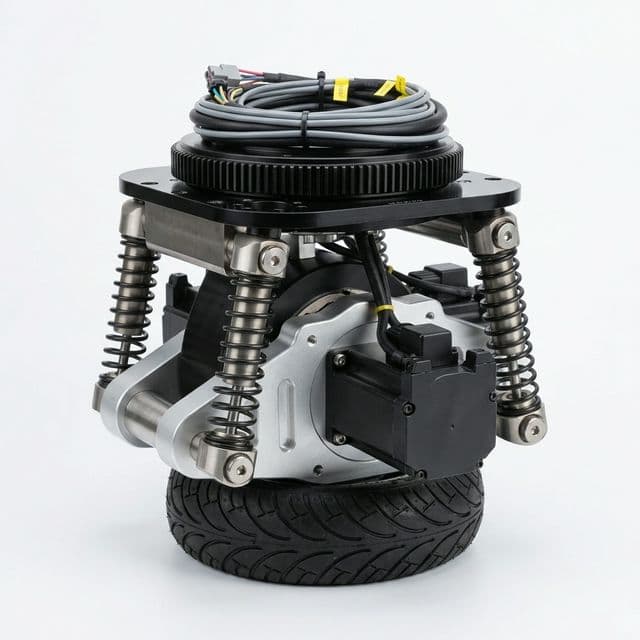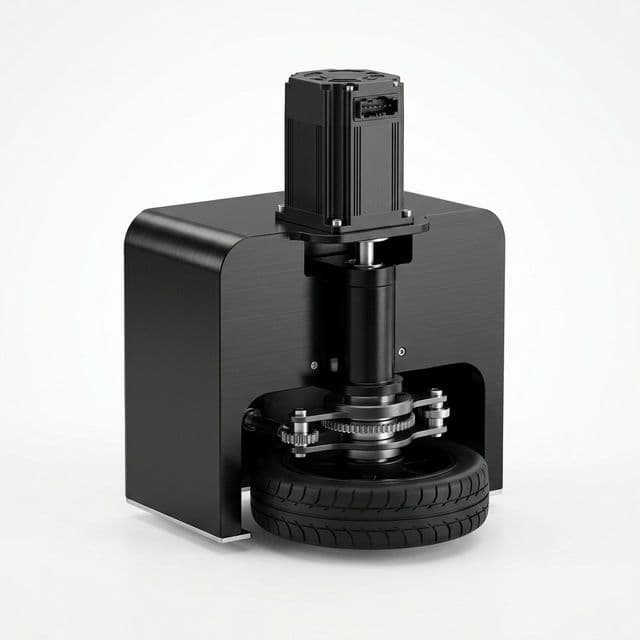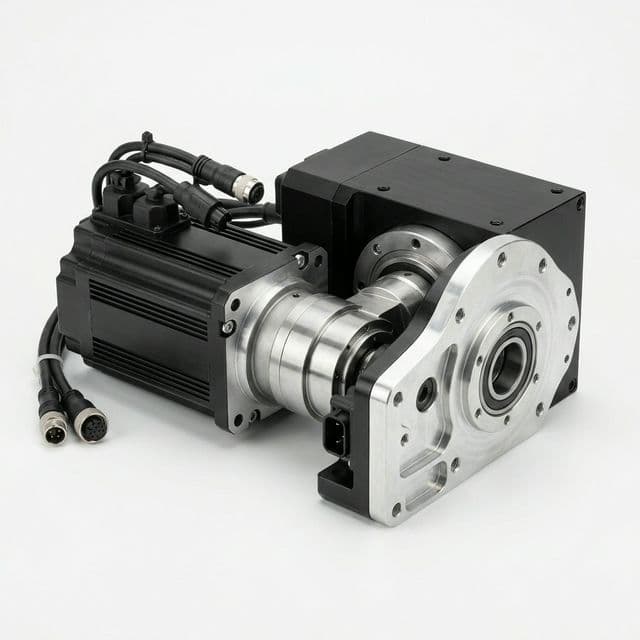
Best Propulsion Unit Manufacturer: Tool-First Shortlist + Evidence Report for AMR Programs
Run a manufacturer-fit check first, then validate the result with standards-linked evidence, risk boundaries, and a practical shortlist workflow. This page is intentionally scoped to AMR/AGV propulsion-unit sourcing.
Tool-first completion
Input -> score -> risk -> next action in one pass, with explicit fallback when evidence is incomplete.
Evidence-backed layer
ISO/IEC/ANSI/OSHA/EU/IFR references are mapped to conclusions, boundaries, and risk controls.
Ambiguity control
Prevents cross-domain SERP noise (marine/aerospace) from contaminating AMR supplier decisions.
Published · Evidence updated · Review cadence: quarterly or when standards/regulation evidence changes.
Tool Layer: Supplier Fit Input
Fill the boundaries below, run evaluation, and use the output as a shortlist starting point.
Higher value means more variant control, mechanical adaptation, and protocol tailoring.
Higher value means unit price pressure is stronger in supplier ranking.
Input bounds: vehicle mass 200-6000 kg, payload 0-3000 kg, grade 0-20%, annual demand 20-20000, lead-time 4-40 weeks.
Result Layer: Interpreted Output
Every output includes interpretation, risk notes, and a next action.
Result area is ready
Run the tool to generate a ranked shortlist, confidence score, and supplier-action checklist.
Report Summary: Core Conclusions
Decision-ready statements with evidence references and scope boundaries.
Safety and machinery frameworks are scope-specific (industrial trucks, regional legal regimes, application class). A defensible shortlist must start from project boundaries, then compare suppliers inside that boundary.
ISO 3691-4 excludes some environments and does not cover power-source requirements; therefore battery-platform and system-level safety evidence must be added separately instead of inferred from one standard label.
PROFINET requires certification for logo use, while CANopen conformance rules limit certificate validity to tested hardware/software versions and explicitly leave timing behavior outside coverage.
IFR reports strong logistics robot growth, but also discloses sample limitations. Teams should treat market numbers as direction signals and still demand dated RFQ evidence for each shortlisted supplier.
EU 2027 application timing plus EU warnings about voluntary certificates means award decisions need explicit conformity-readiness checks and versioned evidence packs before PO.
This tool intentionally routes such cases to high-risk/inconclusive and requires a minimum executable path: lock constraints, request dated evidence, run pilot acceptance, then rerank.
| Number | What it means | Why it matters | Evidence |
|---|---|---|---|
| 102,900 units (+14%) | Logistics service robots sold in 2024 | IFR reports transportation and logistics as the largest professional service robot segment with 14% year-over-year growth. | S6 |
| ~200,000 units (+9%) | Total professional service robots sold in 2024 | IFR states global professional service robot sales reached nearly 200,000 units with 9% growth. | S6 |
| 294 suppliers | IFR supplier sample base | IFR notes the market snapshot is based on 294 suppliers and is not projected to all participants. | S6 |
| 20 Jan 2027 | EU Machinery Regulation application date | The European Commission states Regulation (EU) 2023/1230 applies from this date; pre-date machinery remains under Directive 2006/42/EC. | S5 |
| April 1, 2025 | Recent OSHA interpretation update date | OSHA interpretation updates in 2025 reinforce operational controls, training, and compliance interpretation maintenance. | S4S12 |
| Apr 23, 2026 | ANSI/A3 R15.08-3 latest approval action | ANSI approved A3 R15.08-3-2026, signaling current U.S. mobile-robot safety framework updates buyers should track. | S10 |
| ISO status 90.92 | ISO 3691-4 lifecycle flag | ISO lists 3691-4 with status “to be revised,” so long-cycle programs should plan standards refresh checkpoints. | S1 |
| Stability date: 2026 | IEC 61800-5-2 update watchpoint | IEC metadata indicates stability date 2026 for edition 2.0, so teams should verify edition currency during sourcing gates. | S2 |
| 4 score states | Preferred / Watchlist / High-risk / Inconclusive | Tool output is intentionally decision-oriented rather than binary pass-fail. | Heuristic |
| 6 dimensions | Scoring dimensions | Technical, safety, delivery, customization, lifecycle support, and cost-fit are scored per profile. | Heuristic |
Deep Layer: Method and Evidence
How scoring works, where data comes from, and what remains unknown.
Use these related workflows to pressure-test shortlist decisions before supplier nomination.
| Dimension | Rule | Decision value |
|---|---|---|
| Technical fit (24%) | Payload + grade + architecture complexity vs profile technical envelope. | Prevents low-capability profiles from looking good on price-only comparisons. |
| Safety fit (20%) | Required safety target (PLd/SIL2, PLC, none) vs profile safety ceiling. | Ensures safety expectations are explicit in supplier scoring. |
| Delivery fit (16%) | Requested lead-time window vs typical lead-time band. | Captures schedule risk that often appears after RFQ selection. |
| Customization fit (14%) | Requested customization depth vs profile customization capacity. | Avoids selecting catalog-only models for high-variance mechanical programs. |
| Lifecycle support fit (14%) | Support expectation (global 24h/regional 48h/remote only) vs coverage model. | Reduces field-downtime risk in multi-site deployment. |
| Cost-fit (12%) | Budget pressure vs supplier cost position. | Cost remains visible but cannot dominate safety/integration constraints. |
| Framework | What it covers | What it does not cover | How to use in decision | Evidence |
|---|---|---|---|---|
| ISO 3691-4:2023 (driverless industrial trucks) | AMR/AGV system-level safety requirements for driverless industrial truck systems. | Public-road operation, underground use, military/public-use transport, explosive environments, and power-source requirements. | Use as AMR/AGV safety baseline, then add project-specific gaps before final award. | S1 |
| IEC 61800-5-2:2016 (PDS(SR)) | Safety-related drive-system function architecture and integration guidance. | Does not by itself certify full vehicle compliance across all jurisdictions or use contexts. | Use for drive safety function evidence; combine with vehicle-level and legal-framework checks. | S2 |
| ANSI/ITSDF B56.5-2024 + OSHA 1910.178 | U.S.-oriented AGV safety framework plus operational controls such as training and inspection. | Does not replace EU conformity requirements for CE-bound machinery. | Use for U.S. operation readiness and training governance in multi-region programs. | S3S4S12 |
| Regulation (EU) 2023/1230 | EU machinery legal framework applying from 20 January 2027 with defined transitional context. | Does not validate supplier readiness by default; voluntary certificates are not equivalent to conformity evidence. | Add explicit 2027 readiness gate in RFQ, audit plan, and supplier award checklist. | S5 |
| UL 3100 (automated mobile platforms) | Consensus safety framework for automated mobile platforms in North America context. | Not a universal legal substitute for EU or all regional machinery obligations. | Treat as additional boundary when customers or regions require it; confirm contract-level applicability. | S11 |
| Data area | Status | Disclosure note |
|---|---|---|
| Safety standards and regulatory timeline | Known | High confidence for ISO/IEC/ANSI/OSHA/EU references, dates, and transition milestones from primary pages. |
| Cross-vendor MTBF and field-failure rates | Unknown | No consistent public apples-to-apples reliability dataset across shortlisted propulsion suppliers. |
| Real lead-time by region and quarter | Partially known | Market direction is known, but award decisions still need dated supplier commitments in RFQ language. |
| Lifecycle service SLA outcomes | Partially known | Support models are usually published; measured response-performance data is often private. |
| Fieldbus timing behavior under system load | Unknown | CiA documents explicitly note timing is outside conformance testing; project-level validation remains required. |
| Notified-body and conformity route fit | Partially known | EU framework and timelines are public, but supplier-specific conformity route readiness must be confirmed project-by-project. |
| Exact total landed cost variance | Unknown | Depends on tariffs, qualification scope, spare strategy, and regional support contract terms. |
| ID | Source | Date | Tier | How used on page |
|---|---|---|---|---|
| S1 | ISO 3691-4:2023 — Driverless industrial trucks and their systems (safety requirements) | Published 2023-06 | status: to be revised | accessed May 20, 2026 | Primary | Defines AMR/AGV safety scope boundary and explicit exclusions (e.g., public roads and power-source requirement scope). |
| S2 | IEC 61800-5-2:2016 — Safety related power drive systems | Published 2016 | stability date 2026 | accessed May 20, 2026 | Primary | Anchors drive-level functional safety architecture and reinforces need to track standard lifecycle updates in long programs. |
| S3 | ANSI/ITSDF B56.5-2024 — Safety standard for driverless, automatic guided industrial vehicles | 2024 edition listing | accessed May 20, 2026 | Primary | Adds U.S. AGV safety framing for shortlist screening when operations include U.S. facilities. |
| S4 | OSHA 29 CFR 1910.178 — Powered industrial trucks | Federal regulation page | accessed May 20, 2026 | Primary | Used to support operation/training/inspection boundary checks in field deployment risk controls. |
| S5 | European Commission machinery page — Regulation (EU) 2023/1230 application timeline | Page states application from 20 January 2027 | accessed May 20, 2026 | Primary | Used for date-specific EU compliance transition and certificate-validity risk in supplier award decisions. |
| S6 | IFR press release — Service Robots See Global Growth Boom | Published 2025-09-17 (reporting 2024 data) | accessed May 20, 2026 | Primary | Provides logistics robot growth, total professional robot shipment trend, and supplier-sample caveats for market-context weighting. |
| S7 | PROFINET certification explained (PI) | PI page | accessed May 20, 2026 | Primary | Supports protocol-claim verification logic: certification requirement and test-lab process as shortlist evidence gate. |
| S8 | CANopen conformance test tool (CiA) | CiA service page | accessed May 20, 2026 | Primary | Supports CANopen claim boundary: conformance scope, explicit exclusions (timing and physical layer), and requirement for accredited lab testing. |
| S9 | CANopen conformance test rules and regulations (CiA) | Rules page | accessed May 20, 2026 | Primary | Used to require versioned evidence packs because certificate validity is limited to tested hardware/software versions. |
| S10 | ANSI approved ANS list (includes A3/R15.08 updates) | List updated 2026-05-18 | accessed May 20, 2026 | Primary | Adds date-specific U.S. mobile-robot safety framework update signal for governance and revision planning. |
| S11 | UL Standards Engagement in Robotics — UL 3100 automated mobile platforms | Published 2024-06-04 | accessed May 20, 2026 | Secondary | Used to frame North America battery-platform/system safety considerations that are outside single-standard assumptions. |
| S12 | OSHA 1910.178 standard interpretations index | Includes 2025 updates | accessed May 20, 2026 | Primary | Supports ongoing compliance-maintenance expectation: interpretation updates can affect implementation details after initial supplier selection. |
Deep Layer: Comparison and Risk
Supplier-model comparison, risk matrix, and scenario examples.
| Dimension | Integrated factory | Global Tier-1 | Regional integrator | Cost-ODM | Evidence |
|---|---|---|---|---|---|
| Integration ownership | Single team often owns motor/gearbox/drive/encoder/wheel stack matching. | Strong portfolio depth, but cross-product integration can span multiple internal units. | Flexible integration but often partner-dependent on upstream component vendors. | Buyer usually owns most interface resolution and validation burden. | S2S6 |
| Safety documentation maturity | Can be strong when safety roadmap is explicit and versioned per project. | Usually strongest template documentation and audit workflow discipline. | Varies significantly by team and project scope. | Frequently weakest area; requires strict buyer-side audit. | S1S2S3 |
| Protocol claim verifiability | Often provides focused stacks, but certificate/firmware mapping must be checked. | Best at producing formal certification artifacts at scale. | Can pass with strong local engineering, but evidence package depth varies. | Highest risk of claim-only evidence without formal versioned proofs. | S7S8S9 |
| Lead-time under customization | Moderate lead-time with better cross-domain coordination. | Can extend due to global change-control and commercial process layers. | Fast for local pilots, may saturate earlier at scale volumes. | Fast initial response can hide later revision-stability and compliance delays. | S6S10 |
| Regulatory transition readiness | Potentially strong if compliance ownership is integrated into product roadmap. | Typically stronger governance for multi-region transition documentation. | Can work well in bounded regions but may need external compliance partners. | Highest risk when award criteria rely on voluntary or non-equivalent certificates. | S5 |
| Best-fit project stage | NPI to scaled OEM deployment with repeatable engineering handoff. | Global multi-site rollouts with strict governance and audit needs. | Pilot lines and moderate-scale regional deployment. | Cost-driven pilot where compliance/safety envelope is low. | Heuristic |
| Supplier claim | Minimum evidence to request | Failure mode if skipped | Evidence |
|---|---|---|---|
| “PROFINET-ready” integration claim | PI test-lab certificate + conformance class details + tested firmware reference. | Logo/protocol claim exists, but project-specific integration behavior is unproven under your PLC/runtime stack. | S7 |
| “CANopen compliant” device claim | Accredited laboratory certificate tied to exact hardware and software versions. | Certificate exists for another revision; current device build may not carry the same validity. | S8S9 |
| “Safety-certified” supplier marketing statement | Function scope, standard edition/date, and boundary conditions mapped to your use case. | Generic statement is used as procurement shortcut; late-stage compliance gap appears at FAT/SAT. | S2S5S10 |
| Risk | Trigger | Impact | Mitigation | Evidence |
|---|---|---|---|---|
| False winner from price-only scoring | Budget pressure is high while safety/compliance requirements are undefined or under-weighted. | high | Lock safety/compliance gates first, then rerank suppliers with mandatory evidence pack checks. | S1S2S3 |
| Protocol claim accepted without certificate/version match | Supplier says fieldbus-compatible but certification, tested firmware, and lab evidence are not mapped to delivered revision. | high | Require protocol certificate IDs, version mapping, and FAT interoperability script before nomination. | S7S8S9 |
| Schedule slip after supplier nomination | Lead-time assumptions are copied from old RFQs without region/date refresh. | high | Require dated lead-time commitment with revision clauses in commercial terms. | S6 |
| Compliance mismatch in EU rollout | Supplier selection is finalized without a clear transition plan to Regulation (EU) 2023/1230 timing. | high | Add a compliance readiness checkpoint tied to the 20 January 2027 application timeline. | S5 |
| Commissioning burden underestimated | Component-level sourcing chosen while integration ownership and test responsibilities stay unclear. | medium | Map ownership for interface control documents, safety validation, and acceptance test scripts before PO. | S2S6 |
| Operational safety drift in field | Operator training and maintenance controls are not linked to actual powered-truck operation plans. | medium | Tie deployment handoff to documented operator competence and periodic evaluation process. | S4S12 |
| Scenario | Assumptions | Process | Outcome |
|---|---|---|---|
| High-mix warehouse AMR refresh | 1200 kg vehicle, 450 kg payload, EtherCAT, PLd/SIL2, annual 600 units, lead-time <=14 weeks. | Tool usually ranks integrated factory and global tier as top two, with regional integrator in watchlist. | Action: request two evidence packs + pilot FAT plan before final nomination. |
| Pilot-only low-budget retrofit | 600 kg class, no explicit PLd/SIL2, annual <100 units, budget pressure high. | Regional integrator or cost-ODM can appear acceptable if boundaries remain low. | Action: run boundary checklist to avoid hidden lifecycle and service gaps. |
| Multi-site EU rollout near 2027 transition | Global support needed, tight compliance timeline, cross-site documentation consistency required. | Global tier and integrated factory usually outrank others on governance and safety traceability. | Action: include EU machinery-regulation readiness checkpoint in supplier award criteria. |
| Heavy payload + steep grade + short schedule | Payload >1500 kg, grade >=12%, lead-time <=8 weeks, customization high. | Tool often flags high-risk because constraints conflict across capability, lead-time, and customization. | Action: split rollout in phases or relax one boundary before freezing supplier. |
| Gap found | Self-heal action |
|---|---|
| Several prior conclusions relied on vendor pages and weak cross-domain SERP snapshots. | Replaced core evidence set with standards bodies, regulators, and industry-association primary sources. |
| Standard citations lacked explicit “covers vs does not cover” boundaries. | Added standards applicability matrix with exclusions and decision-use guidance per source. |
| Protocol compatibility claims lacked certification-depth decision checks. | Added protocol certification gate table (required evidence, failure mode, and source mapping). |
| Time-sensitive compliance content was too coarse for sourcing milestones. | Added dated milestones (EU 2027 applicability, ANSI 2026 update action, OSHA 2025 interpretation updates). |
| Evidence uncertainty was present but not operationalized enough for gating. | Expanded known/unknown register and tied unknown fields to mandatory RFQ/FAT closure actions. |
FAQ and Conversion Layer
Decision FAQs grouped by intent plus final action path.
Need a supplier shortlist with your exact payload, protocol, safety target, and rollout geography?
Request Manufacturer Shortlist WorkshopOpen Drive System Architecture ToolStage1c review status (May 20, 2026): blocker/high issues closed; tool-first interaction, interpreted result, and evidence-backed report layer are validated on one canonical URL.
/learn/best-propulsion-unit-manufacturer#alias-best-propulsion-unit-manufacturer