
48V vs. 24V AMR Drive Units: Sourcing Guide for High-Efficiency AGVs
Compare 48V and 24V AMR drive units for AGV sourcing. See current, torque, cable, battery, TCO, safety limits, and RFQ checks before supplier quotes.
By Jimmy Su · B2B Applications & OEM Program Lead
Last reviewed: 2026/07/18
MDX editorial page reviewed for buyer-facing scope, date boundaries, source traceability, and internal-link coverage.
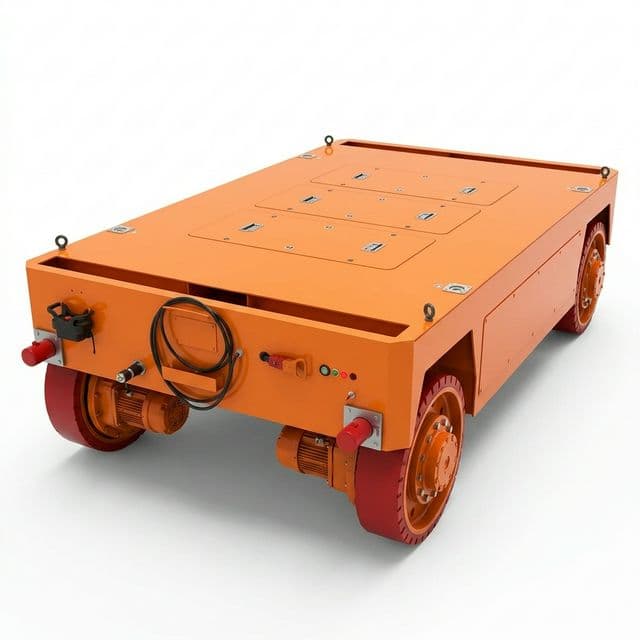
One-line buyer decision (as of 2026-07-18): For AMR payloads exceeding 1000kg, sustained aisle speeds above 2.0 m/s, or high-C opportunity charging, 48V drive units should be the default shortlist unless the vehicle battery, charger, and power backplane are already locked to 24V.
Research window: 2026-05-18 to 2026-07-18. This report provides a practical engineering and procurement framework for choosing the correct operating voltage for Automated Guided Vehicles (AGVs) and Autonomous Mobile Robots (AMRs), addressing the industry's shift toward higher-power 48V architectures.
Scope, Method, and Limits
This AMR drive unit sourcing guide is written for global OEM procurement, electrical engineering, and supplier quality teams comparing 24V and 48V integrated drive wheels for warehouse, factory, and logistics AGVs. It is not a safety certification, charger design, or final motor-sizing report.
The comparison uses a fixed mechanical-power method: calculate current from P = V x I, estimate relative copper loss from I²R, then map the electrical change to harness sizing, controller voltage margin, heat, battery integration, regenerative braking, and RFQ evidence. Final voltage selection still depends on payload, duty cycle, slope, tire diameter, peak acceleration, battery chemistry, charger limits, regional electrical rules, and the supplier's verified motor/controller datasheets.
The Voltage Tipping Point in AMR Design
Historically, 24V DC systems have been the undisputed standard for intralogistics robots. However, as warehouses demand higher throughput, AMRs are being asked to carry heavier payloads (>1000kg) at faster speeds (>2.0 m/s). This increased mechanical power requirement exposes the fundamental physical limitations of 24V drive units.
Key Conclusions for Procurement
- Current Draw dictates Thermal Loss: A 1000W drive unit operating at 24V draws over 41 Amps. The same 1000W unit at 48V draws just 20.8 Amps. Halving the current reduces resistive heating (I²R losses) by 75%, significantly extending component lifespan.
- Cable Harness Costs are Escalating: High-current 24V systems require thick, inflexible copper cables (often 4 AWG or larger) to manage the amperage. 48V systems allow for thinner, lighter, and much cheaper wiring harnesses.
- Synergy with Modern Batteries: Many high-capacity Lithium-Iron-Phosphate (LiFePO4) AMR battery packs and opportunity-charging systems are easier to integrate around 48V. Using a 48V drive unit can eliminate inefficient high-current step-down conversion in the traction power train.
- Dynamic Response and Torque Ripple: 48V motor controllers (inverters) can push current into the motor windings faster than 24V systems, resulting in better acceleration and tighter navigation control for heavy loads.
Technical Evidence: 24V vs. 48V Drive Unit Comparison
To understand the procurement cost delta and engineering impact, we must compare the electrical and mechanical implications side-by-side.
| Specification / Impact Area | 24V AMR Drive Unit (Legacy) | 48V AMR Drive Unit (Modern) | Implication for OEM Design |
|---|---|---|---|
| Max Continuous Power (Typical) | Up to 750W | 1000W to 3000W+ | 48V enables heavy-duty drive wheels without drastically increasing motor size. |
| Current Draw (at 1000W) | ~41.6 A | ~20.8 A | 48V requires smaller contactors, thinner wires, and cheaper fuses. |
| I²R Thermal Losses | 100% (Baseline) | 25% of baseline | 48V motors run significantly cooler, reducing the need for active cooling. |
| High-Speed Torque Curve | Torque drops off rapidly at high RPM | Maintains torque at higher RPMs | 48V AMRs can maintain higher speeds over long warehouse aisles. |
| Cost of Controller/Inverter | Standard (High volume, low cost) | Premium (+15% to 30%) | The 48V controller costs more, but the saving in copper wiring offsets it. |
| Safety Standard (Extra-Low Voltage Class) | Usually within extra-low-voltage design limits | Usually within extra-low-voltage design limits | Verify maximum charger, open-circuit, and regeneration bus voltage against the applicable regional standard. |
| Regenerative Braking | Lower regeneration threshold | Higher energy recovery potential | 48V requires proper brake choppers to prevent DC bus overvoltage. |
The Mechanics of Current Reduction
Why does voltage matter so much for a mechanical drive wheel? It comes down to Joule heating. Heat is the enemy of neodymium magnets (causing demagnetization) and stator insulation.
As illustrated above, pushing 1000W of mechanical power at 24V necessitates massive current. This requires heavy, expensive copper cabling, which is difficult to route inside compact AMR chassis. Moving to 48V slices the current in half, reducing the I²R thermal losses to a quarter, leading to a much cooler, more efficient robot that can run longer on a single charge.
Application Boundaries: When to Switch
While 48V is technically superior, 24V still has its place in the market due to cost and legacy supply chains.
Where 48V Specs are MANDATORY
- Heavy Payload AMRs (>1000kg): Forklift AGVs, unit load carriers, and automotive assembly platforms require sustained high torque that melts 24V contactors.
- High-Speed Operations (>2.0 m/s): Back-EMF at high motor RPMs limits torque in 24V systems. 48V systems maintain their torque curve at much higher speeds.
- Fast-Charging Fleets: Modern fleets utilizing 15-minute opportunity charging at high C-rates almost exclusively use 48V battery architectures.
Where 24V Units are SUFFICIENT
- Lightweight Kiva-style AMRs (<500kg): If the robot is moving lightweight totes at moderate speeds, 24V systems are highly cost-effective and perfectly adequate.
- Hospitality & Service Robots: Environments prioritizing absolute lowest cost over industrial duty cycles.
- Legacy Retrofits: Upgrading an existing fleet where the central battery and power distribution board are already fixed at 24V.
TCO (Total Cost of Ownership) Implications over a 5-Year Lifecycle
When evaluating the procurement of AMR drive units, the upfront capital expenditure (CapEx) of a 48V motor and controller is frequently higher than a mature 24V system. However, for industrial fleets operating 24/7, the Total Cost of Ownership (TCO) shifts dramatically in favor of 48V over a typical 5-year lifecycle.
The primary cost drivers that swing the pendulum include energy efficiency and maintenance. Because 48V systems reduce I²R copper losses by up to 75% for the same mechanical power output, a fleet of 50 heavy-payload AMRs will consume significantly less kilowatt-hours (kWh) from the facility grid. Over 60 months, this electricity saving alone can offset the initial premium of the 48V drive units.
Furthermore, lower operating temperatures reduce thermal stress on the motor windings, bearings, and inverter electronics. Heat is a common cause of premature failure in integrated servo drives. By running cooler, 48V drive wheels can reduce unplanned failures, production downtime, and spare parts inventory. When factoring in the reduced labor cost for harnessing, because thinner and more pliable cables are faster to install and route during OEM assembly, the 48V architecture can produce a stronger lifecycle case for next-generation automated guided vehicles.
For a broader drivetrain architecture review, compare this voltage decision with the AGV drive unit engineering guide and the AGV drive system engineering guide. If the same vehicle also needs safety-rated stop or speed-limit functions, cross-check the voltage shortlist against the ISO 3691-4 AMR drive unit sourcing guide before releasing sample purchase orders.
Sourcing Action Checklist
Use this checklist during the RFQ process to vet 48V drive unit suppliers and avoid electrical mismatches.
| Phase | Owner | Action Item | Verification Method |
|---|---|---|---|
| Specification | Engineering | Confirm the motor winding is optimized for 48V, not just a 24V motor being over-volted. | Ask for the Back-EMF constant (Ke) and torque constant (Kt) datasheets. |
| Controller Match | Procurement | Ensure the chosen motor driver natively supports 48V nominal, with an over-voltage tolerance of at least 60V (for regen braking). | Review the controller's absolute maximum voltage rating. |
| Insulation Check | Hardware Lead | Verify that the stator slot insulation is rated for the faster switching transients (dV/dt) of 48V SiC/GaN inverters. | Request the insulation class rating (e.g., Class F or H). |
| Connector Sizing | Assembly Team | Verify that the OEM connector on the drive unit matches your newly downsized 48V wire harness. | Request mechanical ICD (Interface Control Document). |
FAQ: 48V AMR Systems
Is 48V more dangerous than 24V?
Nominal 48V is usually still treated as an extra-low-voltage architecture, but the final answer depends on maximum battery voltage, charger tolerance, regenerative braking spikes, environment, and the regional standard applied to the complete vehicle. Procurement should not approve a 48V drive until the supplier states the absolute maximum DC bus rating and overvoltage protection method.
Can I run a 24V drive unit on a 48V battery?
Absolutely not, unless you use a DC-DC step-down converter capable of handling the drive unit's peak surge current (which is incredibly expensive and bulky). Applying 48V directly to a 24V motor controller will destroy the capacitors and MOSFETs instantly.
Will moving to 48V save me money?
At the drive-unit level, 48V components may carry a slight premium (10-15%) due to lower global volume compared to legacy 24V wheelchair motors. However, at the system level, OEMs save massive amounts of money on thinner copper cabling, smaller contactors, cheaper fuses, and the elimination of active cooling fans.
How does 48V affect regenerative braking?
When a heavy AMR decelerates, the drive unit acts as a generator, pushing energy back to the battery. In a 48V system carrying 1000kg+, this regenerative energy can quickly cause the DC bus voltage to spike. Procurement must ensure that 48V servo drives include integrated brake choppers or overvoltage protection circuitry to safely dissipate this energy.
Next Steps for Your AGV Fleet
Transitioning your power architecture from 24V to 48V is the single most impactful design change for scaling up AMR payload and speed. If you are designing a heavy-duty AGV platform and need guidance on matching 48V integrated drive wheels with the right kinematics, we can help.
Contact our engineering team today to discuss your payload requirements and receive a customized 48V drive wheel sizing report.
Sources & Verifiable Data
| Source Topic | Key Information | Reference / Industry Baseline |
|---|---|---|
| AGV/AMR Drive Voltage Options | Published AGV/AMR drive solutions show 24V and 48V variants used across different payload and speed classes. | Sumitomo Drive Technologies: AGV/AMR Drive Solutions |
| Extra-Low-Voltage Protection Context | Electrical protection requirements for low-voltage installations, including extra-low-voltage protection concepts that procurement teams should verify with the final system integrator. | IEC 60364-4-41 Electrical Installations Protection |
| Battery Safety Standard Context | Safety requirements for batteries used in electric vehicles, useful when checking traction battery documentation and supplier compliance claims. | UL 2580: Batteries for Use In Electric Vehicles |