The Rise of All-in-One AMR Servo Wheels: Sourcing Trade-offs Post-Automate 2026
Review of the shift towards highly integrated AMR servo wheel modules post-Automate 2026, driven by Yifan Motor and others. Analyzes TCO, procurement risks, and engineering impact.
By Jimmy Su · B2B Applications & OEM Program Lead
Last reviewed: 2026/07/15
MDX editorial page reviewed for buyer-facing scope, date boundaries, source traceability, and internal-link coverage.
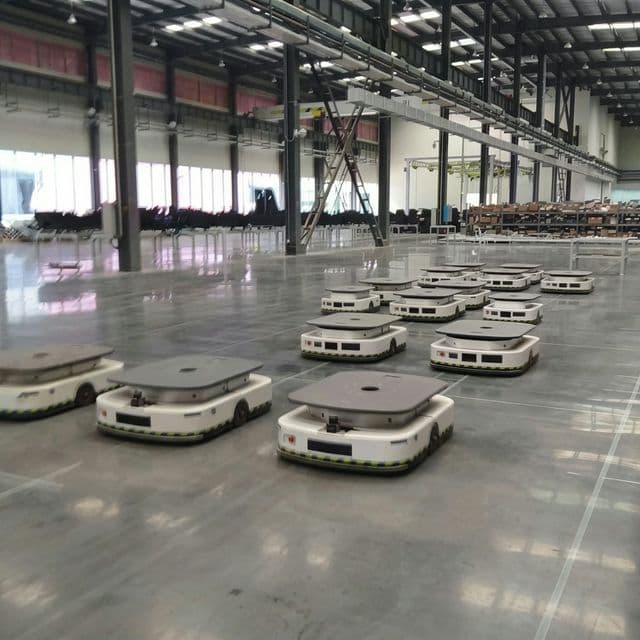
Decision-Level Conclusion: Driven by the releases at Automate 2026 (Chicago, June 2026) such as Yifan Motor's new series, the AMR/AGV drive architecture is experiencing a pronounced shift from discrete component sourcing to "All-in-One" integrated servo wheel modules. These black-box solutions integrate the motor, planetary reducer, absolute encoder, and sometimes the steering mechanism into a single wheel hub. This drastically reduces mechanical integration time and chassis space for OEMs, accelerating Time-to-Market (TTM), but it introduces elevated hardware costs, thermal constraints, and vendor lock-in risks that procurement teams must carefully evaluate.
Research Window: June - July 2026 (Automate 2026 & subsequent releases). Target Audience: AMR/AGV OEM engineers, system architects, and procurement managers.
What Changed: The Shift to "Black-Box" Traction Modules
Historically, OEMs pieced together their AMR drive trains by sourcing motors, gearboxes, and wheels from separate vendors. The industry trend, solidified at Automate 2026, showcases a migration towards highly integrated modules designed to solve the space constraints of modern low-profile warehouse robots.
| Signal / Event | Primary Source | What Changed (Last 30 Days) | Implication for AMR Buyers |
|---|---|---|---|
| Release of Next-Gen Servo Wheel Motors | Yifan Motor at Automate 2026 | Demonstrated an all-in-one module integrating motor, reducer, encoder, and steering into the wheel hub. | Allows for ultra-compact chassis designs, significantly freeing up space for batteries or payload mechanisms. |
| BOM Consolidation | Industry Consensus Post-Show | Transitioning from 4-6 drive components down to a single SKU per wheel. | Simplifies the supply chain and slashes assembly time, but concentrates supply risk onto a single vendor. |
| Shift in Engineering Focus | AMR Architecture Forums | Suppliers are taking over the complex mechanical and protocol integration (EtherCAT/CANopen). | OEM engineers can focus on higher-level fleet management and safety rather than low-level drive tuning. |
Deep Dive: TCO (Total Cost of Ownership) Comparison
While the upfront hardware cost of an integrated servo wheel is undeniably higher than the sum of discrete parts, the Total Cost of Ownership (TCO) tells a different story for scaling OEMs.
Risks and Boundaries
Adopting an integrated module is not without its pitfalls. Engineers must navigate the physical limitations of encapsulating heat-generating components, while procurement deals with supply chain rigidity.
- Vendor Lock-in: The module's mechanical mounting, communication protocols, and overall footprint are proprietary. Switching suppliers later requires a complete chassis redesign.
- Thermal Overload in Enclosed Spaces: Integrating the motor, reducer, and steering into one hub significantly reduces the surface area available for heat dissipation. AMRs running heavy loads 24/7 may hit thermal limits faster than those with discrete components.
- Maintenance Rigidity: If a single internal gear strips or an encoder fails, the entire module often needs to be sent back to the manufacturer, increasing spare parts holding costs compared to replacing a standard off-the-shelf encoder.
- Safety Certification (ISO 3691-4): Ensure the integrated module supports dual-channel Safe Torque Off (STO) and Safe Limited Speed (SLS). A black-box approach can complicate system-level safety certification if the supplier does not provide adequate functional safety documentation.
Buyer Action Checklist
To effectively evaluate whether your next AMR platform should utilize an all-in-one module, follow this checklist:
| Role | Action Item | Verification Target |
|---|---|---|
| System Architects | Evaluate the chassis constraints of your next-gen AMR. | If the target vehicle height is under 200mm, heavily weight the space-saving benefits of integrated modules. |
| Procurement Managers | Negotiate comprehensive SLAs for the integrated units. | Ensure spare parts availability matches your fleet's uptime requirements, and secure bulk pricing to offset the hardware premium. |
| Mechanical Engineers | Request continuous thermal performance data from the supplier. | Do not rely solely on peak torque ratings. Ensure the module can handle your specific 24/7 duty cycles without overheating. |
| Safety Engineers | Verify ISO 3691-4 compliance capabilities. | Check if the module provides built-in support for STO and SLS, or if external safety relays are still required. |
FAQ
Q: Are integrated servo wheels suitable for outdoor applications? A: It depends on the IP rating. While many integrated modules are highly enclosed (IP65/IP67), outdoor applications often require significantly higher continuous torque and shock resistance. Verify the shock ratings (e.g., against ISO standard drop tests) as the integrated gearbox is vulnerable to severe impacts.
Q: Will an all-in-one module reduce my development time? A: Yes, significantly. By purchasing a pre-integrated unit, OEMs bypass the lengthy process of mechanically aligning the motor and gearbox, as well as tuning the control loops between the motor driver and the absolute encoder. This can shave months off the R&D timeline.
Q: Can we repair the wheels if the polyurethane tread wears out? A: This is a critical question for your supplier. Some integrated modules allow for the external wheel tread (the tire ring) to be replaced independently, while others bond the tire directly to the rotating hub, requiring a much more expensive replacement process.
Sources
- Automate 2026 Exhibition Reports: Coverage of new motion control products, including Yifan Motor's "Next-Generation Servo Wheel Motors" (June 2026). automate.org
- Yifan Motor (Jiangnan Yifan Motor Co., Ltd.): Product specifications and release notes for AMR/AGV servo wheel motor modules. yifanmotor.com
- Meticulous Research: "AGV/AMR Market Forecast 2026-2036" detailing the demand for compact chassis designs in warehouse automation. meticulousresearch.com