
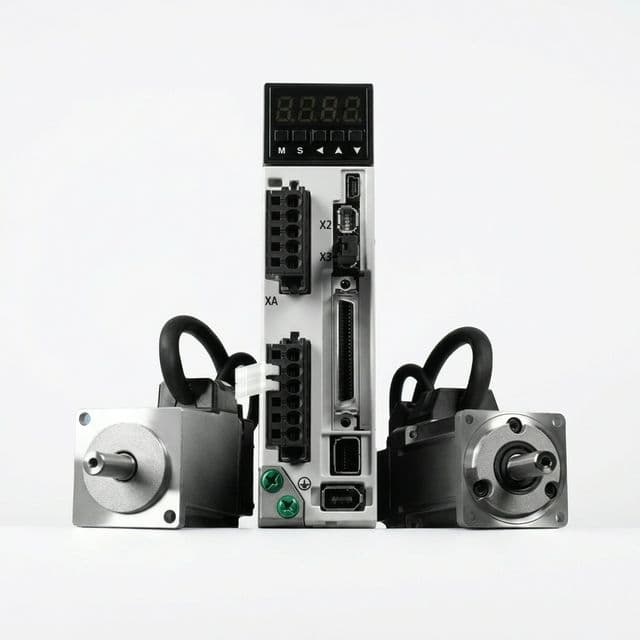
Integrated drive and communication hardware context
Servo motors, integrated drive modules, and fieldbus-capable controllers used in wireless-enabled AMR architectures.
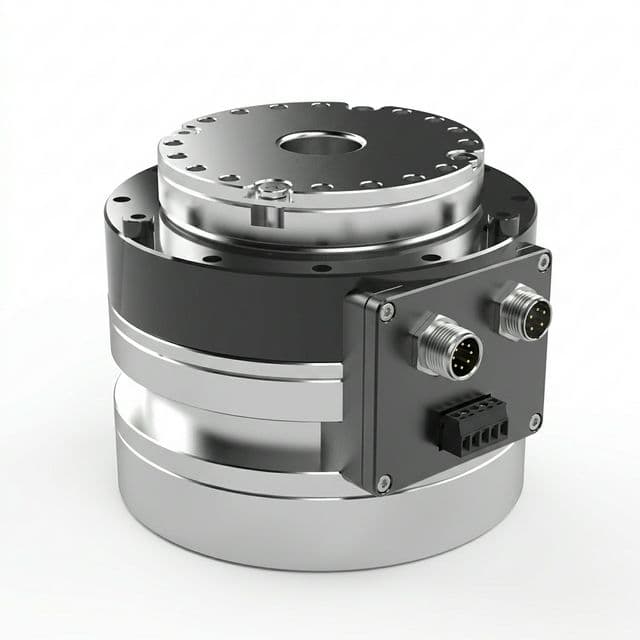
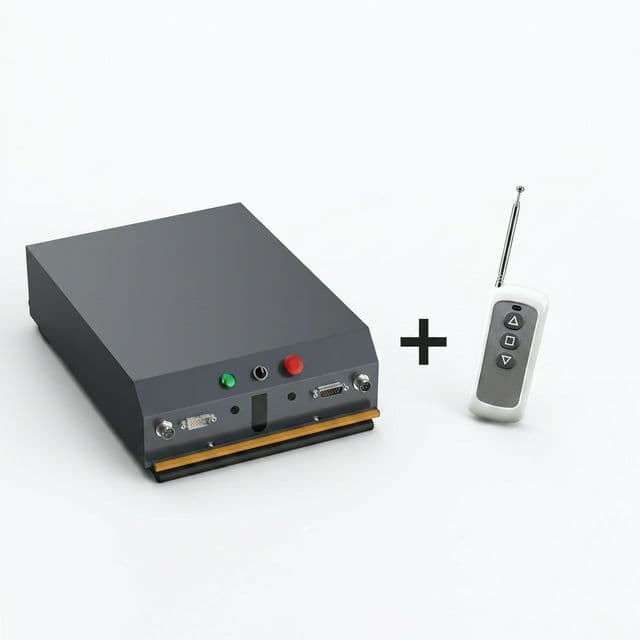
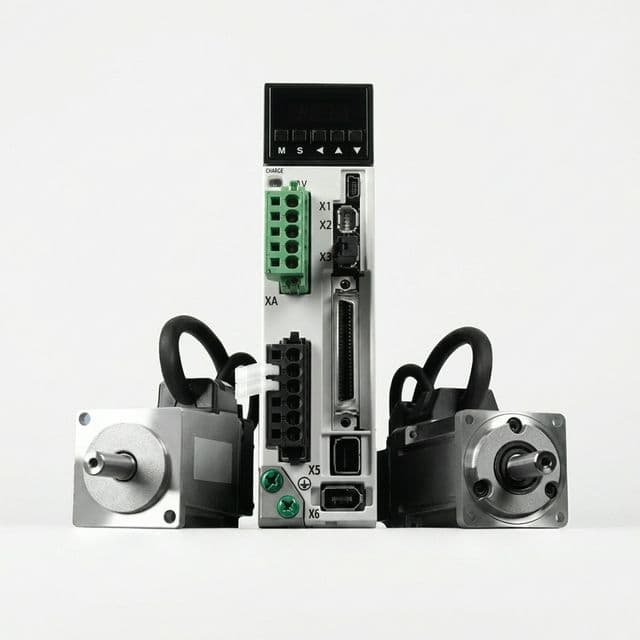
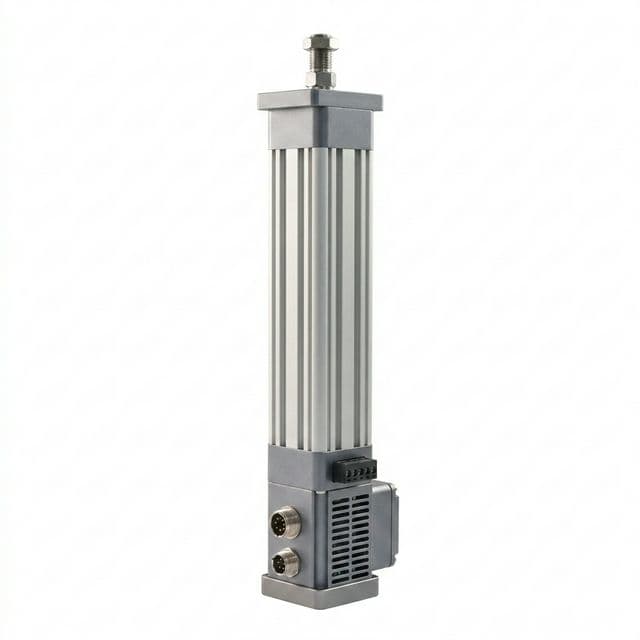
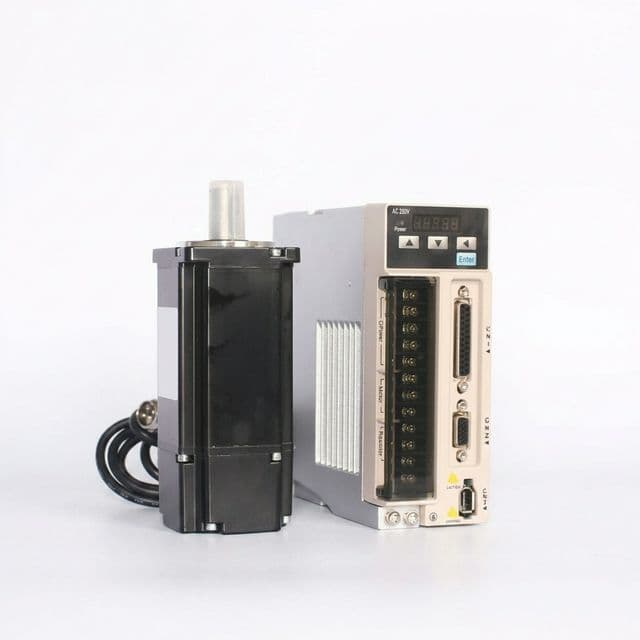
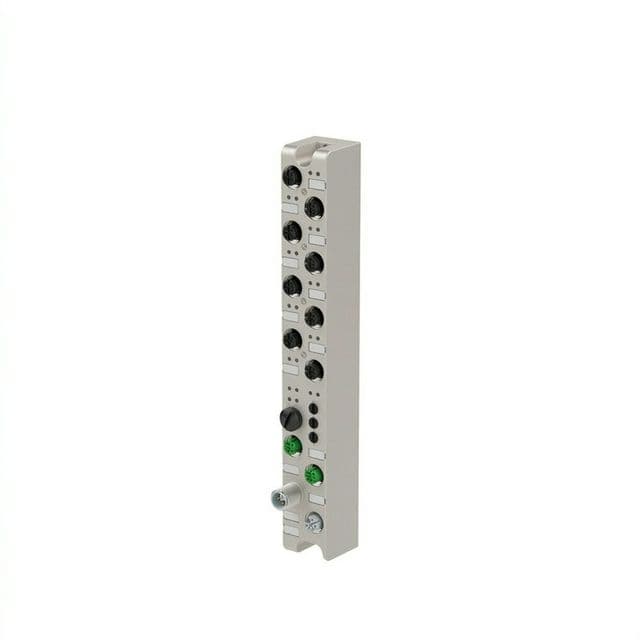
Brushless Servomotor with Integrated Drive and Wireless Fieldbus: Fit Tool + Engineering Decision Report
Run the architecture-fit tool first, then use the report layer to validate boundaries, evidence quality, and fallback decisions before freezing RFQ or pilot scope.
Published May 24, 2026. Evidence references were last checked on May 24, 2026. Time-sensitive protocol lifecycle items are marked explicitly.
1) Immediate architecture screening for wireless integrated-drive feasibility.
2) Quantified boundary and risk interpretation anchored to public technical sources.
3) Next-step actions for fit, review, risk, and inconclusive outcomes.
Tool Layer: Wireless Integrated-Drive Fit Check
Enter motion, network, and safety assumptions. The result explains fit status, uncertainty, and the next executable action.
Use load bands from current PROFINET guidance: less than 20% (healthy), 20-50% (watch), above 50% (explicit mitigation required).
- Configured network load is within the 20-50% watch band. Validate burst behavior and update-time margins before sign-off.
Report Layer Summary: Core Conclusions and Numbers
These conclusions are decision-oriented and map directly to evidence references and architecture actions.
Treat monitoring, command, and closed-loop motion as separate timing classes. Most failures start when one architecture is forced to serve all classes without deterministic fallback.
Evidence: S2, S5
Hard real-time motion intent quickly exhausts wireless margin under congestion, coexistence, and distance variance. A pre-engineered wired bypass prevents late-stage redesign.
Evidence: S1, S2, S4
Site survey, spectrum planning, and access-point redundancy must be modeled before commissioning. Otherwise update-time inflation and unstable packet behavior emerge in production.
Evidence: S4, S5, S6, S10
Security Class adoption and certificate governance improve cyber resilience, but they do not prove motion timing closure. Keep cybersecurity and deterministic timing sign-off as separate release criteria.
Evidence: S12, S15, S16, S17
Sub-100 ns or sub-microsecond synchronization references describe time-service capability. Real machine determinism still depends on load, coexistence, controller behavior, and fallback design.
Evidence: S1, S6, S11, S18
CIP Safety can coexist with motion services and supports SIL targets, but machine-level hazard controls still require full design validation and testing workflow.
Evidence: S8
WirelessHART guidance is strong for telemetry/control update governance and path robustness. It should not be misinterpreted as evidence for high-speed multi-axis motion determinism.
Evidence: S7
Protocol edition drift can invalidate assumptions in integration projects. Freeze specification baselines at proposal stage and lock upgrade triggers.
Evidence: S9
| Number | What it means | Decision note | Evidence |
|---|---|---|---|
| <1 us | Cyclic jitter context for precise motion loops | ODVA CIP Motion framing states precise position/speed control typically needs sub-microsecond class cyclic jitter handling. | S1, S11 |
| <100 ns | CIP Sync clock synchronization capability (network timing layer) | ODVA CIP Sync references sub-100 ns class synchronization capability; this is a timing-service capability, not automatic loop-level determinism. | S18 |
| 125 us | PROFINET IRT minimum send-clock granularity | Siemens PROFINET function manual shows IRT send clock can be configured down to 125 microseconds for high-speed synchronization domains. | S11 |
| <250 us | Wireless motion sensitivity threshold in ODVA 2025 paper | Conference paper uses this threshold to describe deterministic wireless motion ambition; treated as directional, not normative. | S2 |
| 1.5 us | 5G synchronization figure cited in ODVA paper | Presented as base-station synchronization context for CIP Motion-over-5G exploration. | S2 |
| <20% / 20-50% / >50% | Current PROFINET generated network-load decision bands | PROFINET Design Guideline V1.59 uses three load bands: <20% usually no changes, 20-50% requires checks, >50% requires explicit mitigation. | S10 |
| 0.86% / 0.43% / 0.22% / 0.11% | Load per device at 1 / 2 / 4 / 8 ms update time | PROFINET Design Guideline V1.59 quantifies how longer update times reduce generated network load per device. | S10 |
| 1 ms / 4 ms | PROFINET example transmission-cycle granularity | PNO design guideline illustrates 1 ms minimum clock and 4 ms derived update cycles in example planning. | S5 |
| 99.9999% + <1 ms + 1-2 ms | Industrial 5G capability targets (radio and E2E context) | 5G-ACIA material cites radio reliability/latency targets and 1-2 ms end-to-end ambition for Industry 4.0 use cases; these remain deployment-conditional. | S14 |
| 25% -> 50% | WirelessHART gateway-proximity rule escalation | When >20% of devices update faster than 2 seconds, gateway-near device percentage rises from 25% to 50% in the guide. | S7 |
| 0% -> 56% | Packet error range in NIST interference test matrix | NIST IR 8239 tables show packet error rises substantially under stronger proximity interference in free-space setup. | S6 |
| V8 v1.21 | CIP Security edition marker on ODVA specification page | ODVA specification listing shows CIP Security Volume 8 version 1.21 (April 2026 snapshot); use this as lifecycle governance signal across multi-protocol projects. | S9 |
| SC1 / SC2 / SC3 | PROFINET security class progression | Security Class 2 and 3 include integrity/authenticity controls and certificate-based mechanisms; these strengthen cybersecurity posture but do not replace timing validation. | S15, S16 |
| Dec 11, 2027 | EU Cyber Resilience Act applicability marker | PI roadmap notes CRA applicability from this date; architecture and procurement plans should treat security lifecycle evidence as a schedule-critical stream. | S19 |
| Audience | Use this when | Avoid when | Action | Evidence |
|---|---|---|---|---|
| OEM controls architects | You need to quickly decide if wireless can remain in the critical motion path or should be demoted to supervisory traffic. | You require final certification evidence directly from this page without site testing. | Use this as pre-screen, then freeze deterministic fallback and independent cybersecurity gate criteria before RFQ release. | S1, S2, S8, S15 |
| AGV/AMR integration teams | You balance mobility demands with repeatable timing in mixed traffic factory environments. | You cannot collect site RF and load evidence prior to commissioning. | Run site survey + load model and stage migration trigger from wireless to wired segment. | S4, S5, S6 |
| Process telemetry modernization teams | Primary need is robust monitoring/control updates rather than sub-ms motion synchronization. | Program objective is coordinated multi-axis servo behavior with tight cycle constraints. | Adopt WirelessHART planning rules and keep servo-class synchronization on deterministic networks. | S7 |
| Procurement and quality leaders | Need a defensible checklist to challenge unsupported wireless determinism claims from vendors. | You intend to compare vendor proposals without normalizing protocol edition and test conditions. | Use the version-governance, security-class, and evidence-gap tables as bid-gate criteria, including CRA-aligned lifecycle obligations. | S9, S15, S19 |
Deep Layer: Methodology, Evidence, and Boundaries
Method steps are explicit so teams can reproduce or challenge the decision path.
| Step | Logic | Why it matters | Boundary | Evidence |
|---|---|---|---|---|
| Step 1 - Classify control intent by timing regime | Map requested cycle and control intent to Non-RT (>1000 ms) / Soft-RT (1-1000 ms) / Hard-RT (<=1 ms), then reject architecture claims that exceed profile envelope. | Avoids mixing motion loops and telemetry expectations in one unsupported wireless budget. | Hard-RT demands stronger evidence and usually wired fallback planning before release. | S2, S5, S13 |
| Step 2 - Estimate wireless timing budget under load | Apply base profile latency and load/interference penalties to estimate practical update budget margin. | A nominal radio figure without coexistence/load penalties creates false confidence. | If projected headroom drops below 20% or generated load enters >50% band, classify as review or risk. | S3, S4, S6, S10 |
| Step 3 - Evaluate deterministic fallback architecture | Score whether wired bypass path, redundancy, and migration trigger are defined before pilot. | Fallback design quality is often the difference between successful pilot and repeated loop instability. | No wired fallback for hard-RT intent is auto-risk in this tool. | S1, S5, S11 |
| Step 4 - Gate safety and cybersecurity readiness separately | Treat safety target, cybersecurity class, segmentation plan, and certificate lifecycle as separate checks. | Protocol capability alone does not prove either machine safety closure or cyber-hardening closure. | Missing safety validation or missing cybersecurity governance keeps result at review/risk even with good timing score. | S8, S12, S15, S16, S17 |
| Gap | Why insufficient | Enhancement applied | Evidence | Updated |
|---|---|---|---|---|
| Non-RT timing class could not be reached in tool inputs. | Motion cycle upper bound blocked seconds-level monitoring use cases even though report content discussed them. | Expanded motion-cycle range and aligned classification to Non-RT / Soft-RT / Hard-RT boundaries with explicit numeric thresholds. | S13 | 2026-05-24 |
| Network-load guidance was too coarse (single 50% threshold). | Teams lacked actionable treatment differences between healthy, watch, and overloaded load zones. | Added load-band interpretation (<20%, 20-50%, >50%) and per-device load context tied to update-time planning. | S10 | 2026-05-24 |
| Tool output lacked explicit timing-class separation. | Users could treat monitoring-grade wireless profiles as suitable for closed-loop high-speed motion. | Added Non-RT / Soft-RT / Hard-RT classification and direct architecture warnings tied to motion cycle demand. | S2, S5 | 2026-05-24 |
| Wireless constraints were generic, not profile-specific. | Lacked differentiation between IWLAN, private 5G, Wi-Fi class behavior, and WirelessHART update governance. | Added profile comparison matrix plus per-profile timing and integration boundaries. | S4, S5, S7 | 2026-05-24 |
| Interference risk was asserted without quantifiable anchor. | No measured penalty values were visible for planning conversations. | Integrated NIST PER ranges and converted them into risk-score penalties and mitigation checklist. | S6 | 2026-05-24 |
| Safety claims lacked protocol-to-system boundary language. | Teams could confuse protocol capability with machine-level validation completeness. | Added explicit safety-readiness gate and SIL claim disclaimer in result and risk layers. | S8 | 2026-05-24 |
| Specification lifecycle context was missing. | Procurement and integration teams could drift across protocol editions without shared baseline. | Added version-governance recommendation and edition snapshot note (April 2026 as-of). | S9 | 2026-05-24 |
| Cybersecurity readiness was not modeled as a release gate. | Timing-fit outputs could be misread as production readiness without security zoning and certificate governance. | Added security-class input, certificate-lifecycle and segmentation checks, plus dedicated risk entries and method-step boundaries. | S12, S15, S16, S17 | 2026-05-24 |
| Capability claims were not separated by evidence maturity. | Users could mix conference/whitepaper KPI with normative system-level guarantees. | Added capability-vs-deployment boundary table and explicit directional evidence labeling for non-normative materials. | S2, S14 | 2026-05-24 |
| ID | Source | Date / version | Usage in this page |
|---|---|---|---|
| S1 | ODVA CIP Motion technology page | Accessed May 24, 2026 | Provides motion timing boundaries: sub-1 microsecond cyclic jitter requirement context and better-than-200 ns clock synchronization signal for demanding motion control. |
| S2 | ODVA 2025 conference paper: 5G implementation of a CIP Motion network | Presented March 19, 2025 | accessed May 24, 2026 | Adds practical wireless motion boundary language: hard real-time needs, below-250 microsecond sensitivity, and 5G synchronization observations used with caution as conference evidence. |
| S3 | Siemens Communication System Manual (PROFINET planning, send cycle and load) | System Manual 11/2010 | accessed May 24, 2026 | Used for PROFINET planning constraints including keeping generated network load under 50% and matching update time to process need. |
| S4 | PROFINET System Description (Industrial WLAN interaction) | System Manual 03/2012 | accessed May 24, 2026 | Documents wireless interaction boundaries: IWLAN-connected PROFINET devices do not support IRT and typically require increased update time due to bandwidth sharing. |
| S5 | PROFINET Design Guideline (PNO V1.38) | September 2019 | accessed May 24, 2026 | Used for wireless deployment framing, update-time selection under lower wireless throughput, and AGV/extensive conveying as valid wireless candidates with extra planning burden. |
| S6 | NIST IR 8239: ISA100.11a performance under Wi-Fi interference | November 2018 | accessed May 24, 2026 | Provides measured interference penalties (including packet error increase) and supports the risk model for industrial wireless coexistence assumptions. |
| S7 | IEC 62591 WirelessHART System Engineering Guide (HCF_LIT-161) | Revision 1.0, May 5, 2013 | accessed May 24, 2026 | Supports update-rate and gateway-proximity design rules for WirelessHART, used here to classify it as strong for monitoring/control telemetry rather than high-speed coordinated motion loops. |
| S8 | ODVA CIP Safety technology page | Accessed May 24, 2026 | Used for safety boundary: SIL2/SIL3 capability, black-channel transport independence, and coexistence with CIP Motion without assuming automatic machine-level safety sufficiency. |
| S9 | ODVA specifications page (latest volumes as of April 2026) | As-of snapshot April 2026 | accessed May 24, 2026 | Provides edition context (for example CIP Security Volume 8 v1.21 in the listing) for lifecycle planning and version-governance recommendations. |
| S10 | PROFINET Design Guideline V1.59 | January 2025 | accessed May 24, 2026 | Adds current planning thresholds for generated network load bands (<20%, 20-50%, >50%) and update-time impact on bandwidth consumption. |
| S11 | SIMATIC PROFINET with STEP 7 V18 Function Manual | 11/2022 | accessed May 24, 2026 | Provides implementation boundaries: IRT send clock down to 125 microseconds, <1 microsecond jitter target, and IWLAN segments not supporting IRT. |
| S12 | NIST SP 800-82 Rev.3 Guide to OT Security | September 2023 | accessed May 24, 2026 | Used for wireless OT risk boundaries: wireless field networks are generally less reliable than wired and require stronger segmentation, access control, and monitoring discipline. |
| S13 | 5G-ACIA Key 5G Use Cases and Requirements | May 2020 | accessed May 24, 2026 | Provides timing-class vocabulary (non-real-time, soft real-time, hard real-time) used to separate control intent boundaries in this tool. |
| S14 | 5G-ACIA Whitepaper: 5G for Industrial IoT | Accessed May 24, 2026 | Adds capability expectations for industrial 5G (radio latency and reliability targets) with explicit distinction from machine-level end-to-end guarantees. |
| S15 | PROFINET Security Classes Overview | Accessed May 24, 2026 | Defines Security Class 1/2/3 and certificate-based requirements, used to frame cyber-hardening as a separate gate from timing feasibility. |
| S16 | PROFINET Specification Update Notes (V2.5 draft cycle) | Updated November 2025 | accessed May 24, 2026 | Used for lifecycle signaling: V2.5 drafts include the Security Profile and certificate management, so procurement baselines must pin version scope explicitly. |
| S17 | PI/ODVA/FieldComm/OPC Foundation Security Whitepaper News | May 7, 2026 | accessed May 24, 2026 | Supports this page’s recommendation to align OT cybersecurity and functional safety governance early in architecture reviews. |
| S18 | ODVA CIP Sync technology page | Accessed May 24, 2026 | Adds boundary detail: network clock synchronization capability can reach sub-100 ns class, but this is not equivalent to end-to-end motion-loop determinism. |
| S19 | PROFINET CRA compliance roadmap note | February 5, 2026 | accessed May 24, 2026 | Adds regulatory timeline context (Cyber Resilience Act applicability from December 11, 2027) for procurement and lifecycle planning. |
Deep Layer: Comparison, Tradeoffs, and Risks
This section converts architectural ambiguity into explicit escalation triggers.
| Profile | Best for | Timing envelope | Integration load | Boundary | Evidence |
|---|---|---|---|---|---|
| Private 5G + CIP Motion experiments | Programs targeting mobility plus tighter timing envelopes with strong engineering budget. | Directional evidence for hard-RT exploration; case-by-case validation mandatory. | High (PTP/time-domain and QoS design burden). | Conference evidence is informative, not a formal interoperability guarantee. | S2, S14 |
| PROFINET over IWLAN | Mobile assets and AGV contexts where IRT is not required and update-time increase is acceptable. | RT-class usage with explicit update-time adjustment. | Medium-High (coverage/survey and AP planning). | IWLAN-attached PROFINET devices do not support IRT and may need longer update times. | S4, S5, S11 |
| Industrial Wi-Fi 6 profile | Command/monitoring workloads and non-RT to soft-RT scenarios with careful coexistence management. | Generally unsuitable as sole medium for strict hard-RT loops. | Medium (RF and QoS discipline required). | Measured interference can significantly degrade packet error behavior. | S2, S6, S12 |
| WirelessHART mesh | Process telemetry and control/monitoring updates with explicit gateway-range planning. | Fast updates are possible but require strict topology and capacity constraints. | Medium (mesh density and gateway percentage rules). | Not intended as direct evidence for high-speed coordinated servo motion loops. | S7 |
| Fallback option | Deterministic strength | Migration trigger | Cost signal | Evidence |
|---|---|---|---|---|
| EtherCAT-class deterministic motion backbone | Highest practical baseline when sub-millisecond cyclic determinism is mandatory. | Any repeated loop instability or missed synchronization in pilot under peak load. | Higher harness/installation effort, lower deterministic ambiguity. | S1, S2 |
| PROFINET IRT segment | Strong deterministic profile for synchronized motion where IRT topology is feasible. | Wireless segment cannot maintain update-time margin or requires unsupported IRT behavior. | Moderate-high engineering complexity in IRT topology and timing design. | S4, S5 |
| EtherNet/IP + CIP Motion wired domain | High with synchronized end-device clocks and disciplined network planning. | Wireless path cannot preserve motion jitter tolerance in production conditions. | Moderate; benefits from standard Ethernet ecosystem and governance maturity. | S1, S9 |
| Risk | Trigger | Impact | Mitigation | Evidence |
|---|---|---|---|---|
| Sub-millisecond loop over unsupported wireless timing path | Requested motion cycle is <=1 ms while profile and site constraints cannot guarantee deterministic behavior. | High | Shift critical loop to wired deterministic segment and keep wireless for supervisory channels. | S1, S2, S4 |
| Network-load saturation | PROFINET generated load or wireless shared-medium load leaves little reserve for peaks. | High | Cap generated load budget, isolate traffic classes, and enforce update-time discipline. | S3, S5 |
| Interference-driven packet loss escalation | Interferer proximity and shared spectrum conditions without active survey/control plan. | High | Perform spectrum survey, redesign AP/cell placement, and add channel governance before pilot sign-off. | S6 |
| Safety overclaim from protocol capability | SIL target declared without complete machine-level validation and fault-response tests. | High | Keep safety claim gating on validated system behavior, not protocol label alone. | S8 |
| Cyber-hardening gap hidden behind timing-focused pilot success | Pilot meets timing targets, but segmentation, certificate lifecycle, and access controls are not production-ready. | High | Require independent cybersecurity gate (zone design, certificate rotation, credential governance) before production release. | S12, S15, S16, S17 |
| Radio KPI interpreted as machine-level deterministic proof | Latency/reliability KPI from whitepapers is used as direct substitute for integrated machine acceptance evidence. | Medium | Separate radio-layer KPI review from end-to-end loop validation with controllers, drives, and failover events included. | S11, S14, S18 |
| WirelessHART misuse for fast coordinated servo loop | Mesh telemetry design rules are interpreted as proof for high-speed synchronized motion feasibility. | Medium | Use WirelessHART for monitoring/control classes only; route fast motion synchronization to deterministic path. | S7 |
| Specification baseline drift during RFQ cycle | Protocol version assumptions are not frozen and differ between integrator, drive vendor, and controls vendor. | Medium | Lock edition baseline in architecture pack and define explicit update trigger checkpoints. | S9 |
| Claim | Claim layer | Deployment condition | Counterexample / limit | Evidence |
|---|---|---|---|---|
| Sub-100 ns / sub-microsecond synchronization capability | Protocol timing service capability | Requires synchronized clocks, deterministic topology discipline, and validated controller-drive behavior under load. | High sync precision can coexist with unstable motion outcomes if interference, queueing, or fallback logic is poorly engineered. | S11, S18 |
| Industrial 5G can target very high reliability and low latency | Radio and architecture capability target | Needs bounded cell design, QoS policy, and end-to-end validation including control software and failover events. | Meeting radio KPI does not prove machine-level deterministic loop closure in multi-vendor production conditions. | S13, S14 |
| PROFINET Security Class progression hardens communication security | Cybersecurity capability layer | Certificate provisioning, lifecycle operations, and zone segmentation must be implemented and audited in production. | Selecting Security Class 3 without operational certificate governance creates residual release risk. | S12, S15, S16, S17 |
| Generated load under 50% is often treated as acceptable | Planning threshold heuristic | Load band must be interpreted with topology, traffic burst patterns, and update-time settings, not as a universal pass line. | A nominal 45% load can still fail under bursty traffic if segmentation and coexistence controls are weak. | S10, S12 |
| Scenario | Assumptions | Process | Outcome |
|---|---|---|---|
| Intralogistics AMR with mixed traffic and medium payload | 4 axes, 1.2 ms motion loop request for coordinated speed, private 5G pilot cell available, wired bypass physically possible. | Run wireless loop feasibility screen -> keep safety-critical synchronization on wired bypass -> use wireless for coordination/telemetry. | Stable phased rollout with mobility preserved and hard-RT uncertainty contained. |
| Retrofit project using existing IWLAN footprint | Need mobility quickly; existing AP layout has variable congestion and no formal spectrum baseline. | Increase update times for wireless nodes, cap shared load, and define explicit trigger to migrate critical loops to wired IRT if jitter incidents persist. | Fast go-live for non-hard-RT functions; deterministic loops are isolated to avoid repeated stop events. |
| Process site telemetry modernization | Monitoring/control updates are seconds-level, not closed-loop servo coordination. | Use WirelessHART design rules for gateway density and path stability, then validate reliability and capacity reserve at site level. | High coverage and maintainable telemetry network without forcing unsuitable motion claims. |
| High-precision multi-axis station with mobility requirement | Sub-millisecond coordination target and SIL3 ambition with intermittent RF blockers in environment. | Classify as high-risk for wireless-only control -> keep deterministic wired core -> evaluate 5G experiments only as bounded side-link expansion path. | Architecture remains auditable and schedule risk is lower than full wireless-first attempt. |
| Topic | Known | Unknown | Current treatment | Next step | Status |
|---|---|---|---|---|---|
| Cross-vendor hard-RT wireless motion benchmark under identical load profiles | Directional case evidence exists for 5G-based motion experiments. | No open, normalized, multi-vendor benchmark dataset with identical mechanics and RF stress is available. | Treat hard-RT wireless claims as conditional and pilot-bound. | Run controlled pilot with reproducible test harness and publish internal benchmark rubric. | pending |
| Safety integrity under mixed wired/wireless failover in same machine | CIP Safety black-channel transport model supports multiple media classes. | Program-specific fault transition behavior is not validated until integrated tests are complete. | Keep safety claim at design intent only before site acceptance. | Execute SIL/PL validation test plan with induced communication faults. | monitor |
| Wireless interference envelope at deployment site | NIST results show interference can significantly increase PER in some conditions. | Facility-specific RF occupancy and seasonal load patterns are not yet measured. | Apply conservative penalties in pre-screen tool. | Run full RF survey and repeat validation at peak operational windows. | covered |
| Security-class impact on cycle-time headroom for mixed-vendor motion deployments | PROFINET Security Class progression and certificate mechanisms are documented. | No reliable public cross-vendor benchmark quantifies deterministic cycle impact after security controls are fully enabled. | Treat security readiness and timing readiness as separate release gates. | Collect internal benchmark data per vendor stack and publish project-specific acceptance thresholds. | pending |
FAQ and Conversion Layer
Decision FAQs are grouped by usage intent, then mapped to direct action paths.
If your result is review or risk, lock a deterministic fallback workshop before committing vendor scope.
Request Architecture ReviewIf your pilot cannot stabilize deterministic loops, use our wired-drive integration route to keep schedule risk bounded.
Open Wired Deterministic Reference Path