AMR Drive Unit Integration: Sourcing All-in-One Modules Post-Automate 2026
AMR drive unit sourcing update after Automate 2026: compare all-in-one servo wheel modules, lock-in risks, and RFQ checks for 2026 and 2027 buyers.
By Jimmy Su · B2B Applications & OEM Program Lead
Last reviewed: 2026/06/29
MDX editorial page reviewed for buyer-facing scope, date boundaries, source traceability, and internal-link coverage.
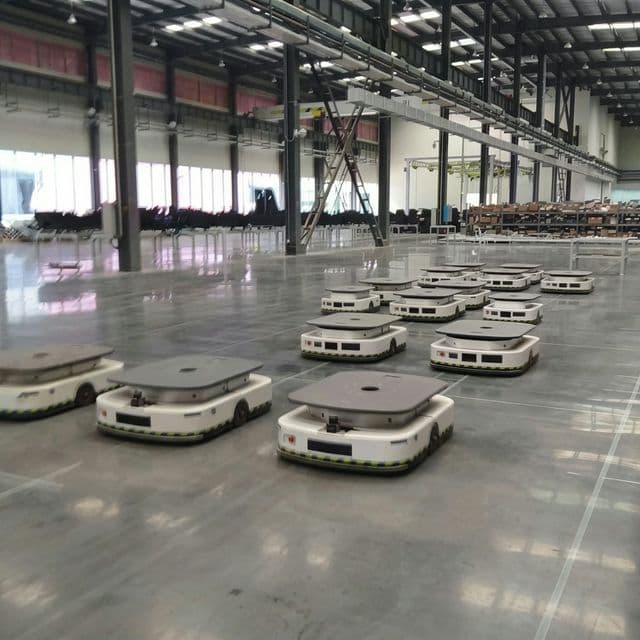
Decision-level conclusion as of 2026-06-29: Automate 2026 marks the tipping point for AMR drive units entering the “All-in-One” era. Integrating the motor, reducer, encoder, and wheel into a single SKU drastically cuts chassis design time and BOM complexity for low-profile AMRs, but it creates profound vendor lock-in. Sourcing teams issuing RFQs in late 2026 must evaluate the trade-off between assembly speed and single-source risk for highly integrated traction modules. Note: Performance assertions are based on Automate 2026 public exhibition concepts and early specifications.
Research window: Last 30 Days (focusing on Automate 2026, June 22-25, 2026). Geographic scope: United States, European Union, and Asia-Pacific warehouse automation markets. Target audience: AMR/AGV OEM engineers, robotics system architects, and procurement managers.
Top-gate buyer action: If your 2026 and 2027 AMR platform is moving from a distributed motor + gearbox + wheel BOM to an integrated module, use this page to define the first RFQ screen, then request an engineering review before sample purchase order release.
Why This Matters for 2026 and 2027 Sourcing
For the past decade, building an AMR involved sourcing distinct components from different specialists: a servo motor from Vendor A, a planetary gearbox from Vendor B, and a polyurethane wheel from Vendor C.
The All-in-One (or Integrated Servo Wheel) trend demonstrated heavily at Automate 2026 disrupts this model. Suppliers are taking ownership of the entire traction stack. For buyers, this translates to simplified supply chains and thinner chassis architectures (critical for lurking-type / latent AGVs that must fit under tight racks). However, it radically shifts the balance of power to the integrated module provider, making second-sourcing and field repairs significantly harder.
What Changed (Last 30 Days)
Automate 2026 (Chicago, IL) served as the launchpad for several integrated drive unit announcements.
| Signal / Event | Primary Source | What Changed | Buyer Implication (Impact) |
|---|---|---|---|
| iWMC Integrated Servo Wheel Launch | Kinco | Exhibited (Booth #15057) an integrated servo wheel module claiming to save more than 35% space and 50% installation time. | Reduces assembly labor but mandates acceptance of Kinco's internal drive tuning and form factor. |
| New Servo Wheel Motors | Yifan Motor | Demonstrated highly integrated drive-steer modules combining servo, reducer, and steering for high torque density. | Shifts the engineering burden of steering kinematics from the OEM chassis team to the motor supplier. |
| SOMANET All-in-One Axis Solution | Synapticon | Highlighted extreme miniaturization combining wheel, motor, drive, encoder, and functional safety in a single device. | Eliminates the need for external safety PLCs for basic axis safe-torque-off (STO), saving panel space. |
| 165mm Servo Integrated Wheel Set | KEYA Servo | Promoted compact combined driving, lifting, and rotation functions optimized for light-duty under-600kg applications. | Sets a clear cost and performance boundary for latent AGVs operating in standard logistics use cases. |
| Compact AGV/AMR Motion | Applied Motion Products | Highlighted Booth 32011 compact, single-unit drive systems for mobile robotics, reducing auxiliary axes complexity. | Enables faster prototyping for new vehicle form factors, lowering the barrier to entry for new AMR builders. |
| Industry Shift to Single SKU | Automate 2026 Floor | General consensus among motion control exhibitors that standalone small-format AGV motors are being commoditized in favor of integrated modules. | Procurement must shift from buying raw motors and gears to buying "guaranteed traction performance" modules. |
Deep Dive: Distributed vs All-in-One Architectures
The engineering impact of moving from a distributed BOM to an integrated module is best understood visually.
Engineering Trade-Offs
When an OEM shifts to an integrated wheel module, they outsource the electromechanical integration.
- Pros: The supplier guarantees that the motor's torque curve is perfectly matched to the integrated planetary gearbox and the thermal dissipation of the combined housing. This ensures optimal navigation performance out of the box, as cogging torque and backlash are pre-tuned.
- Cons: A worn-out polyurethane wheel tread might mean replacing the entire USD 800-1,500 module instead of a USD 50 wheel, dramatically increasing maintenance costs for end-users unless the supplier designs a quick-release tire mechanism.
Applicability Boundaries: Payload and Technology Thresholds
Not all AMRs should migrate to All-in-One drives. The integration of the motor and gearbox significantly reduces the surface area available for thermal dissipation. Furthermore, the adoption of Wide Bandgap (WBG) semiconductors like GaN and SiC is pushing the boundaries of what is possible, but physical limits remain.
| AMR Payload Tier | Typical Application | Recommended Architecture | Boundary Constraints |
|---|---|---|---|
| Light Duty (under 600kg) | Latent/Lurking AGVs, Bin-to-Person AMRs | All-in-One Module | Extremely cost-effective. Thermal limits are rarely breached unless operating on high-friction surfaces or inclines above 5%. Units like KEYA's 165mm are optimized here. |
| Medium Duty (600kg - 1000kg) | Pallet Movers, Heavy Component Delivery | Hybrid / High-End All-in-One | Requires WBG (GaN/SiC) power electronics (e.g., Synapticon SOMANET, Elmo) to handle high peak currents without overheating the enclosed wheel housing. |
| Heavy Duty (above 1000kg) | Heavy Payload AGVs, Auto-Forklifts | Distributed (Motor + Gearbox separate) | The massive torque requirements and continuous thermal load mandate separated components with dedicated cooling or significantly larger mass. |
Risks, Evidence Gaps, and Boundaries
Transitioning a product line to All-in-One modules carries distinct risks. Procurement and integration teams must establish strict boundaries before releasing an RFQ.
| Risk Factor | Trigger Condition | Mitigation / Boundary Strategy |
|---|---|---|
| Vendor Lock-In (Mechanical) | Non-standard mounting flanges and custom suspension geometries are required to fit the module. | Demand a multi-vendor mechanical footprint agreement, or design an intermediate mounting plate that can adapt to at least two different module brands. |
| Vendor Lock-In (Software) | Proprietary CANopen or EtherCAT object dictionaries make swapping brands impossible without rewriting navigation code. | Mandate CiA 402 standard compliance in the RFQ. Refuse modules that require custom proprietary libraries for basic motion control. |
| Thermal Bottlenecks | Heavy payload (e.g., 1000kg+) pushing integrated units at high duty cycles in non-ventilated latent AGV chassis. | Request thermal continuous-run data specifically. The tight integration of motor and gearbox severely reduces the surface area available for heat dissipation. |
| Maintenance Cost Spikes | The wheel tread wears out after 12-18 months of abrasive floor contact. | Reject module designs where the tire is glued directly to the motor rotor. Require a replaceable tire ring that field technicians can swap in under 10 minutes. |
| Safety Integration Limits | Module does not natively support STO or safe encoders natively. | Cross-reference with the ISO 3691-4 sourcing guide. Ensure the module integrates with your safety PLC or software-defined safety architecture. |
This article is a sourcing interpretation, not a certification file or universal supplier ranking. Validate the final selection against your vehicle payload, duty cycle, route slope, floor friction, battery voltage, controller protocol, and regional conformity path before freezing a chassis.
Mid-gate CTA: Before you send a single-SKU integrated drive RFQ, compare your current assumptions with the AGV drive unit engineering guide, the AGV drive system selection guide, and the STO / SLS safety guide.
Sourcing Workflow Change
The traditional sourcing workflow involved heavy internal engineering. The new workflow shifts the burden to the supplier, focusing on validation rather than integration.
Who Should Act Now (Buyer Checklist)
For supply chain and engineering leadership mapping out the late 2026 and 2027 vehicle platforms:
| Persona | Immediate Action Item | Success Criteria |
|---|---|---|
| System Architects | Stop designing custom gear-to-wheel hub assemblies. Model the chassis around 2-3 standard integrated module dimensions shown at Automate 2026. | Mechanical footprint accommodates at least two tier-1 module suppliers. |
| Procurement Managers | Re-evaluate TCO models. Integrated modules have higher upfront unit costs but drastically reduce hidden factory assembly costs. | RFQ includes Total Cost of Assembly (TCA) and Mean Time to Replace (MTTR) metrics. |
| Navigation Teams | Verify encoder resolution on integrated units. Some pancake-style modules compromise on encoder count, impacting low-speed docking precision. | Minimum 17-bit absolute encoder output validated via CANopen/EtherCAT. |
| Field Maintenance Leads | Audit the replacement process for the new modules. Reject modules that require complete vehicle teardowns for simple tire replacements. | SLA guaranteeing a sub-15 minute wheel tread swap in the field. |
Related Engineering Pages and Next Step
- AGV drive unit engineering guide: Use this to check payload, torque, wheel, brake, protocol, and safety boundaries before locking a module form factor.
- AGV drive system selection guide: Use this when the integrated module decision changes the vehicle architecture, steering layout, or route class.
- ISO 3691-4 AMR drive-unit sourcing guide: Use this to define STO, SLS, brake, encoder, and supplier evidence requirements.
- STO / SLS safety validation guide: Use this to separate motion function claims from safety function proof before EU or global fleet release.
- Contact the engineering team: Request a pre-RFQ review if your shortlist mixes distributed drive components and all-in-one integrated servo wheel modules.
FAQ
Why are integrated AMR drives becoming so popular now?
The demand for lower-profile (latent/lurking) robots to fit under shorter racking structures has forced manufacturers to compress the drive unit. Furthermore, as the AMR market matures, OEMs want to focus on software and fleet management rather than tweaking mechanical drive trains.
Does an All-in-One module compromise on torque?
Historically, yes. However, designs showcased at Automate 2026 by Yifan and Kinco demonstrate that advanced high-density windings and embedded planetary stages can now deliver torque densities comparable to distributed systems, though thermal management remains the primary limit.
How does this affect safety certification (e.g., ISO 3691-4)?
It can complicate it if the integrated module does not feature internal safe encoders (for SLS/STO). Buyers must explicitly verify functional safety features at the module level rather than assuming they can easily attach an external safe encoder later.
Are these modules standardized?
Not yet. Unlike standard NEMA motor frame sizes, integrated servo wheels are currently highly proprietary. Establishing second-source compatibility is the biggest challenge for 2026 procurement.
Closing Procurement Guidance
For late-2026 RFQs, treat the integrated AMR drive unit as a validated traction subsystem rather than a motor line item. Ask suppliers for continuous thermal curves, encoder resolution evidence, CANopen or EtherCAT object documentation, replaceable tire service instructions, and a mechanical footprint that can accept at least one alternate supplier. If any of those artifacts are missing, keep a distributed fallback architecture alive until sample testing closes the evidence gap.
Bottom CTA: For a buyer-side review of payload tier, drive architecture, safety evidence, and second-source risk, send the project scope to AMRDriveUnit before sample PO release.
Sources
| Source Title | Institution | Date | URL |
|---|---|---|---|
| Automate 2026 Exhibition Official Directory | Association for Advancing Automation (A3) | June 22-25, 2026 | https://www.automateshow.com/ |
| Synapticon SOMANET Integrated Motion | Synapticon | Accessed 2026-06-29 | https://www.synapticon.com/ |
| KEYA Servo Wheel Products | KEYA Servo | Accessed 2026-06-29 | https://www.keyaservo.com/ |
| Kinco Automation - Integrated Servo Wheel Modules | Kinco | Accessed 2026-06-29 | https://www.kincoautomation.com/ |
| Applied Motion Products - AGV/AMR Solutions | Applied Motion Products | Accessed 2026-06-29 | https://www.applied-motion.com/ |
| AMR Drive Unit Functional Safety Sourcing | Internal Knowledge Base | 2026-06-25 | /blog/amr-drive-unit-market-update-2026-w26 |