Automate 2026 Review: The Shift to Highly Integrated AMR Traction Modules and Its Procurement Impact
Automate 2026 review on highly integrated AMR traction modules (maxon MW 500, Allient KinetiMax). Procurement impact, thermal limits, and BOM reduction.
By Jimmy Su · B2B Applications & OEM Program Lead
Last reviewed: 2026/07/06
MDX editorial page reviewed for buyer-facing scope, date boundaries, source traceability, and internal-link coverage.
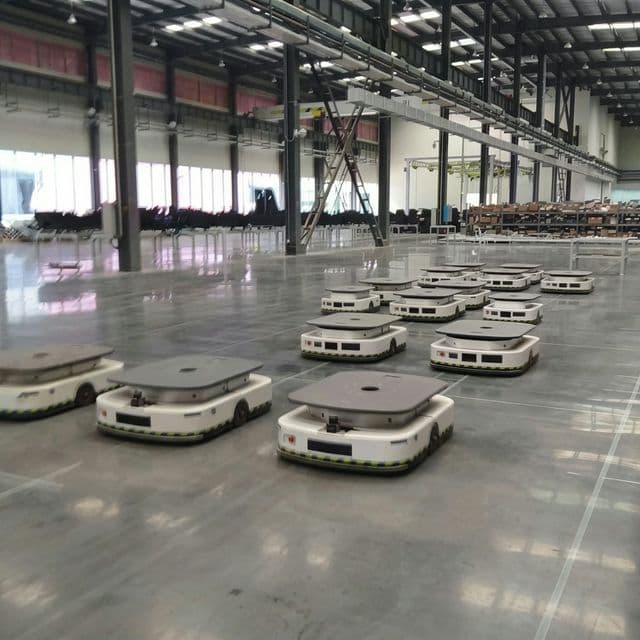
Decision-Level Conclusion: The Automate 2026 exhibition (June 22-25, 2026) released a definitive signal: high-end AMR and AGV drive architectures are rapidly shifting from discrete component assemblies to fully integrated "plug-and-play" traction modules. Products like the maxon MW 500 and Allient KinetiMax HPD demonstrate that extreme power density (e.g., 500kg radial load per wheel) can now be packed into ultra-compact forms. This cuts OEM Bill of Materials (BOM) and assembly time drastically, but introduces new supply chain lock-in and critical thermal management engineering risks.
Research window: Last 30 Days (focusing on Automate 2026, June 22-25, 2026). Geographic scope: United States, European Union, and Asia-Pacific warehouse automation markets. Target audience: AMR/AGV OEM engineers, robotics system architects, integration teams, and procurement managers.
What Changed: The Rise of High-Power Density Modules
Historically, sourcing a heavy-duty AMR drive unit meant piecing together a servo motor, a separate planetary reducer, a steering mechanism, and an external wheel from multiple suppliers. At Automate 2026, premium motion control manufacturers proved that high torque density is no longer restricted to large, multi-part assemblies.
| Signal / Event | Primary Source | What Changed (Last 30 Days) | Implication for AMR Buyers |
|---|---|---|---|
| maxon MW 500 Launch | maxon booth at Automate 2026 | Demonstrated an integrated wheel drive system capable of 500kg radial load in a highly compact, modular chassis. | Enables high-payload (1000kg+ total vehicle) latent AMRs to maintain ultra-low profiles, previously impossible with discrete components. |
| KinetiMax HPD Expansion | Allient Inc. (Automate 2026) | Showcased High Power Density (HPD) brushless DC motors integrated with AGV gearboxes. | Shifts the burden of mechanical integration from the OEM to the supplier, ensuring pre-validated torque-to-wheel curves. |
| BOM Consolidation | Industry Consensus (June 2026) | Move from 5+ SKUs (motor, gearbox, encoder, wheel, couplings) to a single drop-in traction SKU. | Drastically reduces supply chain management overhead and factory floor assembly time for AMR builders. |
| Continuous vs Peak Ratings | maxon MW 500 & Allient specs | Shift from reporting only peak torque to standardized continuous thermal limits in tight spaces. | Buyers must rewrite validation protocols to test 24/7 duty cycles, preventing premature field failures. |
Deep Dive: Architecture Shift & Space Optimization
The primary driver for this shift is chassis space. Modern warehouse facilities demand AMRs that can slide under extremely low racks while carrying heavier payloads.
Methodology and Boundaries: When to Use Integrated Modules
The shift to integrated modules is not a universal panacea. System architects must evaluate their specific vehicle constraints before abandoning discrete component designs.
- Recommended Use Cases: High-end, space-constrained industrial AMRs (e.g., lurking/latent bots requiring a chassis height under 200mm). Systems where reliability, low maintenance downtime, and rapid OEM assembly scale are prioritized over initial material cost.
- Not Recommended: Highly cost-sensitive, entry-level light AGVs. In these budget-driven projects, sourcing discrete off-the-shelf stepper motors and standard gearboxes still yields a lower upfront hardware cost, absorbing the penalty of longer assembly times.
Risks, Constraints, and Trade-Offs
While the procurement benefits are clear (fewer SKUs, streamlined vendor management), the engineering trade-offs require careful mitigation. The following risk matrix highlights the probability and impact of adopting integrated traction modules.
1. The Thermal Management Bottleneck (Engineering Risk)
Packing the motor, gearbox, and braking mechanism into a single enclosed wheel hub creates a severe thermal challenge. The duty cycles (running time vs. resting time) of modern 24/7 warehouse AMRs generate continuous heat. In an integrated module, the surface area for heat dissipation is drastically reduced compared to a discrete long-body motor. Mitigation: Engineers must request and evaluate specific continuous-run thermal limit data from suppliers (like maxon and Allient) rather than just peak torque ratings.
2. Vendor Lock-In (Procurement Risk)
By purchasing a proprietary all-in-one traction unit, OEMs effectively lock themselves into a single supplier's mechanical footprint, communication protocols, and replacement part pricing. Mitigation: Mandate adherence to standard protocols (like CiA 402 for CANopen/EtherCAT) and establish explicit long-term spare parts pricing agreements before mass production.
Action Checklist for Buyers and Engineers
To navigate this technology shift, cross-functional teams should take the following actions:
| Role | Action Item | Verification Target |
|---|---|---|
| R&D / Chassis Engineers | Re-evaluate chassis thermal design to accommodate integrated drives. | Validate thermal dissipation paths. Run heat load simulations based on the supplier's continuous torque curves. |
| Procurement Managers | Shift Total Cost of Ownership (TCO) models. Evaluate modules not on unit price, but on Total Cost of Assembly. | Secure Service Level Agreements (SLAs) regarding lead times (which may differ from standard motors) and spare parts availability. |
| Maintenance / Field Ops | Audit the repair process for worn components (specifically wheel treads). | Ensure the polyurethane tire can be replaced independently without discarding the entire USD 1000+ drive unit. |
Buyer Action Thresholds: When to Upgrade
Not every fleet should immediately migrate to integrated modules. The decision to switch from discrete architectures depends heavily on the target payload and physical constraints of your AMR design.
| Payload Requirement | Chassis Height | Recommended Architecture | Procurement Justification |
|---|---|---|---|
| Light (<250 kg) | High (>300 mm) | Discrete Components | Lower upfront cost; ample space allows for cheap, standard NEMA steppers and simple gearboxes. |
| Medium (250-600 kg) | Moderate (200-300 mm) | Hybrid / Frameless (e.g., KinetiMax HPD) | Balances space savings with thermal dissipation. OEMs handle final bearing and housing integration. |
| Heavy (600-1000+ kg) | Ultra-Low (<200 mm) | Highly Integrated (e.g., maxon MW 500) | Maximum space optimization required. The higher BOM cost is offset by enabling heavy-duty latent AMRs to fit under standard pallets. |
| Heavy (1000+ kg) | High / Open | Discrete Heavy-Duty Servos | Heat dissipation is critical for high payload 24/7 operation; if space allows, discrete units run cooler. |
FAQ: Sourcing Highly Integrated Modules
Q: If an integrated module breaks, do we replace the whole unit or can we repair internal bearings? A: Generally, integrated modules are designed as Field Replaceable Units (FRUs) to be swapped in their entirety to minimize AMR downtime (often under 15 minutes). However, you must verify with the supplier if wear parts, such as the outer wheel tread, can be replaced separately. If the tire is permanently bonded to the rotor, the lifecycle cost will spike.
Q: How do lead times for these modules compare to standard discrete motors? A: In the short term, highly specialized integrated modules like the maxon MW 500 or Allient KinetiMax HPD may have longer or more rigid lead times than commoditized NEMA standard motors. Procurement must negotiate blanket orders or safety stock agreements to de-risk the supply chain.
Q: Can these modules handle high-friction turning in differential drive setups? A: Yes, but turning-in-place generates massive peak torque and heat. This is precisely where the thermal limits of compact integrated housings are tested. Ensure your duty cycle calculations account for high-friction pivots when selecting the continuous torque rating.
Sources
- Association for Advancing Automation (A3): Automate 2026 Exhibition Official Directory (June 22-25, 2026). automate.org
- maxon: MW 500 Wheel Drive System & High Efficiency Joint (HEJ) specifications from Automate 2026 exhibition data. maxongroup.com
- Allient Inc.: KinetiMax High Power Density (HPD) Series and AGV traction solutions overview. allient.com
- RoboticsTomorrow: Industry reports on thermal limits and duty cycle constraints in modern AMR chassis design (June 2026). roboticstomorrow.com