How July 2026 NdFeB Magnet Export Controls Impact AMR Drive Unit Sourcing
Analyzing the impact of July 2026 US Executive Order 14415 and the Nov 10 MOFCOM deadline on AMR drive units and high-performance servo motor supply chains.
By Adrian Kowalski · B2B Applications & OEM Program Lead
Last reviewed: 2026/07/24
MDX editorial page reviewed for buyer-facing scope, date boundaries, source traceability, and internal-link coverage.
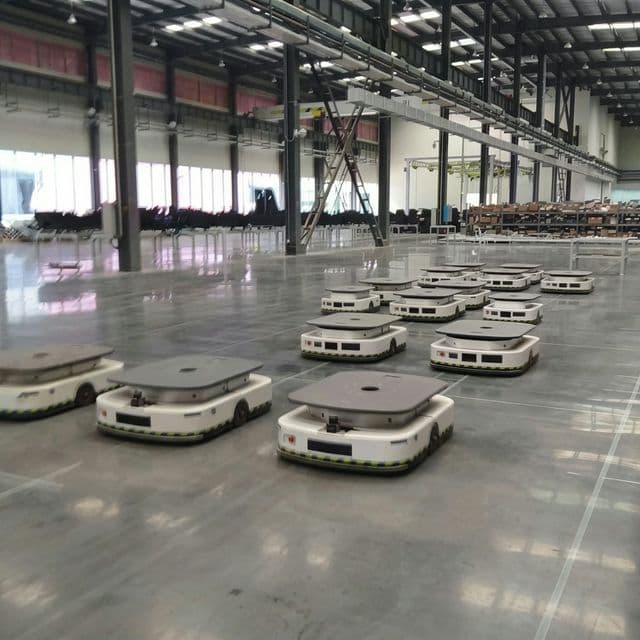
Decision-Level Conclusion: The July 2026 issuance of US Executive Order 14415 and the impending November 10, 2026, expiration of MOFCOM's extraterritorial control suspension create a dual-front compliance risk for AMR and AGV supply chains. Procurement teams must immediately audit the provenance of Neodymium-Iron-Boron (NdFeB) magnets within their integrated drive units and high-performance servo motors. Failure to map these Tier-2/Tier-3 BOM components before Q4 2026 exposes OEMs to sudden lead-time extensions, customs seizures under EO 14415 (taking full effect by 2027), and potential dual-use licensing blockages from China.
Research window: Last 30 Days (focusing on the July 2026 EO 14415 release). Geographic scope: United States, European Union, and Asia-Pacific warehouse automation markets. Target audience: AMR/AGV OEM engineers, robotics system architects, integration teams, and procurement managers.
What Changed: July 2026 Compliance Upgrades
The regulatory environment surrounding rare-earth permanent magnets shifted from a simmering geopolitical issue to an immediate supply chain reality. AMR traction modules—which rely on compact, high-torque NdFeB servos—are directly in the crosshairs of two major policy deadlines.
| Signal / Event | Date | What Changed (Last 30 Days) | Implication for AMR Buyers |
|---|---|---|---|
| US Executive Order 14415 | July 20, 2026 | Signed to secure defense supply chains, mandating strict sourcing transparency for NdFeB and SmCo magnets, removing waiver loopholes by 2027. | Commercial OEMs face collateral supply constraints as defense contractors aggressively lock up compliant non-Chinese NdFeB capacity. |
| US Project Vault & Price Floors | July 2026 | DoD mobilizes domestic industrial policy with $110/kg price floors, guaranteed offtake, and allied frameworks (Australia, Japan). | Emerging non-Chinese supply is expensive and prioritized for defense; commercial AMR buyers will see motor cost increases. |
| MOFCOM Announcement Expiry | Nov 10, 2026 | The suspension of China's aggressive 2025 export controls (including a 0.1% de minimis extraterritorial rule) expires unless renewed. | European and APAC motor suppliers using Chinese heavy rare earths face sudden dual-use licensing requirements, delaying motor shipments. |
| MOFCOM Enforcement Action | June 2026 | Established new reporting mechanisms to monitor unlicensed exports and third-country routing. | Heightened risk of customs delays for Tier-2 suppliers trying to bypass direct export controls via Southeast Asia. |
| OEM BOM Audits | July 2026 | Spike in Tier-1 robotics companies demanding sub-component material declarations from their drive unit vendors. | Procurement teams lagging behind will find it impossible to clear compliance checks for US defense or critical infrastructure deployments. |
Why it Matters: The AMR Drive Unit Bottleneck
AMR and AGV architectures demand maximum torque in the smallest possible footprint to leave room for batteries and payloads. This physics constraint makes high-grade NdFeB magnets (often with dysprosium or terbium additions for thermal stability) irreplaceable in modern servo motors.
When you purchase a "drive unit," you are typically buying an integrated assembly:
- Polyurethane Wheel
- Planetary Gearbox
- Servo Motor (The Risk Zone)
- Encoder & Brake
- Motor Controller (Drive)
The NdFeB rotor sits deep within the servo motor. Because OEMs buy the complete drive unit from Tier-1 suppliers, they often lack visibility into where the Tier-2 motor manufacturer sourced the raw magnetic blanks. Under EO 14415, "I didn't know" is no longer a valid defense for supply chain integrity.
Implementation Timeline: The 2026 Q3/Q4 Squeeze
The timeline is accelerating. While EO 14415 has a January 1, 2027 strict enforcement date for defense waivers, the commercial ripple effects are happening now.
| Date | Milestone / Event | Impact on AMR Component Procurement |
|---|---|---|
| July 20, 2026 | US EO 14415 Signed | Signals the beginning of strict NdFeB supply chain mapping. Commercial suppliers begin allocating "friendly" capacity to defense primes. |
| Q3 2026 | Audit Mandates | US robotics OEMs begin requiring Material Declarations from EU and APAC drive unit suppliers. |
| November 10, 2026 | MOFCOM Suspension Expires | If not renewed, extraterritorial export controls resume, meaning EU motor manufacturers using Chinese magnets could face export halts to the US. |
| January 1, 2027 | DoD Waiver Cessation | Full enforcement of 10 U.S.C. 4872. Any dual-use AMR platforms sold to the government must be 100% compliant. |
Risks and Limits: The Traceability Gap
Shifting magnet sourcing or securing compliance is not simply a matter of paperwork. It introduces profound technical and geopolitical boundaries.
Boundaries and Exemptions
- Not a Complete Embargo: EO 14415 targets defense acquisition directly, but commercial AMR builders are caught in the crossfire as motor suppliers standardise their production lines to meet the strictest standard.
- De Minimis Complexity: If MOFCOM's Announcement No. 61 comes back into force, a foreign-made servo motor containing just 0.1% controlled Chinese rare earth elements could trigger Chinese extraterritorial licensing before being exported to the US.
- Performance Trade-offs: Substituting NdFeB with ferrite or other magnet types in AMR drive units results in a 30-50% loss in torque density, requiring a larger motor diameter that may no longer fit in low-profile lurking AGVs.
- Technical Mitigation via GBD: To reduce exposure to the most heavily constrained heavy rare earths (Dysprosium, Terbium), Tier-2 motor vendors are shifting to Grain Boundary Diffusion (GBD) technology. GBD reduces Dy/Tb consumption by 30–50% while maintaining high-temperature performance (above 200°C).
Alternative Magnet Technologies for AMRs
| Magnet Technology | Torque Density Impact | High-Temp Stability | Supply Chain Risk | Engineering Action |
|---|---|---|---|---|
| Traditional NdFeB (Dy/Tb doped) | Baseline (Max) | Excellent (>200°C) | Critical (MOFCOM Export Delays) | Phasing out in high-risk regions; map BOM immediately. |
| GBD NdFeB | Near Baseline | Excellent (>200°C) | Moderate (30-50% less Dy/Tb) | Qualify GBD rotor suppliers; update motor specs to accept GBD variance. |
| Samarium Cobalt (SmCo) | -10% to -20% | Superior (>300°C) | High (Covered by EO 14415) | Use only if operating in extreme heat; secure non-Chinese (US/EU) SmCo. |
| Alnico / Ferrite | -30% to -50% | Good | Low ("Rare-Earth Free") | Requires complete chassis redesign; only viable for large/slow AGVs. |
Who Should Act Now: Buyer Action Checklist
Do not wait until a container of drive modules is held up at customs or a vendor declares force majeure.
| Responsibility | 30-Day Immediate Action | 90-Day Strategic Goal |
|---|---|---|
| Procurement Managers | Issue formal RFI to all drive unit/motor vendors requesting "End-Use Statements" and "Material Declarations" for NdFeB rotors. | Secure binding lead-time guarantees for Q4 2026 / Q1 2027 deliveries. Buffer inventory of critical modules. |
| Robotics Engineers | Identify which drive modules use high-grade NdFeB vs. standard grades. Map the torque requirements. | Qualify at least one alternative drive module supplier utilizing compliant (US/Allied) magnetic material sources. |
| Compliance Officers | Audit current dual-use exposure for AMRs deployed in government, defense, or critical infrastructure logistics. | Establish a real-time tracking system for MOFCOM export license approvals affecting your Tier-2 motor vendors. |
FAQ: NdFeB Controls and AMR Motors
Q: Our AMR uses integrated European drive units (like SWD). Are we exposed to US and Chinese controls? A: Yes. Even if the final drive unit is assembled in Europe, if the internal servo motor utilizes Chinese-origin NdFeB magnets, it may be subject to MOFCOM's extraterritorial licensing (if the November suspension expires) and will certainly require intense traceability under US EO 14415 for defense-adjacent projects.
Q: Can we just switch to a different type of magnet to avoid this? A: Switching away from NdFeB usually means moving to Samarium-Cobalt (SmCo)—which is also covered by EO 14415—or Ferrite, which drastically reduces torque density and increases the motor's physical size. In compact AMRs, changing the motor diameter usually requires a complete chassis redesign.
Q: What exactly happens on November 10, 2026? A: If Beijing does not renew the suspension agreement, previously suspended export controls (including strict dual-use licensing and extraterritorial de minimis rules for rare earths) will reactivate. This will cause an immediate backlog in export approvals for raw magnets and magnet-containing components leaving China.
Sources
- The White House (July 2026): "Executive Order 14415 on Securing America's Defense Supply Chains and Ensuring Domestic Acquisition of Critical Materials." whitehouse.gov
- Federal Register (July 23, 2026): Publication of EO 14415 detailing restrictions on 10 U.S.C. 4872 covered materials, including NdFeB and SmCo magnets. federalregister.gov
- Ministry of Commerce, PRC (MOFCOM): Announcement No. 70 of 2025 regarding the temporary suspension of export controls, set to expire November 10, 2026. mofcom.gov.cn
- CSIS Aerospace Security Project (July 2026): "Rare Earth Export Restrictions One Year Later" detailing Project Vault, $110/kg price floors, and allied frameworks. csis.org
- Arnold Magnetic Technologies (2026 Outlook): "China’s Rare Earth Export Delays: 2025–2026 Magnet Supply Chain Outlook" focusing on SmCo and non-Chinese sourcing. arnoldmagnetics.com