
Direct Drive Hub Motors vs. Planetary Gear Drive Units for AMRs: OEM Sourcing Guide
Compare AMR drive unit options for AGVs and AMRs: torque density, backlash, TCO, thermal limits, and RFQ criteria before you contact suppliers.
By Jimmy Su · B2B Applications & OEM Program Lead
Last reviewed: 2026/07/22
MDX editorial page reviewed for buyer-facing scope, date boundaries, source traceability, and internal-link coverage.
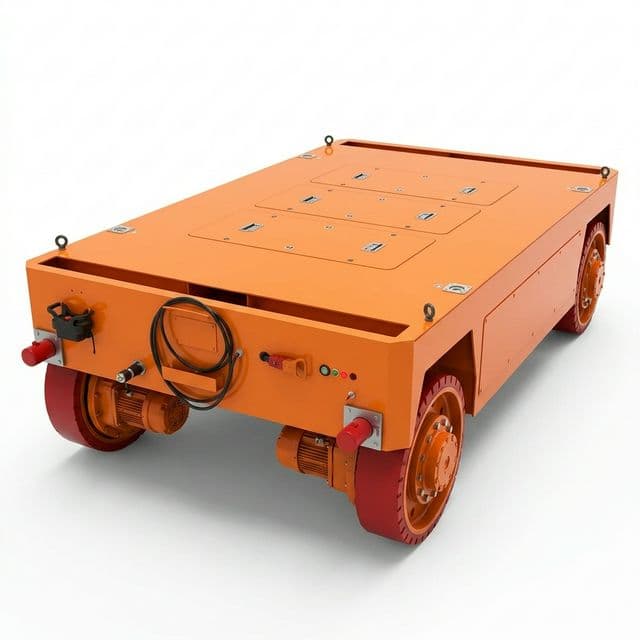
One-line buyer decision (as of 2026-07-22): For continuous heavy-duty towing (above 1,500kg payloads) and high torque at low speeds, Planetary Gear Drive Units remain the standard. However, for compact AMRs requiring zero maintenance, ultra-low noise, and zero backlash in cleanroom or hospital environments, Direct Drive Hub Motors offer a superior Total Cost of Ownership (TCO).
Scope: Global English-language AMR drive unit sourcing guidance for AMR/AGV OEMs evaluating 24V to 48V wheel-drive modules; local machine-safety, EMC, and site certification requirements still need project-level confirmation.
The choice between a Direct Drive Hub Motor and a Planetary Gear Drive Unit is one of the most consequential architectural decisions an AMR (Autonomous Mobile Robot) or AGV (Automated Guided Vehicle) engineering team can make. It dictates not only the physical footprint of the robot but also its acoustic profile, maintenance schedule, and dynamic precision.
This comprehensive sourcing guide provides procurement teams, mechanical engineers, and robotics product managers with a clear framework to evaluate these two dominant drive wheel module technologies, ensuring the selected architecture aligns with application boundaries and cost targets.
The Architectural Divergence in Mobile Robotics
A mobile robot's drive wheel module is responsible for converting electrical energy into precise mechanical traction. Historically, the standard formula was simple: a high-speed servo motor coupled with a multi-stage gearbox to multiply torque and reduce speed. However, advancements in high-density magnetic materials and frameless torque motors have made gearless, direct-drive solutions highly viable for industrial robotics.
Understanding Planetary Gear Drive Units
In a planetary gear setup (often referred to as a geared hub drive), a high-speed, low-torque motor (usually a BLDC or AC Servo) is mated to a planetary reducer. The planetary arrangement—a central "sun" gear driving multiple "planet" gears orbiting inside a "ring" gear—allows for massive torque multiplication within a relatively compact cylindrical housing.
Key Advantages:
- Exceptional Torque Density: By utilizing gear ratios (e.g., 10:1 to 40:1), these units can push massive payloads (2,000kg to 5,000kg+) without requiring an oversized motor.
- Thermal Distribution: Heat generation is shared between the high-speed motor and the gearbox, preventing isolated hot spots.
- Cost-Effective at Scale: Standardized planetary gearboxes and mass-produced servo motors keep initial CapEx low for standard payload requirements.
Primary Limitations:
- Backlash: Mechanical play between gears (backlash) can degrade positioning accuracy, especially during direction reversals or fine docking maneuvers (critical for VDA 5050 compliance).
- Maintenance overhead: Gears require periodic lubrication to prevent catastrophic wear, adding to the end-user's TCO.
Understanding Direct Drive Hub Motors (Gearless)
A direct drive hub motor integrates the motor stator directly into the wheel axle, with the rotor attached to the wheel rim itself. It completely eliminates the planetary gear reduction system. The motor is designed with high pole counts to produce high torque natively at low RPMs (often referred to as a torque motor).
Key Advantages:
- Zero Backlash: With no gears, mechanical backlash is eliminated, enabling extremely high-precision docking and navigation.
- Zero Maintenance: No gearbox means no lubrication, no gear wear, and no oil leaks. This is a massive selling point for end-users operating 24/7 fleets.
- Acoustic Silence: Without the whine of high-speed gears meshing, direct drive units are nearly silent, making them ideal for hospitals, offices, and quiet cleanrooms.
Primary Limitations:
- Size-to-Torque Ratio: To achieve high torque without a gearbox, the motor's diameter must be significantly larger. A direct drive motor will always be wider/larger than a geared motor delivering the exact same continuous torque.
- Thermal Constraints: Because the motor operates at low speeds and high currents to generate torque natively, it can suffer from rapid heat buildup if stalled or pushing maximum payloads on an incline for prolonged periods.
Architectural Visualization: Direct Drive vs. Planetary
To visualize the structural difference and its impact on the AMR chassis, refer to the following schematic representation.
Figure 1: Cross-sectional architecture comparison demonstrating the axial space savings of a direct drive configuration compared to the multi-component footprint of a planetary gear setup.
Core Comparison: Technical & Procurement Data
When evaluating suppliers, OEM purchasing teams must look beyond peak power figures. The following structured table provides the definitive engineering and commercial baseline for comparing these two topologies.
| Decision Dimension | Planetary Gear Drive Unit | Direct Drive Hub Motor | Sourcing Implication |
|---|---|---|---|
| Torque Generation Strategy | High speed × Gear reduction | High pole count × High current | Direct drive needs a higher amp-rated motor controller. |
| Peak Torque Capacity | Extremely High (Up to 500Nm+) | Moderate (Typically < 150Nm) | Use planetary gears for heavy-duty forklifts and tuggers. |
| Mechanical Backlash | 3 to 15 arc-minutes (depending on quality) | Zero (0 arc-minutes) | Direct drive is mandatory for sub-millimeter precision docking. |
| Maintenance & TCO | Requires periodic lubrication/oil changes. | Maintenance-Free. | Direct drives win fleet TCO calculations for continuous warehouse ops. |
| Acoustic Noise Levels | 65dB to 80dB (Gear meshing whine) | < 50dB (Near silent) | Direct drive is essential for hospital AMRs, retail bots, and quiet zones. |
| Space Utilization (Form Factor) | Long axial length, smaller diameter | Short axial length, larger diameter | Direct drive allows for ultra-low profile AMRs (e.g., under-rack lifters). |
| Thermal Management | Heat dispersed across motor and gearbox | Heat concentrated in the wheel hub | Direct drives require strict continuous-torque derating during validation. |
| Cost at Low Payload (<500kg) | Standard cost baseline | Often slightly more expensive | The premium for direct drive is offset by maintenance savings. |
Application Boundaries: When to Use Which?
The decision rarely comes down to one technology being universally "better." Instead, it is about aligning the topology with the physical and environmental boundaries of the robot's deployment scenario.
When to Source Planetary Gear Drive Units
- Heavy-Duty Tow Tractors and Automated Forklifts: If the vehicle must tow 2,000kg+ carts or lift massive pallets, the torque multiplication of a planetary gearbox is non-negotiable. Designing a direct drive motor to produce 500Nm natively would result in a wheel too large to fit in standard chassis footprints.
- High-Incline Environments: If the AMR frequently navigates ramps with heavy payloads, gears prevent the motor from constantly operating in a high-current, low-efficiency stall state, which causes thermal runaway.
- Cost-Sensitive, Standard Precision Systems: If millimeter-perfect docking isn't required and acoustic noise isn't a factor (e.g., a noisy factory floor), planetary units offer a proven, cost-effective baseline.
When to Source Direct Drive Hub Motors
- Low-Profile "Under-Ride" Sortation Bots: In e-commerce fulfillment centers, robots must slide under very low storage racks. The ultra-compact axial length of direct drive motors allows for flatter, sleeker AMR chassis designs.
- Zero-Maintenance Fleet Deployments: For fleets of 500+ AMRs running 24/7, pulling a robot offline to repack gearbox grease represents unacceptable downtime. Direct drive units are fundamentally "install and forget."
- Cleanrooms, Hospitals, and Retail: The elimination of gear oil removes the risk of contamination, and the silence of gearless operation prevents disturbance in human-dense environments.
- VDA 5050 / High-Precision Docking: Without gear backlash, the navigation controller has perfect 1:1 mapping between motor commutation and wheel movement, ensuring the robot stops exactly where intended.
OEM Sourcing & Engineering Validation Checklist
Before issuing a Purchase Order (PO) or proceeding to a pilot build, engineering and procurement teams must validate the supplier using this stringent checklist.
✅ AMR Drive Unit RFQ Checklist
- Verify Continuous Torque vs. Peak Torque: Do not size based on peak torque. Ensure the continuous (rated) torque meets the AMR's requirements at a nominal speed without exceeding Class F (155°C) insulation limits.
- Request Thermal Derating Curves: (Critical for Direct Drive). Ask the supplier for data showing how much torque is lost as the motor hub heats up during a 60-minute continuous run.
- Confirm Backlash Specifications: (For Planetary Gears). Ensure the datasheet explicitly states the maximum backlash in arc-minutes, and verify it aligns with the robot's navigation tolerance.
- Validate Encoder Integration: Does the unit use absolute or incremental encoders? Are they optical (vulnerable to dust) or magnetic? Ensure it matches your motion controller's input requirements.
- Review Sealing & IP Rating: For washdown or outdoor AMRs, verify the unit holds a genuine IP65 or IP67 rating, specifically protecting the bearings and encoder housing from water ingress.
- Confirm Radial Load Limits: The drive unit acts as the structural wheel. Verify that the bearings can support the AMR's weight plus the maximum dynamic payload during cornering.
Anticipating Risks and Trade-offs
The Thermal Risk in Direct Drives Because direct drive motors lack mechanical advantage, generating high torque at zero speed (e.g., holding a robot on a ramp) requires pushing massive amounts of electrical current through the stator. This generates $I^2R$ (resistive) heating very quickly. If the drive unit is encapsulated inside the robot chassis with poor airflow, the motor can overheat, triggering thermal protection shutdowns. Procurement must demand "stall torque thermal time limits" from suppliers.
The Mechanical Risk in Planetary Gears While robust, planetary gearboxes introduce failure points. Poorly machined gears generate significant noise and wear quickly. Furthermore, if an AMR crashes or is subjected to a massive shock load, the brittle teeth of a planetary gear can shear, whereas a direct drive system might simply slip magnetically without mechanical damage.
Frequently Asked Questions (FAQ)
Q: Can a direct drive hub motor achieve the same top speed as a geared motor? Yes, and often higher. Direct drive motors do not have to worry about the mechanical speed limits or lubrication breakdown of high-speed input gears. However, they require higher voltage (e.g., 48V) to overcome back-EMF at high speeds.
Q: Why are planetary gears louder than direct drive? The noise in geared systems comes from the mechanical meshing of metal teeth at high velocities. Even precision-machined helical planetary gears will generate an audible whine under load, whereas direct drives only emit a faint electromagnetic hum.
Q: Are direct drive units significantly heavier? Not necessarily. While the motor itself uses more copper and larger magnets, eliminating the heavy steel gearbox often results in a comparable or even lighter total module weight.
Q: Which technology offers better energy efficiency? It depends on the operating point. Direct drives are highly efficient at moderate speeds because there are no frictional gear losses (often saving 5-10% efficiency). However, planetary gears are much more efficient when holding heavy loads at very low speeds or on inclines.
Q: Do direct drive motors require special motor controllers? They generally require high-current, low-inductance servo drives with excellent low-speed commutation algorithms. A low-quality controller will cause a direct drive motor to "cog" or shudder at very low speeds, ruining its precision advantages.
Conclusion & Next Steps
The shift toward direct drive hub motors is accelerating in the sub-1000kg AMR market due to the overwhelming benefits of zero maintenance, zero backlash, and silent operation. However, planetary gear drive units will remain the undisputed champions of heavy-duty, high-payload industrial automation.
For procurement and engineering teams, the decision must be data-driven. Map your payload, speed, space constraints, and precision requirements against the inherent physics of these two technologies.
Ready to spec your next drive wheel module? Review our brushless integrated fieldbus drive unit, or Contact our Engineering Team for a custom torque-matching consultation and thermal analysis for your specific robot chassis.
Sources & References
- Hans Motor: Why AGV and AMR Manufacturers Are Switching to Direct Drive Torque Motors - Review Article
- Nuodun Drive: Why Planetary Gear Reducers Are Ideal for Mobile Robot Drive Wheel Modules - Review Article
- Harmonic Drive: HPG AGV/AMR White Paper - Technical PDF
- Dunkermotoren: AGV/AMV/AMR Gear Motors & Efficiency Standards - Review Article
- IEC Standard 60034-1: Rotating electrical machines - Rating and performance (Used for establishing continuous thermal torque boundaries).