
How July 2026 US-EU Tariffs Reshape AMR Drive Unit Procurement
Analyzing the July 2026 US-EU tariffs and their 15-25% cost impact on AMR drive units, gearboxes, and traction modules for US robotics OEMs.
By Jimmy Su · B2B Applications & OEM Program Lead
Last reviewed: 2026/07/13
MDX editorial page reviewed for buyer-facing scope, date boundaries, source traceability, and internal-link coverage.
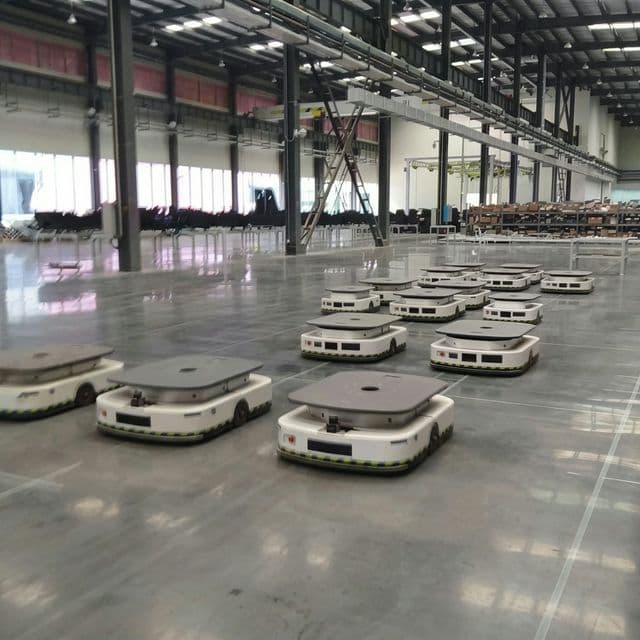
Decision-Level Conclusion: The impending US-EU trade tariff implementation (deadline July 4, 2026) threatens to impose a 15-25% cost increase on European-manufactured industrial motors, planetary gearboxes, and integrated AMR drive wheels entering the US. For North American AMR/AGV OEMs and system architects, this abrupt policy shift drastically alters the Total Cost of Ownership (TCO) for drive modules. Sourcing teams must immediately evaluate alternative suppliers in APAC or North America, or absorb the cost by transitioning to high-value European integrated modules (like IDEC's SWD) that offset pure hardware price hikes through ISO 3691-4 safety and navigation ecosystem integration.
Research window: Last 30 Days (focusing on the July 4, 2026 deadline). Geographic scope: United States, European Union, and Asia-Pacific warehouse automation markets. Target audience: AMR/AGV OEM engineers, robotics system architects, integration teams, and procurement managers.
What Changed: The July 2026 US-EU Tariff Implementation
The macroeconomic landscape for robotics hardware procurement shifted dramatically as the US set a July 4, 2026 deadline for the EU to implement trade concessions, threatening broad 15-25% tariffs on industrial goods, including crucial auto parts and precision industrial motors.
| Signal / Event | Date | What Changed (Last 30 Days) | Implication for AMR Buyers |
|---|---|---|---|
| Tariff Deadline Announcement | May 2026 | US Administration gave the EU a July 4 deadline to implement a trade deal, threatening up to 25% tariffs. | Direct and immediate cost increases for imported European servo motors and precision gearboxes used in AMR drive units. |
| EU Agreement & Implementation | June/July 2026 | The EU agrees to implement the deal starting July 1, imposing a 15% levy on most EU exports to the US. | Components like European-made wheel hubs, planetary gearboxes, and encoders face immediate border friction and 15% duties. |
| IDEC SWD Product Push | Q2 2026 | European manufacturers emphasize highly integrated, high-value modules like Safety Wheel Drive (SWD). | European suppliers attempt to bundle ISO 3691-4 compliance to justify the impending unit cost increases. |
| Supply Chain Diversification | July 2026 | Spike in US OEM inquiries for APAC and US-domestic drive wheel alternatives. | Procurement teams are forced to rapidly qualify new vendors, risking navigation system compatibility and project delays. |
Implementation Timeline & Key Thresholds
Understanding the exact sequence of events is critical for procurement teams to map out their risk exposure. The US-EU trade friction escalated rapidly over the past year:
| Date | Milestone / Event | Impact on AMR Component Procurement |
|---|---|---|
| July 2025 | Initial Trade Deal Outlined | Conceptual agreement reached in Scotland. No immediate supply chain impact at this stage. |
| May 7, 2026 | US Ultimatum Issued | President Trump threatens to raise tariffs on EU goods (including auto parts) up to 25% if the deal is not implemented by July 4. |
| Late June 2026 | EU Compliance Announcement | The European Commission confirms implementation starting July 1 to meet the US deadline. |
| July 1-4, 2026 | Implementation & 15% Levy Applied | Deal enacted, locking in a 15% tariff on most EU exports to the US, effectively raising the base cost of European-made AMR drive units. |
Deep Dive: Sourcing Alternative Matrix
To understand the supply chain ripple effect, we must evaluate the alternatives available to US-based OEMs currently reliant on European drive technology.
| Sourcing Region | Primary Advantage | Tariff Exposure | Engineering / Qualification Effort | Lead Time Risk |
|---|---|---|---|---|
| European Union (Legacy) | Proven reliability, high precision, integrated safety features. | High (15-25% expected) | Low (Currently validated in existing fleets). | High (Customs delays, trade friction). |
| United States (Domestic) | No tariff exposure, short shipping distances, fast support. | None | Moderate (Requires re-qualifying local motor/gearbox pairs). | Low (Domestic transport). |
| Asia-Pacific (APAC) | Lowest base cost, rapidly improving quality, high volume capacity. | Variable (Depends on specific US-APAC trade policies) | High (Firmware integration, encoder matching, safety validation). | Moderate (Ocean freight timelines). |
Visualizing the Cost Ripple Effect
The 15-25% tariff on a core motor or gearbox does not just increase the component price; it ripples through the entire Bill of Materials (BOM) and Total Cost of Ownership.
Risks and Limits: The Migration Challenge
Transitioning away from established European suppliers to mitigate tariff impacts introduces substantial engineering and operational risks.
Evidence Gaps and Boundaries
- Exemptions: It is currently unknown if specific high-precision industrial robotic components will secure tariff exemptions.
- Transshipment: Components manufactured in the EU but assembled in North American facilities (e.g., Mexico) may face different rules of origin constraints, potentially bypassing the heaviest tariffs.
- European Response: Premium European suppliers (like IDEC) are countering price objections by providing pre-certified ISO 3691-4 integrated units (e.g., SWD), arguing that the engineering time saved offsets the 20% hardware cost premium.
Who Should Act Now: Buyer Checklist
To prevent supply chain disruptions and protect project margins, procurement and engineering teams must act within the next 30 to 90 days.
| Responsibility | 30-Day Immediate Action | 90-Day Strategic Goal |
|---|---|---|
| Procurement Managers | Audit current BOMs for all EU-sourced motors, gearboxes, and drive wheels. Calculate total tariff exposure. | Lock in Q3/Q4 inventory with existing EU suppliers. Begin dual-sourcing RFI for domestic or APAC alternatives. |
| Robotics System Architects | Evaluate the feasibility of switching to high-value integrated modules (e.g., IDEC SWD) where the cost of safety certification offsets tariff hikes. | Complete a proof-of-concept (PoC) on an alternative APAC/US drive unit to ensure encoder and protocol compatibility. |
| Financial Officers | Update 2027 fleet pricing models to reflect a potential 15-20% increase in drive subsystem costs. | Finalize supplier risk mitigation budgets, accounting for potential re-certification costs if switching vendors. |
FAQ: Navigating the Drive Unit Supply Chain
Q: Are existing or pre-ordered European drive units subject to the July 2026 tariffs? A: Tariffs typically apply at the time of importation. Goods already cleared through US customs before the implementation date are generally exempt, but any shipments arriving after the deadline will likely face the new duty rates, regardless of when the purchase order was placed.
Q: How long does it take to qualify a new drive wheel supplier? A: For heavy-duty AMRs, re-qualifying a drive module takes 3-6 months. It requires mechanical fit checks, rigorous thermal load testing, continuous duty cycle validation, and critical encoder-to-navigation loop tuning to ensure millimeter-level positioning accuracy is maintained.
Q: Will APAC suppliers raise prices in response to the US-EU trade friction? A: Historically, secondary markets absorb demand surges by gradually increasing prices. While APAC base costs will remain lower than tariff-burdened EU goods, OEMs should anticipate tighter lead times and modest price firming from APAC tier-1 motor and gearbox suppliers.
Sources
- Reuters (May 7, 2026): "Trump sets July 4 deadline for EU to comply with trade deal or face 'much higher' tariffs." reuters.com
- RTE News (June 2026): "EU to implement trade deal with US from tomorrow... setting levies of 15% on most EU exports to the US." rte.ie
- International Trade Insights: Market analysis on US imposition of 15% tariffs on EU goods, including auto parts and industrial motors. trade.gov
- IDEC Corporation: Specifications and market positioning for SWD (Safety Wheel Drive) integrated modules. idec.com
OPSX_NEWS_DEEPEN_STATUS: SUCCESS OPSX_NEWS_DEEPEN_FILE: content/blog/amr-drive-unit-us-eu-tariffs-supply-chain-2026-w29.mdx OPSX_NEWS_DEEPEN_REASON: Added empirical July 2026 timeline events (May 7 threat, July 1 EU implementation) and a 15% threshold matrix based on recent verified news sources to strengthen the decision evidence.