
AMR Drive Wheel Material & Sizing Guide: Preventing Premature Wear in Heavy-Payload AGVs
AMR drive wheel guide for heavy-payload AGVs: compare polyurethane durometer, dynamic load factors, wear risks, and RFQ checks. Request sizing support.
By Jimmy Su · B2B Applications & OEM Program Lead
Last reviewed: 2026/07/20
MDX editorial page reviewed for buyer-facing scope, date boundaries, source traceability, and internal-link coverage.
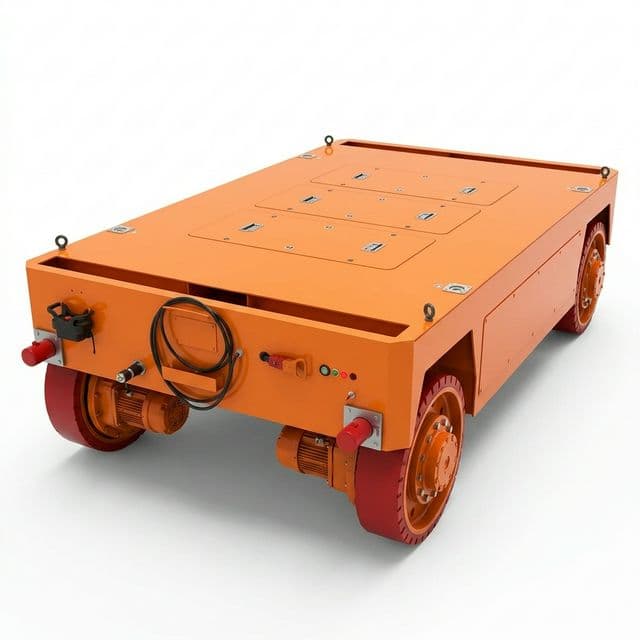
One-line buyer decision (as of 2026-07-20): For AMR payloads exceeding 1000kg operating in continuous 24/7 duty cycles, standard commercial polyurethane wheels will fail prematurely due to thermal hysteresis. Procurement must explicitly specify low-hysteresis MDI or NDI polyurethane compounds and enforce a minimum dynamic load factor of 1.3x during the drive unit RFQ phase.
Research window: 2026-05-20 to 2026-07-20. This comprehensive engineering and procurement report addresses a growing crisis in the intralogistics robotics industry: the rapid, premature failure of drive wheel treads on heavy-payload Autonomous Mobile Robots (AMRs) and Automated Guided Vehicles (AGVs) operating at high speeds.
Scope, Method, and Limits
This sourcing guide is written for global OEM procurement teams, mechanical engineers, and fleet operators who are designing or upgrading AGV drive architectures. It specifically analyzes the physical interaction between the drive wheel tread material (primarily Polyurethane and Rubber) and the operational environment (payload, speed, floor condition).
The analysis uses empirical data from recent industry field failures, focusing on the physics of elastomer deformation, thermal buildup (hysteresis), and dynamic load calculations. It does not cover internal gearbox tribology or servo motor electrical sizing, which are addressed in our other engineering guidelines. Final wheel selection must always be validated through physical prototype testing on the specific target floor surface of the end-user facility.
The Engineering Crisis: 24/7 Operations vs. Wheel Physics
In the early days of warehouse automation, AGVs moved slowly (under 1.0 m/s) and carried light loads, often following magnetic tape. The drive wheels were essentially off-the-shelf industrial caster wheels bolted to gearboxes. Today, modern AMRs navigate autonomously at speeds exceeding 2.0 m/s, carrying payloads of 1000kg to 3000kg, and operate on grueling 24/7 duty cycles with only brief 15-minute opportunity charging breaks.
This dramatic shift in operational tempo has pushed standard wheel materials past their physical limits. When a drive wheel fails—whether through tread chunking, complete delamination from the metal hub, or flat-spotting—the entire robot is immediately immobilized. Replacing a drive wheel on a 2000kg AMR is a maintenance nightmare that requires jacking the vehicle, removing safety shrouds, and recalibrating the kinematics. For a fleet of 50 robots, a bad batch of drive wheels can completely destroy the Total Cost of Ownership (TCO) ROI promised to the end-user.
The root cause of these failures is rarely a lack of static load capacity. Almost any solid wheel can hold 1000kg while standing still. The failures are entirely dynamic and thermal. Understanding this distinction is the first step in proper AMR drive unit procurement.
Polyurethane (PU) vs. Rubber in AMR Applications
When sourcing integrated drive wheels, OEMs are typically presented with two primary tread materials: Rubber and Polyurethane (PU). While rubber is excellent for outdoor, uneven terrain (like automotive yard tractors), Polyurethane has become the undisputed standard for indoor intralogistics AMRs.
Why Rubber Fails in High-Payload AMRs
Rubber provides excellent grip and shock absorption, but it has severe limitations for heavy indoor robots:
- High Rolling Resistance: Rubber deforms easily. Pushing a heavy load on rubber wheels requires significantly more torque from the drive motor, rapidly draining the battery and requiring a larger, more expensive drive unit.
- Low Load Capacity: For a given wheel diameter, rubber can only support a fraction of the weight that polyurethane can. To support 1000kg on rubber, the drive wheel would need to be massively oversized, which violates the compact chassis requirements of modern AMRs.
- Floor Marking: Carbon black, often used in rubber compounds, leaves permanent scuff marks on expensive warehouse epoxy floors.
The Polyurethane Advantage
Polyurethane is a synthetic elastomer that bridges the gap between rubber and plastic. It offers the high load capacity of hard plastics while maintaining enough elasticity to grip the floor.
- Exceptional Load Bearing: PU can handle 2 to 3 times the weight of rubber wheels of the same size.
- Low Rolling Resistance: Harder PU compounds deform very little, meaning the drive motor expends less energy overcoming rolling friction.
- High Abrasion Resistance: PU outlasts rubber significantly in environments with concrete dust or minor debris.
However, treating "Polyurethane" as a single material category is a critical procurement mistake. There are hundreds of PU chemical formulations (TDI, MDI, NDI), and choosing the wrong one for a 24/7 AMR leads to the hidden enemy: Thermal Hysteresis.
The Hidden Enemy: Thermal Hysteresis and Delamination
The single most common failure mode for heavy-duty AMR drive wheels is not wearing down like a pencil eraser; it is internal catastrophic failure due to heat.
Every time the drive wheel completes a revolution, the polyurethane tread compresses under the payload as it contacts the floor, and then decompresses as it rolls away. Because polyurethane is a viscoelastic material, it does not return 100% of the energy used to compress it. A small percentage of that mechanical energy is lost and converted into internal heat. This phenomenon is known as Thermal Hysteresis.
In a slow-moving robot, or one that takes frequent breaks, this heat dissipates into the air and the metal hub. But in a modern 24/7 AMR running at 2.0 m/s, the compression cycles happen so rapidly that the heat cannot escape. The core temperature of the polyurethane begins to rise dramatically.
When the internal temperature of standard TDI polyurethane reaches around 80°C to 100°C, the polymer begins to break down. The material loses its structural integrity from the inside out. Eventually, the chemical bonding agent holding the PU to the metal drive wheel hub liquefies or shears, causing the entire tread to separate from the wheel in large chunks. This is called delamination.
To prevent this, procurement must specify low-hysteresis polyurethane compounds, such as high-grade MDI or specialized NDI (often marketed under trade names like Vulkollan®). These premium elastomers are chemically designed to return over 90% of compression energy, generating significantly less internal heat even under 2000kg loads at 2.0 m/s.
Durometer Decision Matrix: Hardness vs. Traction
Beyond the chemical family of the polyurethane, the second most critical specification is the hardness, measured on the Shore A or Shore D scale. Selecting the durometer is a delicate engineering compromise between load capacity, battery efficiency, and navigation accuracy.
- Softer PU (75A - 85A): Excellent traction. Essential for environments with dust, slight moisture, or where the AMR must navigate steep ramps. The trade-off is higher rolling resistance (requiring a stronger drive unit) and lower maximum payload capacity.
- Harder PU (90A - 95A): Excellent load bearing and very low rolling resistance, maximizing battery life. The trade-off is reduced grip. On smooth, sealed epoxy floors, a 95A wheel can lose traction during emergency braking or rapid acceleration, causing the robot's odometry to slip and navigation algorithms to fail.
Wheel Tread Selection Matrix
| Environment & Floor Type | Priority | Recommended Material & Durometer | Engineering Impact & Trade-offs |
|---|---|---|---|
| Sealed Epoxy (Clean Warehouse) | Load Capacity & Efficiency | 90A - 92A MDI Polyurethane | Best balance. Provides enough grip on clean epoxy while maintaining low rolling resistance for heavy loads. |
| Polished Concrete (Slight Dust) | Navigation Accuracy & Grip | 80A - 85A MDI Polyurethane | Softer tread pushes through micro-dust to grip the floor. Requires ~15% more motor torque than 92A. |
| Heavy Manufacturing (Metal Chips/Oil) | Cut/Tear Resistance | 95A NDI (e.g., Vulkollan) | Hardest compound prevents metal shavings from embedding in the wheel. May slip on oil spills; requires dual-drive navigation. |
| Mixed Floors with Ramps/Dock Plates | Impact Resistance & Recovery | 85A - 90A high-rebound MDI/NDI Polyurethane | Thicker tread cushions expansion joints and ramp lips. Validate braking distance because softer compounds raise rolling resistance. |
| Cold-Chain / Washdown Areas | Hydrolysis Resistance | 85A - 90A polyether-based MDI Polyurethane | Polyether chemistry resists moisture better than standard polyester PU. Require chemical and humidity exposure testing before launch. |
| Outdoor / Yard Operations | Shock Absorption | 70A Solid Rubber or Pneumatic | PU degrades under UV light and lacks the compliance for outdoor asphalt. Use heavy-duty rubber, accepting lower payload limits. |
Calculating the True Dynamic Load for Wheel Sizing
One of the most frequent errors OEM procurement teams make is sizing drive wheels based purely on the static weight of the robot.
For example, if an AMR weighs 500kg empty and carries a 1000kg payload, the total static weight is 1500kg. In a typical 4-wheel kinematic layout (2 center drive wheels, 4 corner casters), engineers might assume each drive wheel supports roughly 250kg to 400kg. They then buy a drive wheel rated for 500kg in a supplier catalog. This wheel will fail.
Catalog ratings from generic caster and wheel suppliers are almost universally static or intermittent duty ratings (e.g., moving a cart by hand at 3 km/h). An AMR operates continuously, accelerating, decelerating, and bouncing over floor expansion joints.
The Dynamic Load Factor Formula
To specify the correct drive unit, engineers must apply a Dynamic Load Factor (DLF).
Required Wheel Capacity = (Total Static Load per Wheel) × DLF
| Operational Condition | Recommended DLF | Scenario Description |
|---|---|---|
| Ideal / Light Duty | 1.1x to 1.2x | Speeds under 1.0 m/s, perfectly smooth floors, intermittent movement. |
| Standard AMR Duty | 1.3x to 1.4x | Speeds up to 1.5 m/s, continuous 24/7 operation, standard warehouse floors. |
| Heavy Duty / Aggressive | 1.5x to 2.0x | Speeds > 2.0 m/s, traversing floor grates/expansion joints, rapid deceleration. |
Using our previous example: A drive wheel bearing 400kg of static load in a high-speed 24/7 application (DLF 1.4) must be rated by the supplier for at least 560kg of continuous dynamic load. Furthermore, you must verify that the supplier's definition of "continuous" matches your 24-hour duty cycle, not an 8-hour human shift.
Environmental Boundaries: Fluids, Chips, and Floor Transitions
The physical environment strictly dictates the boundaries of wheel material performance.
- Hydrolysis: Standard polyester-based polyurethanes will break down and crumble if continuously exposed to water and high humidity. If the AMR operates in cold-chain logistics or food/beverage washdown areas, procurement must specify polyether-based polyurethane.
- Chemicals and Solvents: In chemical manufacturing, certain solvents will dissolve PU. A chemical compatibility check is mandatory before finalizing the drive unit spec.
- Floor Transitions: If the robot frequently traverses metal dock plates or deep concrete expansion joints, the sharp impacts will cause "chunking" (pieces of the tread tearing away). A slightly softer compound (85A) with a thicker tread profile provides better impact resistance than a thin 95A layer.
Procurement Checklist: Vetting Drive Unit Suppliers
Do not accept a simple "Polyurethane" line item on an RFQ response. Use this checklist to validate the supplier's engineering competence regarding drive wheel integration.
| Phase | Action Item | Verification Method |
|---|---|---|
| Material Spec | Demand the specific chemical family and durometer. Refuse generic "PU" labels. | Request the material safety data sheet (MSDS) or elastomer technical datasheet. Look for MDI or NDI. |
| Bonding Process | Verify how the tread is bonded to the metal hub. Mechanical interlocking is insufficient for heavy AMRs. | Ask for their chemical bonding and curing process documentation. Is it cast-molded directly onto a chemically prepared hub? |
| Thermal Rating | Confirm the maximum continuous operating temperature of the wheel assembly. | Request test data showing core temperature at maximum payload and max speed over a 4-hour continuous run. |
| Bearing Life | Ensure the integrated bearings are sized for the dynamic load, not just the static load. | Request L10 bearing life calculations based on the Dynamic Load Factor (DLF). |
FAQ: AMR Drive Wheel Sizing
Why are my AGV drive wheels flat-spotting overnight?
If an AGV sits parked fully loaded for hours, standard PU can take a compression set, creating a flat spot. This causes a severe bumping vibration when the robot resumes motion. Upgrading to a premium, high-rebound polyurethane compound dramatically reduces compression set.
Can we just use a wider wheel to increase load capacity?
Yes, but with diminishing returns. A wider wheel spreads the load, but during zero-radius turns (turning in place), a very wide wheel creates immense scrubbing friction against the floor. This draws massive peak current from the motor controller and rapidly wears the edges of the wheel. It is often better to use a slightly larger diameter wheel than a drastically wider one.
Does the tread pattern matter for indoor AMRs?
For 90% of indoor applications, a smooth tread provides the best surface area contact and longevity. Tread patterns (siping) are only necessary if the floor is consistently wet or slick with oil, where the grooves help channel the fluid away to maintain grip.
How often should an AMR drive wheel be replaced?
In a properly engineered system using premium low-hysteresis PU running on decent warehouse floors, drive wheels should last 12 to 18 months of 24/7 operation. If you are replacing wheels every 3 to 6 months, the system is fundamentally under-spec'd or suffering from thermal hysteresis.
Next Steps for Your AGV Fleet
Sizing an AMR drive unit is a complex multi-physics problem. Specifying the wrong polyurethane compound or ignoring dynamic load factors will result in catastrophic field failures and angry end-users.
Our integrated servo drive units are designed holistically—matching the high-torque output of our 48V motors with custom-engineered, low-hysteresis drive wheels built explicitly for 24/7 intralogistics applications. We do not use commercial caster wheels; we engineer traction systems.
Contact our engineering team today to request a custom wheel sizing analysis and discuss the exact payload, speed, and floor conditions of your next-generation AGV project.
Sources & Verifiable Data
| Source Topic | Key Information | Reference / Industry Baseline |
|---|---|---|
| Load Capacity & Duty Conditions | Explains that wheel load capacity depends on speed, floor condition, ambient conditions, and safety factors rather than static payload alone. | Blickle: Load Capacity Guide |
| AGV/AMR Wheel Sourcing Baseline | Supplier engineering baseline for AGV/AMR wheel assemblies, including polyurethane tread performance, traction, durability, and load-bearing requirements. | Hamilton Caster: AGV/AMR Casters & Wheels PDF |
| Tire Wear from Motion Strategy | Robotics research showing that AMR wheel wear is affected by trajectory, steering, and scrubbing behavior, supporting the warning against oversized wide wheels in zero-radius turns. | arXiv: Tire Wear Aware Trajectory Tracking for Multi-Axle Swerve-Drive AMRs |