Hybrid Tool + ReportCAN bus driven servo alias coveredEvidence updated: October 10, 2026

CAN Bus Motor Controller & Driver Fit Tool

A can bus driven servo motor usually pairs a servo motor with an external or integrated drive that accepts CAN or CANopen commands. The drive controls motor current locally. Use this fit check to review protocol, profile, supplier evidence, and freeze boundaries.

1) Tool Inputs

Defaults are preloaded for a 500 kbit/s CANopen CC controller. Run the check now, then adjust the stepper or BLDC inputs below.

Stepper axes need local encoder feedback when missed steps would affect position confidence.

Whole number only (2-110 nodes).

Average busload (%)36%
Live topology budget500 kbit/s reference envelopeTrunk 80 m / 100 mwithinStub 3 m / 5.5 mwithin
2) Result
Result feedbackRun the fit check to populate the score and action path.empty

Published:

Evidence updated:

Baseline research accessed: 2026-06-07

CRA status checked: 2026-10-10

Review cadence: refresh every 6-12 months.

3) Report Summary & Key Conclusions

Suitability boundary visual
SuitableNot suitable1. Local drive loops2. Verified trunk/stub budget3. EDS + object dictionary evidence1. Remote commutation over CAN2. Protocol label as sole proof3. No security governance pathUse the tool result to decide whether to proceed, review, or collect missing evidence.
Evidence coverage visual
92%Physical layer84%Profile fit68%Cyber boundaryCoverage score is editorial: source-backed facts are strongest for physical/profile boundaries; security remains project-specific.
Decision summary for CAN bus motor controller projects
DecisionKey numberSuitable forNot suitable forRefs
Choose CANopen CC when payload and busload are modest.8-byte CAN CC frame payload; 10 kbit/s to 1 Mbit/s range.AMR/AGV controller retrofits with stable PDO maps, local drive loops, and verified cable envelope.High telemetry, frequent parameter transfer, or classic CAN designs expecting more than 1 Mbit/s.S1, S2
Review CANopen FD when fragmentation or busload is the blocker.Up to 64-byte CAN FD payload; ISO 11898-2 physical layer up to 5 Mbit/s; CiA 1301 future-proof data phase up to 10 Mbit/s with supplier limits.Richer BLDC telemetry, denser diagnostics, and projects needing lower frame fragmentation.Teams that cannot validate arbitration phase timing, transceiver limits, cable envelope, and supplier FD profile support.S1, S3, S9
Do not treat CiA 402 label as the final interoperability proof.CiA 402-2/402-3 v5.0.0 published Feb 06, 2024.Multi-vendor programs that can audit EDS files, object dictionaries, and profile revision claims.Supplier selection based only on brochure conformance badges without interop FAT scripts.S3, S4, S5
Security-governed projects need controls outside CAN/CANopen.Checked Oct 10, 2026: CRA in force since Dec 10, 2024; Article 14 reporting active since Sep 11, 2026; most remaining product requirements apply from Dec 11, 2027.Projects with segmentation, update governance, credential lifecycle, and evidence tracking.Programs assuming the fieldbus protocol itself provides intrinsic cybersecurity.S7, S10, S24
Freeze controllers only after communication services pass acceptance.NMT/heartbeat/SYNC/PDO remain core CANopen FD acceptance surfaces; SDO is replaced by USDO and EMCY behavior changes.Programs with captured boot-up, state-transition, heartbeat, PDO timing, object-access, and emergency-event logs.Programs validating only “motor spins over CAN” without fault-state and diagnostic-service evidence.S13, S14
Treat “motor driver” wording as drive-electronics evidence, not only a naming alias.Certification validity is tied to tested device plus conformance tool version; retest is required after CANopen behavior changes.Procurement teams that can bind part number, firmware, EDS/XDD, profile revision, and runtime logs into one approval package.Programs accepting a generic driver/controller label without variant-level evidence.S17
Separate motion control acceptance from functional-safety claims.IEC 61800-5-2:2016 is Edition 2.0, published Apr 18, 2016; CiA 402-4 covers drive safety functionality.Designs where STO/SLS/SS1/SRDO evidence is owned by a safety case, not by normal application traffic.Architectures using ordinary CANopen commands as the only safety stop or safe-speed mechanism.S15, S16
Do not use CAN XL claims to mask unresolved CANopen fit gaps.CAN XL data fields are documented up to 2048 bytes, but physical rate depends on network design and selected transceiver class.Roadmap reviews where the host controller, tools, device stack, and cabling can all be qualified for CAN XL.Near-term CANopen motor-driver sourcing where suppliers only provide CANopen CC or CANopen FD evidence.S18, S19
Treat closed-loop feedback as the stepper acceptance boundary.CiA 402 covers the profile semantics; position confidence still depends on encoder feedback, stall recovery, and status evidence from the selected drive.AGV steering/lift axes and low-speed, high-torque positioning tasks replacing servos.Cost-reduction attempts using open-loop pulse/dir steppers mapped blindly to CAN controllers.S4, S20
Use closed-loop steppers with FOC for low-speed, high-torque tasks.FOC regulation only draws required current, eliminating open-loop idle heat.AMR lifting mechanisms, precise slow-speed steering axes, and high-torque direct drives.High-speed traction drives where stepper back-EMF severely limits maximum RPM compared to BLDC.S21
Specify physical encoder closed-loop instead of sensorless stall detection for low-speed AMR safety.Stall detection back-EMF feedback is unreliable below 200 RPM or under high motor thermal drift.Lifter overload or secondary barrier protection where physical feedback is present.Primary safety-rated collision detection (which requires SIL2/PLd sensors or physical safety edges).S20, S22
For richer BLDC telemetry/parameter channels, CAN FD reduces frame fragmentation pressure because payload can scale to 64 bytes.
Busload around 50% is a practical planning boundary, not a guaranteed safe line; burst behavior and arbitration still matter.
CiA 402 conformance label is necessary but not sufficient for multi-vendor projects. Interop testing remains mandatory.
CANopen FD high-rate claims need supplier proof: public CiA guidance distinguishes 5 Mbit/s physical-layer capability from future-proof 10 Mbit/s data-phase wording.
CAN/CANopen lacks intrinsic cybersecurity controls. For in-scope CRA products, Article 14 reporting has applied since Sep 11, 2026; most remaining product requirements apply from Dec 11, 2027. Confirm product scope and incident ownership.
A CAN bus motor controller is not ready for supplier freeze until NMT, heartbeat, SYNC/PDO, SDO/USDO, and EMCY behavior is captured under load.
Normal CiA 402 motion control and IEC 61800-5-2 safety-function evidence are separate acceptance tracks.
For can bus stepper motor driver intent, closed-loop feedback is the decision boundary: open-loop stepper axes can hide missed steps from the CAN master.

4) Method & Evidence

The tool logic is deterministic and based on published protocol and network guidance. Unknown items are not forced into conclusions and are explicitly tracked in a known-unknown register.

Payload & throughput visual
CAN CC frameup to 8 bytesCAN FD frameup to 64 bytesInsight: richer PDO/object data can fit in fewer frames when migrating to CAN FD.Source: CiA CAN FD basic idea (accessed 2026-06-07).
Bitrate vs cable envelope visual
1 Mbit/s800 kbit/s500 kbit/s250 kbit/s125 kbit/sEnvelope reference uses CiA lower-layer guidance and legacy NXP AN10211 context.
Key fact table
QuestionSource-backed answerDecision impactRefs
How much process data can one frame carry?CAN CC carries up to 8 bytes. CAN FD extends this to up to 64 bytes in one frame.If BLDC control objects exceed 8 bytes per cycle, CAN FD usually reduces fragmentation pressure.S1
What is the open standard range for CANopen CC line rate?EN 50325-4 summary on CiA shows CANopen CC in the 10 kbit/s to 1 Mbit/s range.If architecture assumes >1 Mbit/s with classic CANopen, treat that as design mismatch.S2
What busload threshold is a practical watchpoint?CiA network design guidance recommends keeping average busload around 50% or lower.Above 50% should trigger schedule review; above 70% usually requires immediate redesign.S3
Does CiA 402 conformance automatically guarantee interoperability?No. CiA notes compliant products may still fail to interoperate because profile options are large.For multi-vendor BLDC rollout, plan interop tests and EDS/parameter audits before SOP.S3, S5, S11
What changed recently in drive profile standards?CiA 402-2 and 402-3 version 5.0.0 were published on Feb 06, 2024 with extensions such as 64-bit position values.Ask suppliers which CiA 402 revision they implement; version drift affects integration risk.S4
What CANopen FD bitrate claim needs qualification?CiA describes CANopen FD lower layers as ISO 11898-2 physical-layer based, capable up to 5 Mbit/s, while CiA 1301 bit timing is future-proof up to 10 Mbit/s in the data phase; current implementations commonly target 2 Mbit/s or 5 Mbit/s.Do not freeze 8-10 Mbit/s as a default procurement requirement without supplier timing, transceiver, cable, and pilot evidence.S9
What does the CANopen CC conformance tool not prove?The CiA conformance tool verifies the CiA 301 communication profile; timing requirements are not defined or tested, and device/application profiles are not covered by that tool.For a motor controller shortlist, add runtime timing tests, PDO behavior checks, and profile-specific acceptance scripts.S5, S11
Does CAN/CANopen provide intrinsic cybersecurity?CiA explicitly states CAN and CANopen currently do not provide intrinsic cybersecurity support.If project scope includes CRA-aligned governance, add segmentation, key management, and secure update planning.S7, S10
Which CRA dates affect EU-market controller programs?Checked Oct 10, 2026: the CRA entered into force Dec 10, 2024. Chapter IV on conformity assessment bodies has applied since Jun 11, 2026, and Article 14 reporting has applied since Sep 11, 2026. Manufacturers must report actively exploited vulnerabilities and severe incidents affecting in-scope products with digital elements, with an early warning within 24 hours and a main notification within 72 hours. Most remaining product requirements apply from Dec 11, 2027; confirm product scope and operator role separately.If the controller or host product is placed on the EU market, supplier evidence collection should start before controller freeze, not at final compliance review.S7, S10, S24
Which CANopen services should be proven before controller freeze?CiA defines CANopen communication objects such as NMT, heartbeat, SYNC, PDO, SDO/USDO, EMCY, and TIME; CANopen FD keeps NMT, boot-up, heartbeat, SYNC, and PDO core behavior close to CANopen CC, replaces SDO with USDO, and changes EMCY behavior.A supplier test plan should cover state transitions, heartbeat loss behavior, process-data timing, object access, and emergency reporting instead of checking only basic motion commands.S13, S14
What does a CANopen CC certification document not make universal?CiA rules state certification is valid for the tested device and the used CANopen CC conformance test tool version. Family certification needs representative devices and EDS files, and retesting is required after CANopen implementation or behavior changes through hardware, firmware, or software.For a motor driver supplier freeze, match the exact firmware, hardware variant, EDS, and certification version to the part number being purchased.S17
Where does functional safety begin for a CANopen drive?CiA 402-4 is the safety-functionality part of the drive profile; it references SRDO communication parameters from EN 50325-5 CANopen Safety and aligns safety functions with IEC 61800-5-2 scope.Do not treat ordinary CiA 402 controlword/statusword behavior as a safety function unless the selected device exposes and validates the safety profile path.S13, S15, S16
Is CAN XL the right default answer for rich motor-driver data?No default conclusion is justified from public evidence. CiA documents CAN XL data fields from 1 byte to 2048 bytes and data-phase rates that depend on physical network design, but CAN XL is a separate third-generation CAN technology rather than a drop-in substitute for a current CANopen CC/FD motor-driver stack.Treat CAN XL as a roadmap or architecture-review question unless the selected drive, host controller, tools, conformance plan, and harness are all explicitly CAN XL capable.S18, S19
How do stepper motors ensure reliability over CAN bus?A CANopen stepper can share the CiA 402 profile surface, but a standard open-loop stepper cannot prove missed-step recovery to the CAN master by fieldbus state alone. For AMR/AGV axes where position confidence matters, use closed-loop feedback inside the drive or independent position feedback.Do not accept open-loop stepper selection for CAN bus axes where stall detection or strict position synchronization is critical; specify closed-loop CANopen stepper evidence or a separate feedback path.S4, S20
How does a closed-loop CAN bus stepper compare to a BLDC servo?A closed-loop stepper using Field-Oriented Control (FOC) acts like a high-pole-count servo over the CAN network. It draws only required current (reducing heat compared to open-loop steppers) and provides higher torque at low speeds than a comparable BLDC, though it loses torque rapidly at high speeds.Select closed-loop steppers for low-speed, high-torque AMR axes (e.g., lifting mechanisms) to save gearhead costs, but use BLDC for high-speed traction drives.S20, S21
At what speed does a stepper motor's torque decay, and how does FOC mitigate this?Traditional steppers lose up to 70-80% of their holding torque by 1000 RPM due to back-EMF; closed-loop FOC with field-weakening (FW) control can extend the usable speed range up to 1500-2000 RPM depending on winding inductance, though torque still drops off significantly faster than BLDC.When designing AMR steering or lift axes, cap the stepper's operating range at 1000 RPM for safety margins, and transition to BLDC if continuous operation >1200 RPM is required.S21, S23
What are the limitations of sensorless stall detection (e.g., StallGuard) in CANopen stepper drivers?Sensorless detection relies on back-EMF feedback, which is only reliable at medium-to-high speeds (typically >200 RPM) and is sensitive to motor temperature variations.For AMR collision safety or payload positioning at low speeds, do not rely solely on sensorless stall detection; require an absolute encoder or secondary physical switches.S20, S22
CANopen FD fit boundary
ClaimPublic evidence boundaryProject proof requiredRefs
64-byte process data framesCAN FD raises payload capacity from 8 bytes to 64 bytes and is standardized with CAN CC in ISO 11898-1:2024.Verify object mapping, PDO/USDO behavior, and host stack support before assuming throughput gains.S1, S9
5 Mbit/s physical-layer planningCiA describes CANopen FD as requiring ISO 11898-2 physical-layer implementation capable of up to 5 Mbit/s.Validate selected transceiver, cable, connector, EMC context, and error counters at final topology.S9
10 Mbit/s data-phase wordingCiA frames 10 Mbit/s data phase as future-proof support; current implementations are commonly designed for 2 Mbit/s or 5 Mbit/s.Treat 8-10 Mbit/s requirements as pending confirmation until supplier timing files and pilot logs prove them.S9
Operational acceptance visual
Boot-upNMTAliveHeartbeatCycleSYNC/PDOConfigSDO/USDOFaultEMCYController freeze should be based on captured service behavior, not only a successful spin test.Sources: CiA CANdictionary v13 2026 and iCC 2020 CANopen FD conformance testing paper.
Controller freeze acceptance table
Acceptance layerPublic boundaryEvidence to collectFailure mode if skippedRefs
Boot-up and NMT state machineCANopen communication profile includes NMT; CANopen FD conformance migration keeps NMT and boot-up core behavior close to CANopen CC.Capture boot-up, pre-operational, operational, stopped, reset-node, and reset-communication transitions for every controller node.A node can appear reachable while PDOs are unavailable or while reset behavior differs between suppliers.S13, S14
Heartbeat and error controlCiA identifies heartbeat/error control as CANopen communication profile content.Log heartbeat producer/consumer timing and verify the host reaction to missing or delayed heartbeat frames under peak busload.Faulted or disconnected drives may not be removed from the motion planner quickly enough.S13
SYNC and PDO process dataPDO and SYNC remain core CANopen FD migration surfaces; PDOs in CANopen FD can carry up to 64 bytes.Measure command-to-status timing across synchronous PDO cycles, burst traffic, and worst-case arbitration load.A controller passes static mapping review but misses the cycle-time envelope during real traffic.S1, S13, S14
SDO or USDO object accessCANopen FD replaces SDO with USDO; USDO testing is an added conformance surface.Verify object dictionary read/write paths, abort behavior, parameter persistence, and configuration recovery scripts.Commissioning can become non-repeatable when parameter access or abort handling differs across controller firmware.S13, S14
EMCY and diagnostic eventsCANopen FD changes EMCY behavior while retaining the CANopen EMCY message structure inside the CANopen FD EMCY message.Trigger overcurrent, undervoltage, encoder loss, bus-off recovery, and thermal warning cases and compare event logs.Diagnostic tooling may miss or misclassify drive faults after CC-to-FD migration.S13, S14
Motor driver supplier-freeze evidence checklist

The phrase “CAN bus motor driver” is acceptable as a buying term, but the evidence package should still prove the exact drive electronics variant. This table turns the alias intent into a procurement checklist.

Freeze gateEvidence to requestWhy it mattersRefs
Device identity and certificate matchExact orderable part number, hardware option, firmware version, CANopen certificate number, conformance tool version, and Vendor-ID.CiA rules tie certification validity to tested devices and tool version; behavior changes require retesting.S17
EDS/XDD and object dictionary consistencySupplier EDS for CANopen CC or XDD/XDC-style documentation for CANopen FD, plus a diff against the implemented object dictionary.Commissioning failures often come from parameter access, abort behavior, missing objects, or profile-option drift rather than from the word “driver” or “controller”.S13, S14, S17
Operational service proofCaptured NMT transitions, boot-up, heartbeat timing, SYNC/PDO timing, SDO or USDO access, EMCY events, and recovery after bus-off or node reset.A spin test is too narrow; AMR uptime depends on diagnostic and recovery behavior under load.S13, S14
Physical-layer rate and harness proofBit timing, transceiver class, cable/connector bill, termination plan, oscillator tolerance, EMC context, and error-counter logs at final topology.CiA physical-layer guidance makes high data-phase rates topology dependent rather than universally available.S9, S19
Safety claim separationIEC 61800-5-2 safety manual, STO/SLS/SS1 evidence, and CiA 402-4 or CANopen Safety/SRDO declaration only when the chosen device supports it.Normal motion commands are not a safety-function proof path.S15, S16

5) Comparison & Risk

Decision flow visual
1. Physical envelope2. Profile maturity3. Security boundaryOnly after all three checks pass should you freeze controller supplier and CAN stack.
Cybersecurity timeline visual
Dec 10 2024CRA in forceJun 11 2026CAB chapter appliesSep 11 2026Article 14 activeDec 11 2027Main requirementsBoundary: protocol labels do not satisfy CRA evidence needs; security controls sit outside CAN/CANopen.
Safety boundary visual
Motion control proofSafety-function proof1. CiA 402 state/mode behavior2. PDO timing and statusword logs3. Object dictionary evidence1. IEC 61800-5-2 safety manual2. CiA 402-4 or SRDO declaration3. Validated STO/SLS/SS1 behaviorBoundary: ordinary CANopen commands are integration evidence; certified safety functions need a separate safety case.
Stack comparison table
DimensionCANopen CCCANopen FDProprietary CANRefs
Frame payload efficiency8-byte payload ceiling, more fragmentation for rich objects.64-byte payload ceiling, fewer segmented transfers.Can be optimized, but portability depends on supplier.S1
Standard profile governanceMature with EN 50325-4 + CiA 301/402 ecosystem.Modernized stack based on CiA 1301 with broader payload, but FD support must be verified per supplier.Vendor-specific object model; lock-in risk increases.S2, S4, S9
High-rate availabilityDo not plan beyond 1 Mbit/s in this workflow.5 Mbit/s physical-layer capability is a public boundary; 10 Mbit/s data-phase claims require project evidence.Can advertise custom rates, but cable, transceiver, oscillator, and EMI evidence still decide.S2, S8, S9, S19
Variant-level certification evidenceCertification must match tested device, EDS, conformance tool version, and relevant firmware behavior.FD migration adds USDO and changed EMCY behavior to the evidence surface.Usually lacks public CANopen certification leverage; require supplier-owned traceable test scripts.S14, S17
Multi-vendor integration effortLower if both sides are same CiA 402 subset.Lower when suppliers align on CANopen FD profiles and tooling.Highest effort due custom diagnostics and mapping.S3, S5, S11
Timing confidence under heavy loadSensitive to arbitration congestion near 50%+ average busload.Improved throughput, but arbitration phase still remains critical.Can be tuned tightly but often loses interoperability transparency.S1, S3
Cybersecurity readinessNeeds external security controls.Needs external security controls.Also needs external controls; custom protocol does not imply secure-by-default.S7
Closed-loop stepper vs BLDC servo comparison table
DimensionClosed-loop Stepper (FOC)BLDC ServoRefs
Low-speed torque densityExtremely high torque at standstill/low speeds (no gearhead needed for many applications).Moderate torque at low speed; often requires a gearbox for high-torque AMR lifts or traction.S21, S23
High-speed performanceTorque decays rapidly above 1000 RPM (typically 50-80% loss at 1000-1500 RPM).Flat torque curve up to 3000-4000 RPM; highly suitable for fast traction.S21, S23
Thermal dissipationFOC closed-loop control reduces current under no-load, minimizing traditional stepper heat, but still runs warmer than BLDC.High efficiency with minimal standby heat; rotor heat is negligible.S21
Sensorless safety detectionStallGuard sensorless detection is speed-dependent (>200 RPM) and sensitive to temperature drift.Sensorless FOC is possible but rarely used for safety; encoder-based torque/speed limits are preferred.S22
Safe Torque Off (STO) supportSupported via dual-channel physical inputs on advanced drivers (e.g. Nanotec PD4-E, ADI Trinamic TMCM).Standard feature on industrial servo drives; certified to IEC 61800-5-2.S15, S16, S22
Protocol roadmap boundary table

Richer payload needs do not automatically justify a future protocol jump. Use this table to separate current CANopen fit decisions from roadmap-level CAN XL questions.

ProtocolPublic boundaryMotor-driver decisionRefs
CANopen CCClassic CANopen planning remains bounded by 8-byte CAN CC payload and the 10 kbit/s to 1 Mbit/s CANopen CC range summarized by CiA.Use when payload, busload, and profile evidence are stable. Do not hide high-telemetry needs behind segmented transfers without testing.S1, S2
CANopen FDCAN FD raises payload to 64 bytes; CANopen FD adds USDO and changed EMCY behavior while physical rate still depends on implementation and topology.Use when fragmentation or busload is the problem and the supplier can prove FD service behavior at final harness conditions.S1, S9, S14, S19
CAN XLCiA documents CAN XL as a third CAN generation with 1-byte to 2048-byte data fields and data-phase rates dependent on the physical network design.Keep as roadmap/architecture review unless the exact motor driver, host interface, conformance plan, and tooling are already CAN XL capable. Public evidence is currently insufficient to make it a default AMR motor-driver recommendation.S18, S19
Safety-function boundary table
BoundaryPublic evidenceDecision ruleRefs
Normal CiA 402 motion profileCiA 402 covers drives and motion controllers including frequency inverters, servo controllers, and stepper motors.Use it for interoperable state/mode/object semantics; do not count it as a safety function by itself.S4, S13
CiA 402-4 safety functionalityCiA 402-4 specifies safety functionality; CiA notes bit 19 in object 1000h indicates whether a CiA-402-compliant drive supports safety functionality.Ask for the exact safety-profile declaration, supported safety functions, and validation evidence before freezing a safety requirement.S15
CANopen Safety / SRDOEN 50325-5 specifies CANopen Safety as an add-on to CANopen; CiA 402-4 uses SRDO parameters defined by EN 50325-5.Use SRDO evidence only when the chosen device, stack, and safety case explicitly implement it.S13, S15
IEC 61800-5-2 drive safety standardIEC lists IEC 61800-5-2:2016 as Edition 2.0, published Apr 18, 2016, covering functional safety requirements for adjustable-speed electrical power drive systems.Tie STO, SS1, SLS, safe speed, and safe brake claims to the drive safety manual and validation plan, not to normal CAN traffic alone.S16
Risk matrix
RiskTriggerMitigationRefs
Remote commutation loop over CAN busTeam pushes fast motor control loop traffic through network instead of local drive loop.Keep current/commutation loops local inside drive, send only supervisory commands over CAN.S3, S4
Bitrate/length mismatchChosen bitrate exceeds practical trunk-length envelope.Reduce bitrate or segment network physically; re-run topology budget before commissioning.S2, S8
False confidence from conformance labelSupplier claims CiA 402 or CANopen conformance without profile-option disclosure, timing evidence, or runtime interop proof.Require EDS + object dictionary review + timing stress test + interop FAT script before PO freeze.S3, S5, S11
Over-specified CANopen FD data phaseProcurement assumes 8-10 Mbit/s CANopen FD is default because the profile is future-proof.Require supplier proof for data-phase bit timing, transceiver rating, cable class, EMC context, and pilot logs at final topology.S9
Cybersecurity assumption gapProgram assumes CANopen transport is intrinsically secure.Add segmentation, credential lifecycle, secure update process, and CRA-ready evidence tracking.S7
Thermal overload from open-loop steppers in compact drivesUsing open-loop stepper drivers over CAN bus in a compact AMR chassis where continuous holding current generates excessive heat.Specify closed-loop CANopen stepper drivers that use load-dependent current regulation (FOC) to minimize idle and low-load heat generation.S21
Node-count cap treated as universalTeam copies a 110-node planning cap without checking selected transceiver, cable, termination, and voltage-drop context.Treat the tool cap as a screening guardrail only; verify node count with the exact transceiver data sheet and physical-layer test.S8, S12
Acceptance test limited to basic motion commandSupplier demo proves velocity or position command only, with no NMT, heartbeat, SYNC/PDO, object-access, or EMCY evidence.Require an operational acceptance script that captures boot-up, state transitions, heartbeat timeout reaction, PDO timing, SDO/USDO access, and emergency reporting.S13, S14
Certified family does not match purchased driver variantA supplier presents a family-level or older-version certificate while the purchased unit has different firmware, EDS/XDD, hardware option, or behavior.Bind PO approval to exact device identity, EDS/XDD, firmware version, certification document, test-tool version, and retest statement.S17
Safety function confused with normal control commandTeam assumes controlword disable, quick stop, or application-layer command equals certified STO/SLS behavior.Require IEC 61800-5-2 safety-function documentation and, where CANopen Safety is used, SRDO/profile evidence for the specific device.S15, S16
Roadmap protocol confused with current procurement requirementCAN XL payload/rate claims are used to justify a CANopen motor-driver shortlist that only supports CANopen CC or CANopen FD.Keep CAN XL in the roadmap column unless the exact drive, host, tooling, transceiver, and harness have project evidence.S18, S19
Undetected stepper motor stall over CANTeam specifies an open-loop stepper motor on a CANopen network and relies on microstepping for position confidence.Use closed-loop stepper systems with encoder feedback, or add independent position feedback, and require overload logs plus CiA 402 status evidence from the selected drive.S20
High-speed torque starvation on stepper-driven traction wheelsUsing closed-loop steppers for traction wheel drives expecting sustained speed >1200 RPM under load.Use high-pole-count BLDC motors for traction, or restrict steppers to auxiliary lifters, conveyors, and low-speed steering axes.S21, S23
CRA deadline impact table
DateRequirement boundaryController decision impactRefs
In force since Dec 10, 2024The CRA entered into force; most product requirements have a later application date.Start a security-level and evidence-map workstream before controller architecture freeze.S7, S10
Applied since Jun 11, 2026CRA Chapter IV on notification of conformity assessment bodies applies.Check product scope and category, then verify whether the applicable route requires third-party assessment.S7, S10
Applied since Sep 11, 2026Article 14 reporting applies to manufacturers of in-scope products with digital elements: early warning within 24 hours and main notification within 72 hours for actively exploited vulnerabilities and severe incidents.Confirm scope and assign incident intake, escalation, reporting ownership, vulnerability handling, and supplier update contacts.S7, S10, S24
Applies from Dec 11, 2027Most remaining CRA product requirements apply, subject to scope and transition rules.Complete the controller evidence pack: risk assessment, external-interface hardening, update path, and maintained supplier declarations.S7, S10
Scenario outcomes
ScenarioInputsResultWhy
Warehouse AMR retrofit with legacy 500 kbit/s network500 kbit/s, 90 m trunk, 35% average busload, local drive loops.Likely fit with CANopen CC + CiA 402 profile alignment.Within published length guidance and below the main busload watchpoint.
High telemetry + frequent tuning writes1 Mbit/s, 40 m trunk, 68% busload, multi-vendor requirement.Review state. Either reduce busload or move to CAN FD architecture.Busload pressure and interop complexity increase arbitration risk.
Security-governed program (CRA roadmap)Mixed suppliers, CRA program required, custom object model.Risk state until governance artifacts and profile mapping are proven.No intrinsic CAN/CANopen cybersecurity; process controls are mandatory.
Specification requests 10 Mbit/s CANopen FD by defaultCANopen FD, long harness, no selected transceiver, no supplier timing log.Review state until the data-phase claim is proven in topology.CiA frames 10 Mbit/s as a future-proof data-phase capability, while many current implementations target 2 Mbit/s or 5 Mbit/s.
Supplier demo only proves “motor spins over CAN”CiA 402 claim, no heartbeat timeout log, no EMCY trigger log, no SDO/USDO abort handling evidence.Review state until operational acceptance logs prove the communication service surface.CANopen acceptance needs state, timing, object-access, and diagnostic evidence, not only motion response.
Purchasing calls it a CAN bus motor driver, engineering calls it a controllerSame supplier module, same CANopen interface, but quote, EDS, firmware, and certificate names do not match one exact variant.Review state until identity evidence is reconciled.The naming alias is acceptable; mismatched device identity, firmware, or EDS evidence is not.
AGV safety review asks whether CAN command is enough for STONormal CiA 402 controlword path, no IEC 61800-5-2 safety manual, no CiA 402-4/SRDO declaration.Risk state for the safety case.Normal control traffic and safety-related drive functions have different evidence requirements.
Known unknowns (no forced conclusions)
TopicStatusImpactMinimum evidence to close
Cross-vendor BLDC jitter benchmark under identical loadInsufficient public dataHard to compare deterministic behavior by brochure claims only.Run identical command-cycle stress tests across shortlisted controllers.
Public field failure rate by CiA 402 revisionPending confirmationRevision choice can affect migration planning but lacks open reliability datasets.Request anonymized fleet failure distributions from each supplier.
10 Mbit/s CANopen FD availability on final AMR harnessSupplier-and-topology specific; pending confirmationA headline data-phase rate may fail once cable length, connectors, EMC, and transceiver selection are fixed.Supplier bit-timing declaration plus oscilloscope and error-counter logs at final cable topology.
Standardized security conformance score for CANopen deploymentsInsufficient public dataSecurity posture cannot be inferred from protocol choice alone.Establish project-level OT security acceptance checklist and evidence archive.
Public pass/fail data for CANopen operational acceptance scriptsNo reliable public cross-supplier dataset foundOperational maturity cannot be ranked by open benchmark tables; supplier claims must be verified in the project.Run the same NMT, heartbeat, SYNC/PDO, SDO/USDO, and EMCY script on each shortlisted controller.
CAN XL motor-driver ecosystem readiness for AMR sourcingPublic evidence confirms CAN XL protocol capability, but not broad current AMR motor-driver availabilityA roadmap protocol can distract from near-term CANopen CC/FD evidence gaps.Supplier device support, host controller support, conformance plan, commissioning tool support, and final-harness physical-layer logs.

6) FAQ & Next Step

Alias anchor for can bus dc motor controllerLegacy alias anchorAlias anchor for can bus driven servo motorAlias anchor for can bus stepper motor driverAlias anchor for controlling a bldc motor with can bus interfac
Alias intent coverage

This canonical page explicitly handles alias intents for can bus motor driver, can bus dc motor controller and can bus bldc motor controller, plus can bus driven servo motor, can bus stepper motor driver, and controlling a bldc motor with can bus interfac. Share any anchor for direct intent routing:

/learn/can-bus-motor-controller#alias-can-bus-motor-driver /learn/can-bus-motor-controller#alias-can-bus-dc-motor-controller /learn/can-bus-motor-controller#alias-can-bus-bldc-motor-controller /learn/can-bus-motor-controller#alias-can-bus-driven-servo-motor /learn/can-bus-motor-controller#alias-can-bus-stepper-motor-driver /learn/can-bus-motor-controller#alias-controlling-a-bldc-motor-with-can-bus-interfac

Decision boundary: using “driver” instead of “controller” should not create a separate page or a separate protocol rule. It should trigger variant-level checks: exact firmware, EDS/XDD, profile revision, conformance document, physical-layer proof, and safety manual where safety functions are claimed.

Stepper-specific boundary: a can bus stepper motor driver should be treated as deployment-ready only when the drive closes the loop locally with encoder feedback and reports stall or position-error state through CiA 402 status. Open-loop stepper axes need an independent feedback path or a closed-loop replacement before supplier freeze.

Intent & Scope

What does “CAN bus driven servo motor” usually mean?

It usually means a servo motor paired with an external or integrated drive that accepts CAN or CANopen commands. The drive controls motor current locally. Before selection, confirm the exact protocol and profile, supply and current limits, motor and encoder pairing, and separate safety evidence. This fit check screens architecture and supplier evidence; it does not certify a specific motor-drive combination.

Does this page explicitly cover “can bus motor driver” intent?

Yes. This alias intent is merged into the canonical CAN bus motor controller URL because buyers use driver and controller phrasing for the same CAN-connected drive electronics selection task.

Does this page explicitly cover “can bus bldc motor controller” intent?

Yes. This alias intent is merged into the canonical URL with a dedicated alias anchor and decision workflow.

Does this page explicitly cover “can bus dc motor controller” intent?

Yes. This alias intent is merged into the same canonical URL and is routed through the same tool-first decision workflow.

Does this page explicitly cover “can bus driven servo motor” intent?

Yes. This phrase is handled on the same canonical URL and maps to the same controller-level stack, profile, and risk checks.

Does this page explicitly cover “can bus stepper motor driver” intent?

Yes. Stepper drivers with CAN bus interfaces are covered by the same profile governance and busload boundaries. It explicitly warns against open-loop steppers on CAN bus due to undetected step loss, recommending closed-loop CiA 402 stepper drives instead.

Does this page explicitly cover “controlling a bldc motor with can bus interfac” intent?

Yes. The core principles for controlling a bldc motor with can bus interfac—such as payload boundaries, object dictionary conformance, and cycle timing—are identical to the controller evaluation process covered on this page.

Is this a replacement for full motor-control firmware design?

No. This is an architecture triage tool for integration decisions, not a firmware implementation guide.

Should I choose stack type by payload size only?

No. Use payload size together with topology, busload, profile governance, and security obligations.

Can I use this for non-AMR consumer projects?

Not directly. The assumptions target AMR/AGV industrial integration context.

Boundary & Risk

Does CiA 402 compliance alone guarantee plug-and-play interoperability?

No. CiA documentation itself warns about profile option breadth; interop testing remains mandatory.

Can I run tight commutation loops over CAN to simplify hardware?

Usually not recommended. Keep fast loops local and use CAN for supervisory control and diagnostics.

If busload is under 50%, is the design always safe?

No. 50% is a planning guideline, not a universal guarantee. Burst traffic, topology, and software timing still matter.

Can I assume 10 Mbit/s CANopen FD will work on any AMR harness?

No. Treat 10 Mbit/s as a data-phase capability that needs supplier, transceiver, cabling, and EMC proof. Many current CAN FD implementations are built around 2 Mbit/s or 5 Mbit/s.

If a vendor uses proprietary CAN objects, is that automatically better performance?

Not automatically. It can optimize one stack but may increase lifecycle lock-in and diagnostics cost.

How does microstepping resolution map to positioning accuracy on a CANopen stepper?

High microstepping (e.g., 256 steps) increases resolution but does not guarantee accuracy under dynamic loads in open-loop mode because step lag occurs. FOC closed-loop control treats the stepper as a high-pole servo, regulating current dynamically to ensure actual position matches the command.

Can a CANopen stepper motor driver support Safe Torque Off (STO)?

Yes. Industrial CANopen stepper drivers (e.g. Nanotec PD4-E, ADI Trinamic TMCM) often feature dual-channel physical STO inputs that cut motor current directly. This must be wired independently of the CAN bus commands to comply with IEC 61800-5-2 safety specifications.

Execution

What is the minimum evidence before freezing supplier selection?

At minimum: EDS/object dictionary review, profile revision declaration, NMT/heartbeat/SYNC/PDO/SDO-or-USDO/EMCY logs, and stress-test logs for your cycle-time envelope.

How should I react to a “review” result?

Close one gap at a time: busload, topology, or profile maturity; then rerun with updated inputs.

What if the result is inconclusive due missing data?

Follow the fallback path: collect missing telemetry and run a bounded pilot before commercial commitment.

Do I need cybersecurity planning for CANopen projects in 2026?

Yes, if your market scope requires it. CAN/CANopen has no intrinsic security, so governance controls are external and mandatory.

Which CRA deadlines matter for EU-market controller programs?

Checked Oct 10, 2026: the CRA entered into force Dec 10, 2024. Chapter IV on conformity assessment bodies has applied since Jun 11, 2026, and Article 14 reporting has applied since Sep 11, 2026. Manufacturers must report actively exploited vulnerabilities and severe incidents affecting in-scope products with digital elements, with an early warning within 24 hours and a main notification within 72 hours. Most remaining product requirements apply from Dec 11, 2027; confirm product scope and operator role separately.

Is a successful spin test enough to freeze a CAN bus motor controller?

No. A spin test proves only a narrow motion path. Freeze requires state-machine, heartbeat, process-data, object-access, emergency-event, and load-timing evidence.

Can normal CANopen control commands be used as the safety case?

No. Treat normal CiA 402 motion control and IEC 61800-5-2 safety-function evidence as separate tracks unless the selected device has explicit CiA 402-4/CANopen Safety evidence.

Ready for supplier shortlist review?

Freeze controller selection only after physical, profile, and security evidence is complete.

Source Register

All core conclusions above map to these sources. When evidence is weak or unavailable, the page marks it as pending confirmation or insufficient public data instead of forcing a conclusion.

CodeSourcePublished / UpdatedAccessedUsage
S1

CAN FD - The basic idea

CAN in Automation (CiA)

https://www.can-cia.org/can-knowledge/can-fd-the-basic-idea
States ISO 11898-1:2024 and CAN CC/CAN FD frame limits2026-06-07Defines 8-byte CAN CC payload, 64-byte CAN FD payload, and bitrate split rules.
S2

CANopen lower layers

CAN in Automation (CiA)

https://www.can-cia.org/can-knowledge/canopen-lower-layers
Summarizes EN 50325-4 bitrate/length ranges for CANopen CC/FD2026-06-07Used for bitrate-to-trunk-length guidance and protocol boundary notes.
S3

Designing a CAN network

CAN in Automation (CiA)

https://can-cia.org/can-knowledge/designing-a-can-network
Network design guidance page2026-06-07Used for average busload guidance (~50%) and conformance/interoperability caveats.
S4

CiA 402 series: CANopen device profile for drives

CAN in Automation (CiA)

https://www.can-cia.org/can-knowledge/cia-402-series-canopen-device-profile-for-drives-and-motion-control
Shows CiA 402-2/402-3 rev. 5.0.0 release date: Feb 06, 20242026-06-07Used to explain profile readiness, FSA semantics, and multi-vendor fit boundaries.
S5

CANopen conformance test tool

CAN in Automation (CiA)

https://www.can-cia.org/services/canopen-conformance-test-tool
Service page2026-06-07Used to mark that conformance testing does not by itself guarantee timing interoperability.
S6

CANopen vendor-ID service

CAN in Automation (CiA)

https://www.can-cia.org/services/canopen-vendor-id
Service page2026-06-07Used to document unique vendor-ID governance and maintainability implications.
S7

EU Cyber Resilience Act and CAN

CAN in Automation (CiA)

https://can-cia.org/about-us/eu-cyber-resilience-act
Board update dated Feb 10, 20262026-06-07Used for cybersecurity boundary: CAN/CANopen has no intrinsic cybersecurity support; board members started CiA 446 work on Dec 10, 2025.
S8

AN10211: TJA1040 high-speed CAN transceiver

NXP

https://www.nxp.com/docs/en/application-note/AN10211.pdf
Application note Rev. 02, Nov 10, 20062026-06-07Used as historical physical-layer reference for bus/stub constraints; marked as legacy context.
S9

CANopen FD - The art of embedded networking

CAN in Automation (CiA)

https://www.can-cia.org/can-knowledge/canopen-fd-the-art-of-embedded-networking
Explains ISO 11898-2 physical layer, CiA 1301 bit timing, and practical CANopen FD rate boundaries2026-06-07Used to qualify 5 Mbit/s physical-layer capability, 10 Mbit/s data-phase planning claims, and CAN remote-frame limits.
S10

Regulation (EU) 2024/2847 - Cyber Resilience Act

EUR-Lex / European Union

https://eur-lex.europa.eu/eli/reg/2024/2847/oj/eng
Official Journal publication Nov 20, 2024; Regulation dated Oct 23, 20242026-10-10Primary legal source for the CRA entry-into-force date and phased application dates in Article 71.
S11

CiA test center

CAN in Automation (CiA)

https://www.can-cia.org/services/cia-test-center
Service page2026-06-07Used to separate static CANopen conformance testing from dynamic interoperability testing in real multi-vendor networks.
S12

AN00020: TJA1050 high-speed CAN transceiver

NXP

https://www.nxp.com/docs/en/application-note/AN00020.pdf
Application note Rev. 02, Nov 10, 20062026-06-07Used only as legacy context for the tool node-count cap; not treated as a universal guarantee for every transceiver or topology.
S13

CANdictionary v13 2026

CAN in Automation (CiA)

https://www.can-cia.org/fileadmin/cia/documents/brochures/can_dictionary_v13_2026.pdf
2026 dictionary; includes CANopen communication objects, CiA 402 series, and EN 50325-5 CANopen Safety entries2026-06-07Used to define NMT, heartbeat, SYNC, PDO, SDO/USDO, EMCY scope and the CiA 402 safety/profile boundaries.
S14

CANopen FD conformance testing - today and tomorrow

CAN in Automation (iCC 2020 proceedings)

https://www.can-cia.org/fileadmin/cia/documents/proceedings/2020_kaplun.pdf
iCC 2020 proceedings paper2026-06-07Used to compare CANopen CC versus CANopen FD acceptance scope: NMT/heartbeat/SYNC/PDO continuity, USDO replacing SDO, and changed EMCY behavior.
S15

CANopen for functional safe drives

CAN in Automation (CAN Newsletter 16-3)

https://www.can-cia.org/fileadmin/cia/documents/publications/cnlm/previous_issues/16-3_cnlm.pdf
CAN Newsletter issue 16-32026-06-07Used for CiA 402-4 safety-drive boundaries, SRDO linkage to EN 50325-5, and object 1000h bit 19 safety-support indication.
S16

IEC 61800-5-2:2016

International Electrotechnical Commission (IEC)

https://webstore.iec.ch/en/publication/24556
Edition 2.0 published Apr 18, 2016; stability date 20262026-06-07Used to anchor functional-safety scope for adjustable-speed electrical power drive systems.
S17

CANopen CC conformance testing - rules and regulations

CAN in Automation (CiA)

https://www.can-cia.org/services/canopen-device-conformance-testing/canopen-conformance-test-rules-and-regulations
CiA service rules page; accessed for 2026 evidence refresh2026-06-07Used to clarify certification validity, EDS/Vendor-ID prerequisites, family certification limits, and retest triggers after hardware, firmware, or software changes.
S18

CAN XL

CAN in Automation (CiA)

https://www.can-cia.org/can-knowledge/can-xl
Explains CAN XL data-field length, ISO 11898-1:2024 framing, and physical design caveats2026-06-07Used as a future-protocol boundary: CAN XL can carry up to 2048 bytes and higher data-phase rates, but it is not a drop-in CANopen motor-driver procurement assumption.
S19

CAN: From physical layer to application layer and beyond

CAN in Automation (CiA)

https://www.can-cia.org/can-knowledge
Summarizes ISO 11898 lower layers and ISO 11898-2:2024 high-speed transceiver rate classes2026-06-07Used to qualify physical-layer rates: common high-speed CAN up to 1 Mbit/s, CAN FD transceiver classes up to 2 Mbit/s and 5 Mbit/s, CAN SIC about 8 Mbit/s depending on design, and CAN SIC XL fast mode up to 20 Mbit/s.
S20

CiA 402 device profile boundary for stepper drives

CAN in Automation (CiA)

https://www.can-cia.org/can-knowledge/cia-402-series-canopen-device-profile-for-drives-and-motion-control
CiA 402 includes stepper motors in the drive and motion-control profile family2026-06-07Used to anchor the CANopen stepper profile surface; the closed-loop feedback requirement is this page’s AMR/AGV procurement guardrail for axes where missed steps cannot be tolerated.
S21

Closed-Loop Technology

Nanotec Electronic GmbH & Co. KG

https://www.nanotec.com/us/en/knowledge-base-article/closed-loop-technology
Knowledge base article on FOC closed-loop steppers2026-06-19Used to explain Field-Oriented Control (FOC) on steppers, efficiency gains, thermal improvements, and high torque at low speeds compared to BLDC.
S22

TMCM-1636 hardware manual & stallGuard2/stealthChop technology

Analog Devices / Trinamic

https://www.analog.com/en/products/tmcm-1636.html
Technical documentation for TMCM-1636 and sensorless control patent details2026-06-21Used to define sensorless load detection limits, quiet operation dynamics, and integrated driver board thermal boundaries.
S23

PD4-E / PD4-C stepper motor with integrated controller technical specifications

Nanotec Electronic GmbH & Co. KG

https://www.nanotec.com/us/en/products/22361-pd4-e-plug-drive-stepper-motor-with-integrated-controller
Technical sheets for integrated controller-stepper hardware lineup2026-06-21Used to reference operational cycle constraints, speed-torque drop-off curve examples (e.g. 50% torque drop by 1000 RPM), and FOC current scaling.
S24

Cyber Resilience Act - Reporting obligations

European Commission

https://digital-strategy.ec.europa.eu/en/policies/cra-reporting
Confirms reporting obligations apply from Sep 11, 2026; checked Oct 10, 20262026-10-10Confirms current manufacturer reporting duties for actively exploited vulnerabilities and severe incidents, CRA Single Reporting Platform availability, and 24-hour early-warning / 72-hour notification windows.
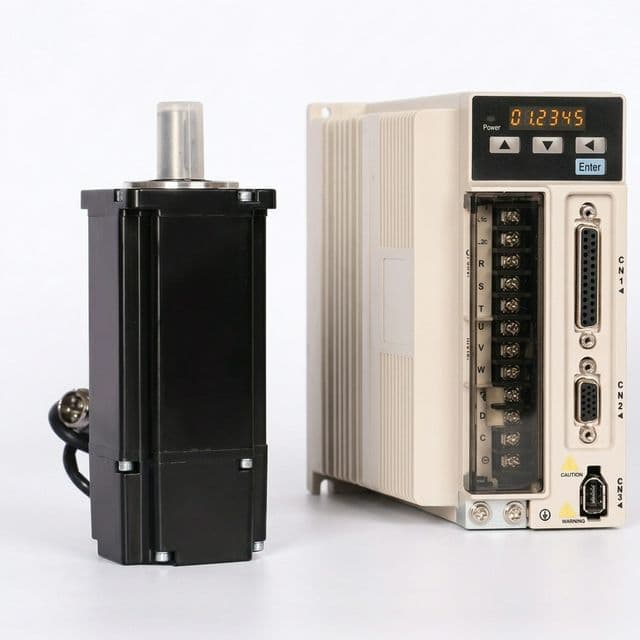
Servo motor and matching beige motor drive shown side by side

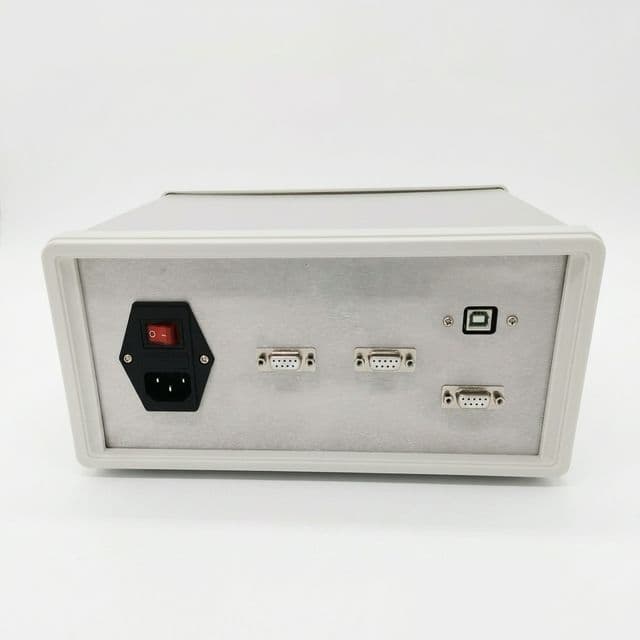
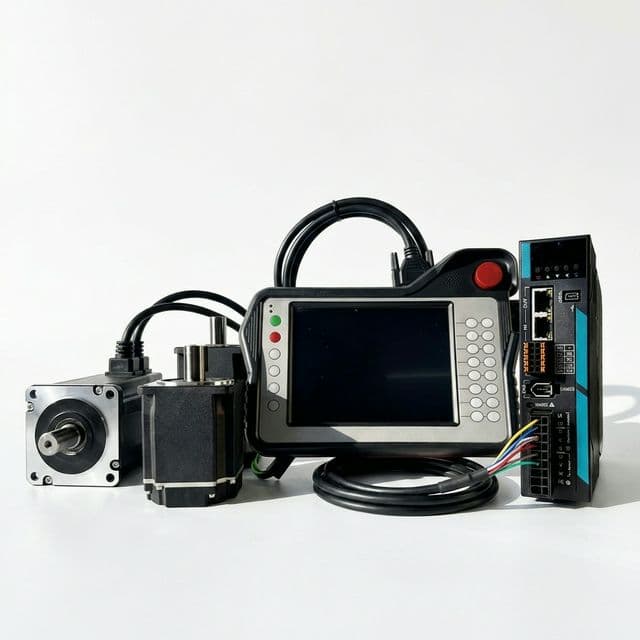
Related motor and drive hardware

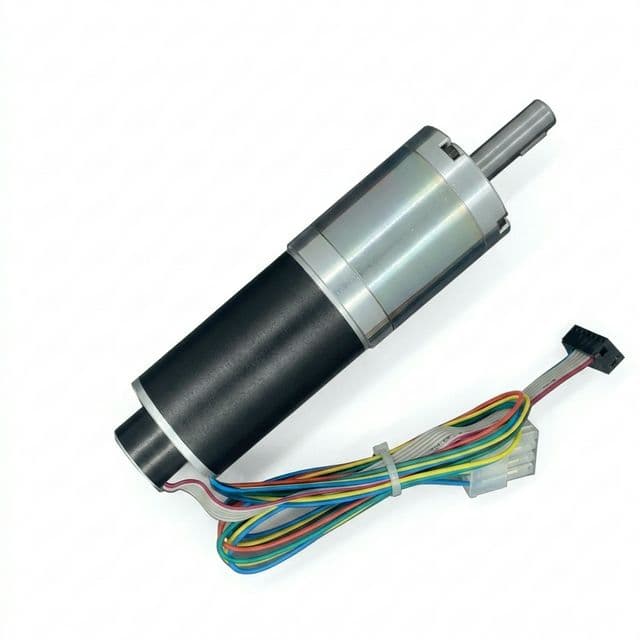
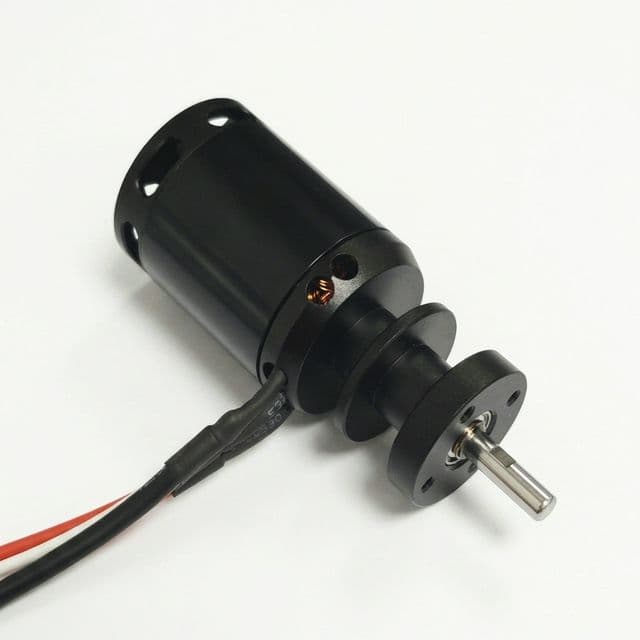
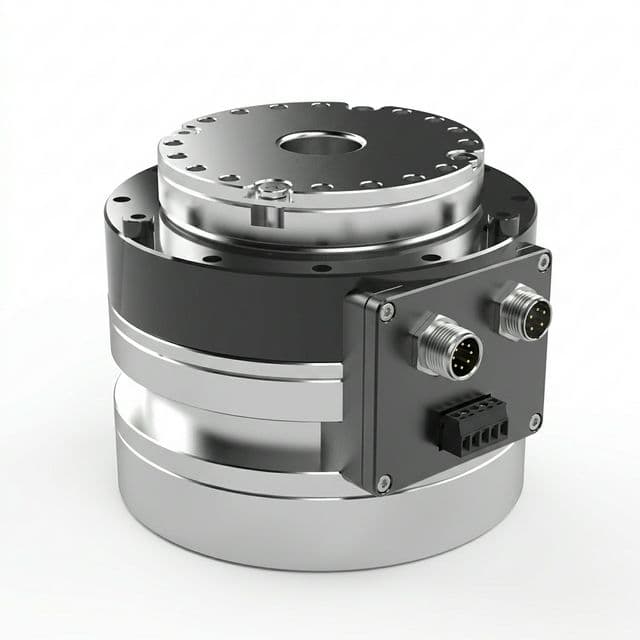
Representative hardware formats for integration planning. Verify each controller’s bus interface, profile, and exact product fit with its supplier.

Industrial multi-axis controller module
Compact motor control board for multi-node systems
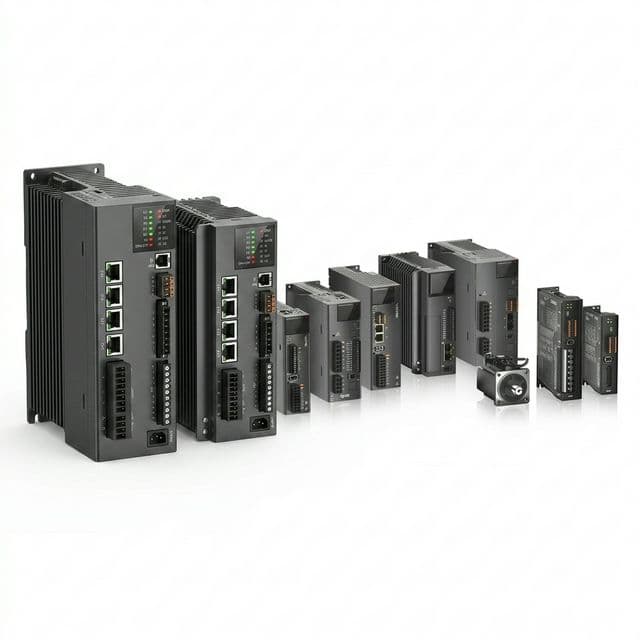
Drive controllers lineup for industrial automation
BLDC motor for AMR drive subsystem integration
Compact BLDC motor module with industrial housing
Integrated motor and controller assembly for mobile robots