
VDA 5050 3.0.0 Integration: Drive Unit Firmware Bottlenecks in Q3 2026
How the VDA 5050 3.0.0 release (March 2026) and new Zone Concept are forcing AMR drive units to handle edge computing, causing Q3 firmware bottlenecks.
By Jimmy Su · B2B Applications & OEM Program Lead
Last reviewed: 2026/07/20
MDX editorial page reviewed for buyer-facing scope, date boundaries, source traceability, and internal-link coverage.
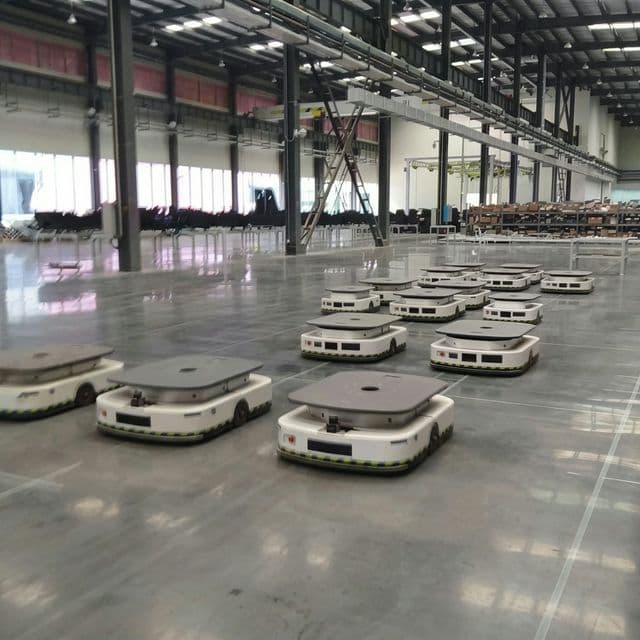
Decision-Level Conclusion: The official release of VDA 5050 3.0.0 (March 2026) has shifted the bottleneck in AMR scaling from software algorithms to component-level hardware. The standard's new requirements for freely navigating robots—specifically the "Zone Concept" and "Planned Path Sharing"—demand sub-millisecond edge response times. Traditional "dumb" drives relying on an IPC master for safety zones are failing to meet these latency requirements. Consequently, buyers are scrambling to procure next-generation drive units with advanced firmware (like those seen at Automate 2026), leading to severe Q3 2026 supply chain bottlenecks and integration delays as these new firmware stacks remain in Beta.
Research window: Q2-Q3 2026 (focusing on post-March standard release and Automate 2026). Geographic scope: United States, European Union, and Asia-Pacific warehouse automation markets. Target audience: AMR/AGV OEM engineers, robotics system architects, integration teams, and procurement managers.
What Changed: VDA 5050 3.0.0 and the Shift to Edge Processing
Historically, AMR drive units were evaluated primarily on mechanical specs: torque, radial load capacity, and thermal limits. With the VDA 5050 3.0.0 release, the paradigm has shifted to firmware maturity and communication stack capabilities.
| Signal / Event | Primary Source | What Changed (Last 30 Days) | Implication for AMR Buyers |
|---|---|---|---|
| VDA 5050 3.0.0 Release | VDMA / VDA (March 2026) | Introduction of the "Zone Concept" and "Planned Path Sharing" for AMR-Native navigation. | Safety and speed zones must now be processed faster, forcing logic down into the drive unit's firmware rather than relying solely on the master PLC/IPC. |
| Next-Gen Drive Debuts | Automate 2026 (June 2026) | Exhibitors like Elmo Motion Control showcased drives with built-in advanced protocol parsers and safety-over-bus capabilities. | Buyers must upgrade to smarter, more expensive drives to achieve VDA 3.0 compliance without latency penalties. |
| Firmware Bottlenecks | July 2026 Supply Chain Reports | High failure rates in OEM integration testing due to immature "VDA 3.0 compatible" drive firmware. | Procurement faces delayed lead times; systems integrators face prolonged debugging phases. |
| Latency Standards | Industry Consensus (Q3 2026) | Master-slave polling limits exposed; IPC-to-Drive latency exceeds safe stopping distances at high speeds under new zone rules. | Mandatory shift to decentralized edge processing directly on the motor controller/drive unit. |
Deep Dive: Architecture Shift and Latency Bottlenecks
Under VDA 5050 2.0, AGVs largely followed fixed paths (e.g., magnetic tape, QR codes). The VDA 5050 3.0.0 update fundamentally embraces freely navigating Autonomous Mobile Robots (AMRs).
The critical new feature is the Zone Concept. A Master Fleet Manager sends dynamic speed limits, no-go zones, and safety protocols to the AMR. If the AMR relies on a central IPC to parse these zones, calculate kinematics, and then send basic PWM/velocity commands via CANopen or EtherCAT to a "dumb" drive, the cumulative latency often results in the robot violating the zone boundaries at high speeds.
To fix this, the industry is moving to Edge-Native Drive Units.
Risks and Constraints: The Firmware Maturity Trap
Hardware readiness does not equal firmware readiness. While major drive manufacturers showcased high-power smart drives at Automate 2026, the underlying firmware required to perfectly interpret the VDA 5050 3.0.0 Zone logic is often still in Beta.
The primary risk for OEMs in Q3 2026 is "Integration Hell." Drive spec sheets may claim "VDA 5050 3.0.0 Compatible," but this frequently refers to physical communication layers (like EtherCAT FSoE), not mature, bug-free zone parsing algorithms. OEMs are discovering that drives drop connections, misinterpret coordinate boundaries, or enter uncommanded STO (Safe Torque Off) states during complex planned path sharing maneuvers.
Boundary Conditions: When is Edge-Native Processing Mandatory?
Not every AGV/AMR requires immediate transition to edge-native drive units. Understanding the applicability boundaries (适用边界) is crucial to avoid over-engineering.
| Application Scenario | Peak Speed | VDA 3.0 Edge-Native Drive Required? | Justification / Limit |
|---|---|---|---|
| Heavy-duty AGV (Magnetic/QR) | < 0.5 m/s | No (Optional) | Fixed paths and low speeds mean IPC latency (50-100ms) won't exceed safe stopping limits. |
| Warehouse AMR (Mixed fleet) | 0.5 - 1.2 m/s | Recommended | Dynamic zone changes require faster response; basic MQTT broker overhead can introduce lag. |
| High-speed Sortation AMR | > 1.2 m/s | Mandatory | At high speeds, network latency + IPC kinematics computation > zone violation threshold. Edge logic is strictly required. |
| Outdoor / 5G AMRs | Any | Mandatory | Variable network QoS and potential MQTT broker dropouts mean safety zones must be enforced locally by the drive firmware. |
Timeline: VDA 3.0 Firmware Sourcing Window
Buyers must align their procurement cycles with the realistic firmware maturity timeline rather than initial hardware availability.
- Q2 2026: Hardware debuts (e.g., Automate 2026). Firmware largely in closed Beta. High risk of integration bugs.
- Q3 2026 (Current): Early adopter rollout. Frequent OTA updates needed to patch uncommanded STO events. Lead times peak (20+ weeks) due to limited qualified vendors.
- Q1 2027: Anticipated stabilization of Tier-1 European/Israeli firmware. Start of broad OEM qualification.
- Q3 2027: Cost-optimized Asian drive units achieve full VDA 3.0 firmware parity. Procurement leverage returns to buyers.
Action Checklist for Buyers (Who Should Act Now)
To prevent supply chain delays and engineering bottlenecks in Q3/Q4 2026, procurement and architecture teams must update their vendor qualification criteria immediately.
| Role | Action Item | Verification Target |
|---|---|---|
| Procurement Managers | Audit existing drive suppliers for VDA 5050 3.0.0 firmware roadmaps. | Demand exact release dates for stable (non-Beta) firmware that explicitly supports the new Zone Concept. |
| System Architects | Transition integration testing from mechanical dynos to software-in-the-loop (SITL) protocol stress tests. | Verify drive unit latency when handling 50+ dynamic zone updates per second. |
| Quality Assurance | Establish strict acceptance testing for uncommanded Safe Torque Off (STO) events during zone handoffs. | The drive must gracefully handle path changes without hard emergency braking unless a true safety violation occurs. |
| Supply Chain Planners | Identify secondary sources for "Smart Drives" with edge-computing capabilities. | Lead times for high-end controllers (e.g., from top European/Israeli brands) are extending past 20 weeks due to sudden demand. |
FAQ: VDA 5050 3.0.0 Drive Integration
Q: Can we achieve VDA 5050 3.0.0 compliance without upgrading our drive units? A: Technically yes, if your central IPC is incredibly powerful and your bus network (EtherCAT) is perfectly optimized. However, for freely navigating AMRs operating at high speeds (1.5m/s+), the latency of IPC-based zone processing usually results in compliance failures. Pushing logic to the drive is the industry-standard workaround.
Q: Are Chinese drive manufacturers supporting VDA 3.0 yet? A: Leading tier-1 Chinese motor controller manufacturers are rapidly adopting the standard, but as of Q3 2026, many are still prioritizing VDA 5050 2.0 stability. European and Israeli manufacturers currently have a slight lead in 3.0.0 firmware maturity, driving the current supply bottleneck.
Q: What is the biggest hidden cost in upgrading to edge-native drives? A: Engineering time. Upgrading to a drive that parses zones natively requires rewriting the IPC-to-Drive communication protocol entirely, moving from simple velocity targets to complex trajectory and boundary handoffs.
Sources
- VDMA / VDA Official GitHub (March 2026): VDA 5050 Version 3.0.0 Release Notes and Specification. github.com/VDA5050
- VDA Standard Documentation: Official announcement of the new Zone Concept and Planned Path Sharing for freely navigating robots. vda.de
- Association for Advancing Automation (A3): Automate 2026 Exhibition analysis regarding intelligent motion controllers (June 2026). automate.org
- Idealworks & Magazino Engineering Blogs (July 2026): Insights into VDA 5050 3.0.0 MQTT network overhead and the necessity of shifting zone logic to drive-level firmware to prevent stop-and-go behavior. idealworks.com/vda-5050
- Robotics Supply Chain Insights (July 2026): Component-level firmware maturity and its impact on AMR deployment scaling.