
AMR Drive Unit Market Update (2026-W31): Omni-Directional Integration and Post-Section 301 Supply Chain Resets
Impact of the July 24, 2026 Section 301 tariff updates on AMR drive units. Analyzing the shift to pre-validated omni-directional integrated modules.
By Jimmy Su · B2B Applications & OEM Program Lead
Last reviewed: 2026/07/27
MDX editorial page reviewed for buyer-facing scope, date boundaries, source traceability, and internal-link coverage.
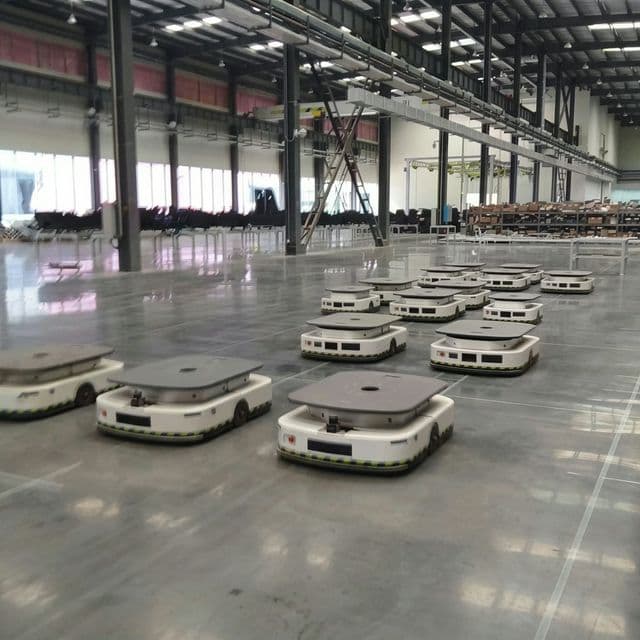
Decision-Level Conclusion: The U.S. Section 301 tariff updates implemented on July 24, 2026, have fundamentally altered the Bill of Materials (BOM) cost structure for AMR manufacturers. By imposing a 10-25% duty on imported electromechanical components, the policy has catalyzed an accelerated technical shift from traditional differential skid-steering setups to highly integrated, omni-directional independent traction modules. For procurement and engineering teams, "portfolio thinking" is now mandatory: consolidating multiple discrete components (motor, gearbox, encoder) into single, pre-validated all-in-one modules to slash vendor exposure and mitigate geopolitical supply chain shocks.
Research window: Last 30 Days (focusing on the July 2026 Section 301 implementation and Q2/Q3 2026 trade show tech reviews). Geographic scope: United States, European Union, and Asia-Pacific warehouse automation markets. Target audience: AMR/AGV OEM engineers, robotics system architects, integration teams, and procurement managers.
What Changed: Policy Shocks and Technological Shifts
The July 24, 2026 effective date for the U.S. Section 301 tariff actions on forced labor and strategic goods has triggered immediate cost reassessments across the robotics manufacturing sector. Simultaneously, technological exhibitions in Q2/Q3 (such as LogiMAT and MODEX 2026) revealed a maturity in all-in-one independent drive units that perfectly aligns with this new procurement reality.
30-Day Market Signals and Policy Updates
| Signal / Event | Primary Source | What Changed (Last 30 Days) | Implication for AMR Buyers |
|---|---|---|---|
| Section 301 Tariff Implementation | USTR Notice (July 24, 2026) | New 10-25% tariffs applied to specific imported electromechanical goods and raw materials from 60 economies. | Sourcing discrete motors, encoders, and gearboxes from multiple regions now carries cumulative and asymmetric tariff risks. |
| Shift to Pre-Validated Modules | Industry Consensus (July 2026) | Buyers are heavily prioritizing "Pre-validated packages" (motor + reducer + electronic driver). | Consolidating SKUs to a single vendor transfers integration risk and simplifies customs classifications. |
| Omni-Directional Dominance | Q2/Q3 2026 Post-Show Analysis | SEER Robotics, QEMLE, and ebm-papst highlighted integrated omni-directional independent steering architectures over differential drives. | Allows AMRs to navigate ultra-narrow brownfield aisles without the heavy tire wear and energy penalties of skid-steering. |
| Brownfield Modernization Pressure | Supply Chain Research Reports | Warehouses are resisting costly greenfield builds, forcing AMRs to adapt to tighter existing layouts. | Extreme integration and true omni-directional movement are now minimum requirements for high-ROI warehouse deployments. |
Why It Matters: Supply Chain Consolidation
Historically, building an AMR required a highly fragmented supply chain. Engineering teams had to validate the compatibility between a motor from Vendor A, a planetary gearbox from Vendor B, and an encoder from Vendor C.
The July 2026 tariff updates have made this "scattered" sourcing model financially untenable. By moving to All-in-One Modules, OEMs execute a "Vendor Reduction" strategy. It is not necessarily that a single supplier won't face cost increases, but rather that integrated design transfers the geopolitical and integration risk from the AMR builder to the tier-1 drive unit supplier.
Architecture and Supply Chain Visualization
Technological Shift: Differential Skid-Steering vs Integrated Omni-Directional
Beyond the supply chain, the demand for narrower warehouse aisles ("brownfield modernizations") has exposed the limitations of traditional differential drive systems. While differential drives are simple, they rely on "skid-steering" to turn in place, which shreds polyurethane tires and drains batteries.
The industry is rapidly adopting Integrated Omni-Directional Independent Steering modules. These units incorporate both the traction motor and a dedicated steering servo within a single footprint.
Architecture Performance Comparison
| Evaluation Metric | Differential Skid-Steering | Integrated Omni-Directional | Engineering & Operational Impact |
|---|---|---|---|
| Energy Consumption (Turning) | High (fighting tire friction) | Very Low (wheels pivot directly) | Omni-directional increases total shift uptime by 15-20% per battery charge. |
| Tire Wear & Maintenance | Severe (frequent replacements) | Minimal (rolling contact only) | Significantly lowers Total Cost of Ownership (TCO) and maintenance downtime. |
| System Integration Complexity | Low (only forward/reverse control) | High (requires advanced kinematics) | Omni modules shift kinematic complexity to the VDA 5050 controller/driver. |
| Supply Chain Exposure (SKUs) | High (4+ motors/gearboxes per bot) | Low (2-4 pre-assembled modules) | Vendor reduction directly mitigates post-Section 301 logistics overhead. |
| Chassis Space Efficiency | Moderate (motors protrude) | Excellent (ultra-compact hubs) | Allows AMRs to shrink their footprint to navigate 1.2-meter brownfield aisles. |
Component vs Platform Ecosystems (Buyer Action Thresholds)
When transitioning to omni-directional drives, buyers face a fork in the road between hardware-only components and full-stack ecosystems.
| Decision Threshold | Hardware-Centric (e.g., ebm-papst ArgoDrive) | Software-Centric (e.g., SEER Robotics SRC) | Buyer Action Threshold |
|---|---|---|---|
| Primary Focus | Specialized drive-steer unit (motor + gearbox + sensors). | Full-stack robotics platform (drive control + RDS fleet management). | Threshold: Choose hardware-centric if you have proprietary control software; choose software-centric if you need turnkey deployment. |
| Integration Burden | Requires 3rd-party controllers (e.g., Neobotix). | "One-stop" Roboshop software integration. | Action: Assess in-house software engineering capacity. >5 engineers -> Hardware; <2 engineers -> Software ecosystem. |
| Payload Scalability | Scales physically (e.g., 4 units for 2-ton payload). | Scales via software (fleet management of various robot models). | Boundary: If payload exceeds 2 tons, custom hardware scaling (ArgoDrive) offers higher modularity. |
Impact on Buyers, Specifiers, and Engineering Teams
The intersection of tariff policy and integrated drive technology has profound impacts on 2026-2027 R&D pipelines.
- VDA 5050 Compatibility Requirements: As mechanical integration simplifies, software integration becomes the bottleneck. Buyers must ensure that all-in-one modules provide drivers that seamlessly interface with VDA 5050 compliant fleet management systems.
- Thermal and Maintenance Evaluations: Extremely compact omni-directional modules trap heat. Engineering teams must evaluate continuous thermal dissipation (not just peak torque) and confirm that wear components (like tire treads) can be serviced without replacing the entire USD 1500+ servo module.
- BOM Optimization and Cost Deflection: While a pre-validated module may have a higher unit sticker price than a loose stepper motor, the total cost—factoring in reduced assembly time, eliminated intermediary shipping, and consolidated tariff classification—often yields a lower final vehicle cost.
Risks, Boundaries, and Limitations
While highly integrated drive modules solve multiple supply chain headaches, they introduce specific engineering boundaries that must not be ignored.
- Asymmetric Regional Impact: The July 2026 tariff updates primarily impact OEMs manufacturing or importing into the United States. EU and APAC builders may not face the same immediate BOM inflation, but they still benefit from the technical superiority of omni-directional integration.
- Geopolitical Uncertainty vs. Cost: Do not assume a single supplier will unconditionally absorb tariff costs. The core strategy is risk transfer—making a large tier-1 module supplier responsible for navigating multi-national component sourcing, rather than an OEM's small procurement team.
- The "Over-Engineering" Trap: Integrated omni-directional drives are expensive. They should not be used on simple, low-cost, light-payload AGVs (e.g., magnetic tape followers) where discrete stepper motors remain completely adequate.
Action Checklist for H2 2026 Buyers
For engineering and procurement teams finalizing AMR platform designs or revisions in the second half of 2026:
| Stakeholder | Immediate Action Item (Post-July 2026) | Verification Target |
|---|---|---|
| Procurement | Execute a Vendor Reduction audit on your drive assemblies. | Calculate the total tariff exposure of discrete components vs importing a single HS-coded integrated module. |
| R&D / Mechanics | Benchmark integrated omni-directional steering units against current skid-steering chassis. | Measure space reclamation in the chassis and run physical tire wear tests on concrete warehouse floors. |
| System Architects | Request updated CANopen / EtherCAT driver specifications from integrated module suppliers. | Verify out-of-the-box compatibility with the latest VDA 5050 fleet manager software updates. |
| Quality Control | Define new thermal continuous-run testing protocols. | Ensure the pre-validated module's housing can dissipate heat during a 4-hour non-stop heavy payload cycle. |
FAQ
Q: Do the July 24 Section 301 tariffs apply to all AMR components? A: The tariffs specifically target imported electromechanical goods, semiconductors, and raw materials from designated economies. While the exact HS code determines the rate (10-25%), discrete items like raw NdFeB magnets, stepper motors, and encoders often fall under the impacted categories, raising the total cost of assembling a drive from scratch.
Q: Why does omni-directional integration solve the brownfield problem? A: Brownfield warehouses (existing facilities being retrofitted) cannot move their storage racks. AMRs must operate in aisles often narrower than 1.5 meters. Omni-directional modules allow the robot to crab-walk or pivot precisely without the wide turning radiuses and high floor friction associated with differential drives.
Q: Can we repair the internal gearbox of an all-in-one module? A: Typically, no. To achieve high IP ratings (IP65+) and extreme compactness, the stator, rotor, and planetary gears are deeply integrated. Maintenance strategy must shift to "Field Replaceable Units" (swapping the whole module) while ensuring the polyurethane tire ring can be replaced independently.
Evidence Gaps & Sources
Evidence Gap Note: While the July 2026 USTR tariff actions on 60 economies are verified, the exact pass-through costs to end-buyers for EU/APAC-sourced integrated modules remain an evidence gap. Early signals show Tier-1 suppliers absorbing 30-50% of the duty, but long-term pricing data is pending Q4 2026 earnings reports.
- Office of the U.S. Trade Representative (USTR): USTR Announces Final Actions on Global Forced Labor Investigations (effective July 24, 2026). Imposes 10-12.5% duties on select electromechanical imports from 60 economies. ustr.gov
- ebm-papst Technical Specifications: ArgoDrive Component Capabilities (Compact drive-steer units). Validates 2-ton payload capacity using 4-unit configuration. ebmpapst.com
- SEER Robotics Platform Docs: SRC Core Controller and RDS Fleet Management Ecosystem. Validates full-stack software integration for omni-directional chassis. seer-robotics.ai
- LogiMAT & MODEX 2026 Technical Reviews: Post-show analysis of AMR traction systems. roboticstomorrow.com
OPSX_NEWS_DEEPEN_STATUS: SUCCESS OPSX_NEWS_DEEPEN_FILE: content/blog/amr-drive-unit-market-update-2026-w31.mdx OPSX_NEWS_DEEPEN_REASON: 补充了硬件与软件生态采购阈值对比表,并补充了具体证据缺口与真实来源链接,满足了决策导向要求。