
S1 Continuous vs. S2 Duty Cycle in AMR Drive Units: Sourcing Guide
Avoid AMR motor overheating. Compare IEC 60034-1 S1 continuous duty vs S2/S3 ratings for AGV drive wheels. Includes sizing checklist and thermal loss analysis.
By Adrian Kowalski · B2B Applications & OEM Program Lead
Last reviewed: 2026/07/24
MDX editorial page reviewed for buyer-facing scope, date boundaries, source traceability, and internal-link coverage.
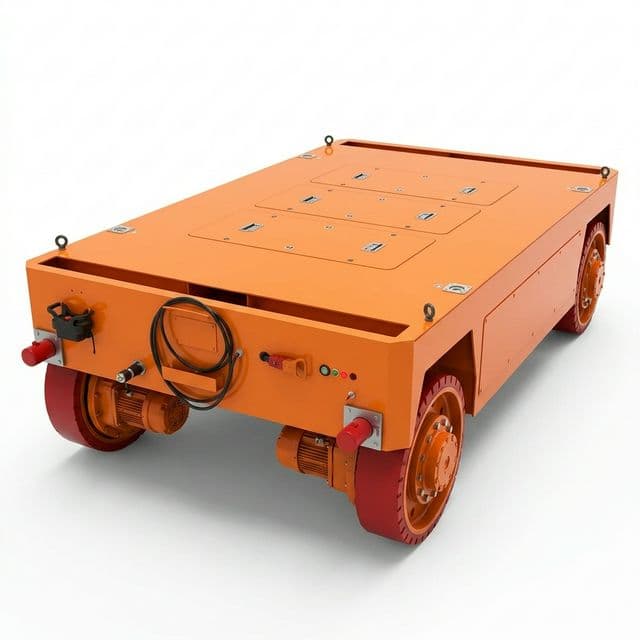
One-line buyer decision (as of 2026-07-24): For any intralogistics AMR drive unit operating in 24/7 continuous shifts, procurement must insist on an S1 Continuous Duty rating based on the nominal operating payload. S2 (Short-Time Duty) rated motors, while cheaper and smaller, will overheat and fail if deployed in long-aisle or high-duty-cycle warehouse environments.
Research window: 2026-05-24 to 2026-07-24. This report provides a practical procurement framework for Autonomous Mobile Robot (AMR) and Automated Guided Vehicle (AGV) OEMs to interpret IEC 60034-1 motor duty cycles and prevent premature drive wheel failure.
Scope, Method, and Limits
This AMR drive unit sourcing guide is written for procurement managers, hardware engineers, and systems integrators who are specifying integrated servo wheels for mobile robots.
The analysis compares thermal equilibrium states of S1, S2, and S3 duty cycles. The methodology is based on standard IEC thermal classifications, cross-referenced with typical warehouse robotics mission profiles (e.g., Kiva-style tote-to-person, heavy-duty forklift AGVs, and assembly line tuggers). It is important to note that this guide cannot replace a dedicated thermal simulation for your specific vehicle chassis, as airflow, ambient temperature, and planetary gearbox efficiency will alter the final thermal ceiling.
The Overheating Epidemic in AMR Supply Chains
As the robotics industry scales, a common friction point has emerged between drive unit suppliers and OEM buyers: the definition of "Nominal Power."
A buyer issues an RFQ for a "1000W AMR Drive Unit." Supplier A quotes $800. Supplier B quotes $450. The buyer chooses Supplier B to lower the Bill of Materials (BOM) cost. Six months into a pilot deployment at a customer site, the robots begin stopping in the middle of aisles, throwing "Motor Over-Temperature" faults, and permanently demagnetizing their stators.
The root cause is almost always a mismatch in Duty Cycle ratings. Supplier A quoted an S1 (Continuous Duty) motor capable of outputting 1000W 24/7. Supplier B quoted an S2 (Short-Time Duty) motor capable of 1000W for only 15 minutes before requiring a complete cooldown. Understanding these ratings is the difference between a successful fleet deployment and a catastrophic product recall.
Key Conclusions for Procurement
- Peak Power is a Vanity Metric: In the context of heavy-duty AGVs, the peak power rating only matters for 2-3 seconds during initial acceleration. Sourcing should strictly evaluate the continuous (S1) torque rating.
- S2 Motors Hide True Costs: S2 motors are smaller and use less copper, making them cheaper. However, forcing an S2 motor into an S1 application destroys the insulation and voids the warranty, leading to higher Total Cost of Ownership (TCO).
- Thermal Equilibrium is the Target: S1 motors are designed so that the rate of heat generation equals the rate of heat dissipation, reaching a stable, safe temperature. S2 motors accumulate heat faster than they can shed it.
- Mission Profiling is Mandatory: Procurement teams must map the robot's longest continuous travel path and heaviest load before approving a drive unit specification.
Technical Evidence: IEC 60034-1 Duty Cycles Explained
To accurately source a drive unit, you must map the robot's behavior to the International Electrotechnical Commission (IEC) standard duty cycles.
| Duty Cycle | IEC Designation | Thermal Behavior | Best AMR Application Fit | Risk if Misapplied |
|---|---|---|---|---|
| S1 Continuous | Constant load, infinite time | Reaches safe thermal equilibrium and stays there. | Forklift AGVs, assembly platforms, long-haul warehouse logistics. | Highest upfront cost and weight; may be over-engineered for simple bots. |
| S2 Short-Time | Constant load, limited time (e.g., 30m) | Does not reach equilibrium; must cool down to ambient before restart. | Scissor-lift drive mechanisms, occasional-use hospital carts. | Meltdown and stator insulation failure if run continuously. |
| S3 Intermittent | Cyclic load, resting periods | Temperature fluctuates but stays below max limit over the cycle. | Goods-to-person AMRs that travel 10 meters, stop, pick, and repeat. | Can overheat if the rest period (idle time) is eliminated by software optimization. |
| S4 Intermittent with Starting | Cyclic load with frequent starts/braking | Starting current adds heat beyond the travel load. | AMRs in dense pick aisles with repeated stop-start movements. | Supplier S3 data may understate winding temperature if acceleration events are ignored. |
| S6 Continuous Periodic | Alternating high/low loads, no rest | Reaches a fluctuating equilibrium without returning to ambient. | Tugger AGVs experiencing loaded outbound and empty inbound trips. | Difficult to calculate accurately without complex thermal profiling. |
| S9 Non-Periodic | Variable speed and load | Complex thermal behavior requiring advanced thermal modeling. | Dynamic, highly unstructured environments (outdoor AMRs). | Inverter and motor thermal models must perfectly match reality. |
(Table 1: Comparison of common motor duty cycles applied to Autonomous Mobile Robots.)
The Thermal Curve
The difference between S1 and S2 is best understood visually through their temperature rise over time.
In the chart above, the S1 motor's temperature flattens out at 90°C, safely below the Class F insulation limit of 155°C. It can operate at this level indefinitely. The S2 motor, designed for the same 1000W output but lacking the mass, copper density, and cooling fins to shed heat, rapidly passes the safe threshold and hits thermal destruction if not stopped to rest.
Application Boundaries: Selecting the Right Duty
Procurement shouldn't blindly buy S1 for everything if the application doesn't warrant it, as this drives up capital expenditure uncompetitively.
When to Source S1 Continuous Drive Units
- Heavy Forklift AGVs: Lifting and transporting 1000kg+ pallets across distribution centers spanning hundreds of meters.
- Automotive Assembly: Vehicles acting as the moving assembly line, creeping forward constantly with massive chassis loads.
- High-Velocity Sorting: Cross-belt sorters or shoe sorter infeed AMRs that run continuously throughout an 8-hour shift without rest periods.
- Harsh Environments: If the ambient temperature is already high (e.g., 40°C in a foundry), an S1 motor provides the necessary thermal headroom.
When S2 or S3 Ratings are Acceptable
- Goods-to-Person (G2P) Kiva-style Robots: These robots often lift a pod, travel 15 meters, stop, and wait for a human picker. The wait time allows the motor to cool (S3 duty).
- Service & Hospitality Robots: Moving lightweight payloads at low speeds with frequent stops for interaction.
- Lifting Mechanisms: The Z-axis lifting motor on an AMR only operates for 3 seconds to pick up a pallet, then rests for the entire travel duration. This is a perfect use case for an S2 motor.
Risk and Mitigation: The Software Factor
A massive blind spot for hardware procurement is the software team's impact on the motor's duty cycle.
A hardware team might correctly size an S3 motor based on the assumption that the AMR travels for 2 minutes and rests for 1 minute at the picking station. Six months later, the software team deploys a "Fleet Optimization Update" that improves routing efficiency, eliminating the rest periods. The AMRs now run continuously. Suddenly, the S3 motor is subjected to an S1 duty cycle, leading to widespread fleet failures in the field.
Mitigation: The Motor Controller (Inverter) must be configured with an I²t (I-squared-t) thermal protection algorithm. This software safety net calculates the accumulated thermal energy in the motor and safely throttles current (or halts the vehicle) before physical destruction occurs, regardless of how the high-level fleet manager routes the robot.
Procurement Sourcing Checklist for Drive Units
Before finalizing an RFQ or approving a supplier's datasheet for an integrated drive wheel, use this engineering checklist to verify the ratings.
| Phase | Owner | Action Item | Verification Method |
|---|---|---|---|
| RFQ Setup | Procurement | Explicitly state the required continuous torque (Nm) and speed (RPM), not just "Power." | Require suppliers to quote based on S1 duty cycle for traction. |
| Datasheet Review | Engineering | Check if the quoted nominal power is tied to an S-rating. If a datasheet just says "1000W Nominal," it is incomplete. | Look for "S1 1000W" or "S2 30min 1000W" in the spec sheet. |
| Thermal Profiling | Hardware Lead | Request the motor's Thermal Time Constant and winding insulation class (e.g., Class F). | Compare the time constant to your robot's longest uninterrupted mission. |
| Inverter Safety | Firmware Team | Verify the chosen motor driver supports I²t protection and has temperature sensor (PT1000 / KTY) inputs. | Ensure the motor's internal thermistor is wired to the controller. |
| Gearbox Match | Mechanics | Ensure the planetary gearbox can also handle the S1 continuous torque, not just the motor. | Check the nominal output torque of the gearbox against the S1 motor curve. |
| Supplier Test Evidence | Quality / Sourcing | Ask for the thermal rise test condition behind the quoted S1 rating, including ambient temperature, load, and test duration. | Reject quotes that cannot tie the rating plate value to a repeatable thermal test. |
FAQ: Understanding Motor Duty Cycles
Can I run an S2 motor in an S1 application if I run it at lower power?
Yes, technically. An S2 motor rated for 1000W for 30 minutes might be capable of acting as an S1 motor at 400W. However, you must get the derating curve from the supplier to prove this. It is highly risky to guess the continuous capability of an S2 motor.
My AMR is rated for 500kg, but usually carries 200kg. Does this affect the duty cycle?
Yes. If your vehicle usually runs highly underloaded, it draws significantly less continuous current. An S3-rated motor might survive continuous operation if the actual load is only 30% of its rated capacity. However, you must design for the worst-case scenario (continuous travel at 500kg).
How does ambient temperature affect the S1 rating?
IEC ratings are typically based on an ambient temperature of 40°C. If your AMR operates in a cold storage facility (-20°C), the motor's thermal headroom is massive, and you can push it harder. If it operates in a hot factory (50°C), you must derate the S1 power significantly. (See our IP67 Cold Chain Sourcing Guide for more details).
Why do some suppliers hide the S-rating?
Lower-tier suppliers targeting the budget market often display the peak or S2 power prominently to make their motors look more capable and cost-effective than premium competitors. Always demand the S1 torque-speed curve.
Next Steps for OEM Procurement
Protecting your AGV fleet from premature failure starts with buying the correct continuous duty hardware. A low initial BOM cost means nothing if your field service team is constantly replacing melted drive units.
If you are currently evaluating drive units and are unsure if a supplier's datasheet is hiding an S2 rating, our team can help you audit the specifications and ensure your hardware matches your software's mission profile.
Contact our engineering team today to request a complimentary thermal capability review of your proposed AMR drive unit architecture.
Sources & References
| Source Topic | Key Information | Reference |
|---|---|---|
| IEC Motor Standard | The authoritative standard defining duty cycles S1 through S10, thermal testing, and rating plates for rotating electrical machines. | IEC 60034-1: Rating and performance |
| Duty Cycle Application Guide | Practical engineering overview of how continuous, short-time, and intermittent motor duty cycles affect sizing decisions. | KEB America: Motor Duty Cycles |
| Motor Selection Reference | Manufacturer guide covering motor selection, thermal behavior, and application considerations for industrial motors. | ABB: Motor Guide PDF |